BitMine Faces Multibillion-Dollar Unrealized Losses as Ethereum Holdings Weaken, Reframing Risk in Crypto Trading
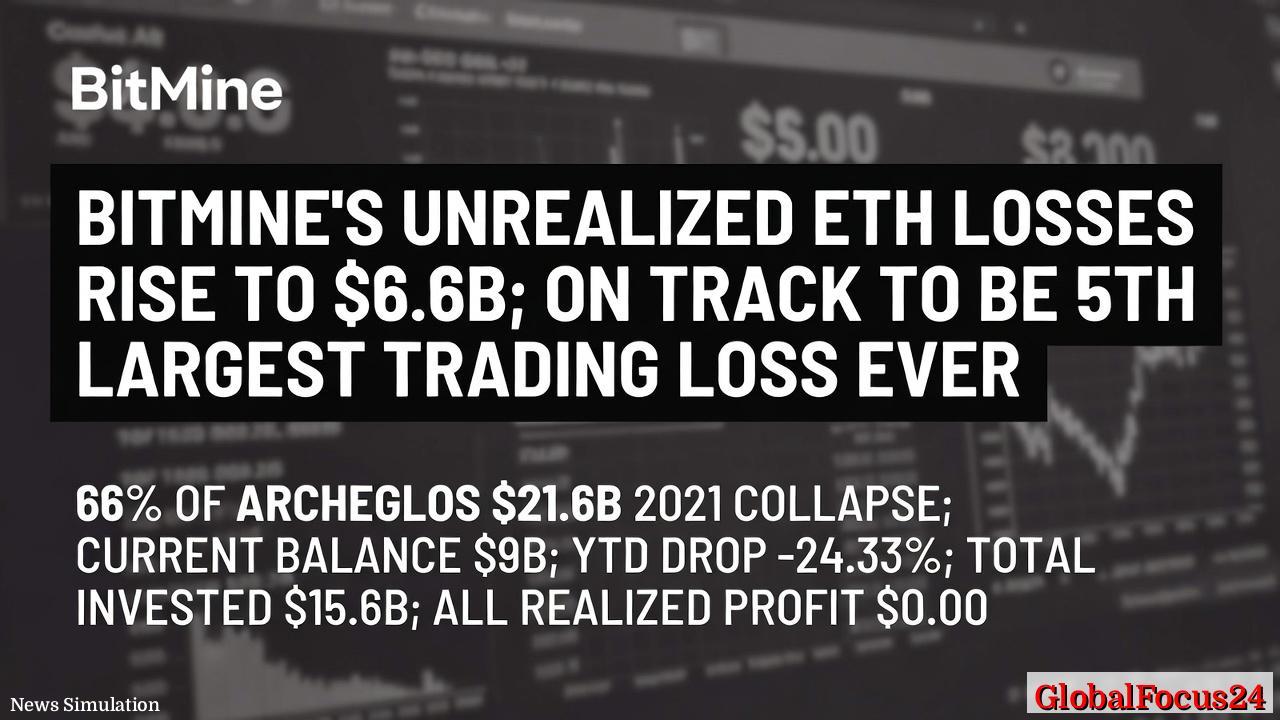
A prominent cryptocurrency trading entity, BitMine, is currently navigating a dramatic red area on its books as unrealized losses on Ethereum holdings intensify. The firm’s disclosed figures show an unrealized loss of approximately $6.614 billion, translating to a 42.26% decline from its total profit position. With a reported current balance of about $9.037 billion, the year-to-date picture reflects a 24.33% drop, or roughly $2.905 billion, in value. Realized profit remains at zero, underscoring that the losses are not yet crystallized through sales but sit as a vast unrealized drawdown within the firm’s portfolio.
Historical context and how we arrived here To understand the magnitude of BitMine’s current situation, it helps to situate it within the broader history of high-profile liquidity and risk events in the financial and crypto markets. The Archegos Capital Management collapse in 2021 stands as a touchstone for analysts tracking how concentrated, highly leveraged trading strategies can produce outsized losses that reverberate through multiple counterparties and asset classes. Archegos’ failure, which resulted from the rapid de-leveraging of large family-office positions in equities, underscored the systemic risk posed by concentrated bets and opaque risk management. BitMine’s disclosed exposure—an unrealized loss on a major crypto holding that could crystallize into a substantial realized loss if sold—invites a comparative lens: while the specific assets, counterparties, and regulatory environments differ, the underlying dynamics of leverage, liquidity pressure, and mark-to-market risk remain instructive.
In the crypto space, price volatility has repeatedly tested risk controls, especially for entities operating with high leverage or sizable one-asset concentration. Ethereum, as the backbone of a wide ecosystem including decentralized finance, smart contracts, and NFT marketplaces, has demonstrated both resilience and vulnerability across different market cycles. When a firm’s margin requirements tighten or liquidity becomes constrained, mark-to-market losses can escalate quickly. BitMine’s reported numbers—where unrealized losses dwarf realized profits—signal a phase of elevated risk, where market movements directly influence the firm’s balance sheet and risk posture, even before any actual trades are executed to crystallize losses.
Economic impact and implications for liquidity and markets The near-term economic implications of such a large unrealized loss are multifaceted. First, the balance sheet reality—unrealized losses of this magnitude—creates scrutiny around risk controls, capital adequacy, and the potential for prompt liquidity management actions. If price volatility continues or if market conditions deteriorate further, the firm may face margin calls, collateral requirements, or forced liquidation scenarios that could affect counterparties and the broader market.
Second, investor confidence and market perception can be as impactful as the raw numbers. Stakeholders, including lenders, custodians, and trading partners, monitor how quickly and transparently a firm addresses risk exposure. A rapid and credible response—such as enhanced risk governance, independent risk oversight, and clear communication about liquidity planning—can help alleviate contagion concerns and support continued market functioning.
Third, the situation highlights the evolving risk landscape in crypto trading entities, where regulatory expectations, risk management standards, and capital requirements are still maturing in comparison with traditional financial institutions. As firms accumulate large, mark-to-market losses on volatile assets, there is growing emphasis on robust stress testing, diversification of asset risk, and transparent reporting to investors and regulators. These dynamics influence not only individual firms but also the ecosystem’s credibility and long-term stability.
Regional context and comparisons From a regional perspective, crypto firms and trading desks operate within a spectrum of regulatory and market environments. In the United States, oversight around digital assets has intensified, with debates over custody standards, leverage limits, and consumer protections shaping how firms manage large positions and respond to adverse price moves. In Europe, where markets have historically emphasized transparency and consumer safeguards, firms have pursued risk controls that align with broader financial market standards, even as they contend with cross-border liquidity and settlement considerations. In Asia, authorities have pursued a mix of pragmatism and precaution, balancing innovation with systemic risk concerns, which in turn influences trading firms' capital planning and risk-taking behaviors.
If BitMine were to realize a portion of its unrealized loss, the impact would depend on several factors: the pace of price recovery in Ethereum, the liquidity of the firm’s counterparties, and the availability of alternative funding sources. A sharp turn in Ethereum prices could compress margins quickly, while a gradual rebound might provide breathing room, enabling staged risk mitigation and orderly unwinds. For market participants, awareness of such outcomes informs liquidity provisioning, hedging strategies, and risk management practices across crypto desks.
Operational and governance considerations The magnitude of BitMine’s current exposure raises important questions about governance and operational risk. Key considerations include:
- Risk architecture: How is leverage managed, and what are the thresholds for drawdown and margin calls? A robust framework typically includes pre-defined stress scenarios that capture extreme but plausible market moves in major assets such as Ethereum.
- Collateral and liquidity: What are the collateral requirements, settlement timelines, and liquidity pools that can support rapid liquidity generation if needed? Efficient liquidity management is vital to prevent forced liquidations during downturns.
- Disclosure and transparency: Investors and counterparties value clear, regular updates on risk metrics, concentration risk, and scenarios. Transparent communication helps maintain trust during periods of stress.
- Independent oversight: An independent risk committee and external audits can enhance confidence that risk controls are functioning as intended, reducing the likelihood of unchecked exposures.
Public reaction and market sentiment Public reaction to such disclosures in crypto markets tends to be swift, given the asset class’s sensitivity to price swings ands. Traders, investors, and observers often parse the numbers for clues about future price trajectories, liquidity conditions, and the health of the broader ecosystem. In periods of heightened uncertainty, sentiment can swing between concern about losses and optimism about potential recoveries. Market participants typically respond with a mix of hedging activity, rotation into perceived safer assets, and closer scrutiny of counterparties’ balance sheets.
Strategic paths forward Looking ahead, BitMine could pursue several strategic avenues to navigate its current position. These paths are not mutually exclusive and may be pursued in sequence or in parallel, depending on market conditions and internal capacity:
- Risk reduction and diversification: Reducing concentration risk by diversifying across multiple assets and hedging strategies can help dampen sensitivity to any single asset’s price movement.
- Liquidity optimization: Strengthening liquidity frameworks, including access to credit lines or contingency funding facilities, can provide a buffer against sudden liquidity stress.
- Profitability recovery strategies: Implementing disciplined risk-adjusted return targets, reviewing fee structures, and optimizing execution could support stronger profitability once market conditions stabilize.
- Regulatory and governance enhancements: Elevating governance standards and ensuring robust risk reporting can bolster credibility with investors, lenders, and regulators.
Regional and global outlook for crypto trading entities As the crypto market continues to mature, trading firms face a balancing act between innovation and risk management. The evolution of custody solutions, improved transparency, and standardized risk metrics contribute to a more resilient trading environment. However, the volatility inherent in major digital assets like Ethereum ensures that even well-capitalized firms must remain vigilant about mark-to-market exposure, liquidity dynamics, and counterparty risk. The industry’s trajectory will likely be shaped by a combination of technological advancement, regulatory developments, and macroeconomic conditions influencing appetite for crypto risk and institutional participation.
Conclusion BitMine’s current display of billion-dollar unrealized losses on Ethereum holdings underscores the ongoing risk-reward calculus that characterizes advanced crypto trading operations. While the losses are unrealized, they illuminate the fragility and resilience of market participants in the face of rapid price movements and sophisticated trading strategies. As the firm evaluates its risk controls, liquidity position, and long-term strategy, the broader market watchers should reflect on the implications for liquidity, market integrity, and the evolving landscape of digital asset trading.
Notes for readers: The figures discussed reflect reported, non-audited metrics as of the current reporting period. Market conditions, asset prices, and risk profiles can shift quickly in the crypto arena, and investors should seek up-to-date information from official disclosures and market data feeds. This article presents context, considerations, and potential pathways without prescribing specific investment actions.