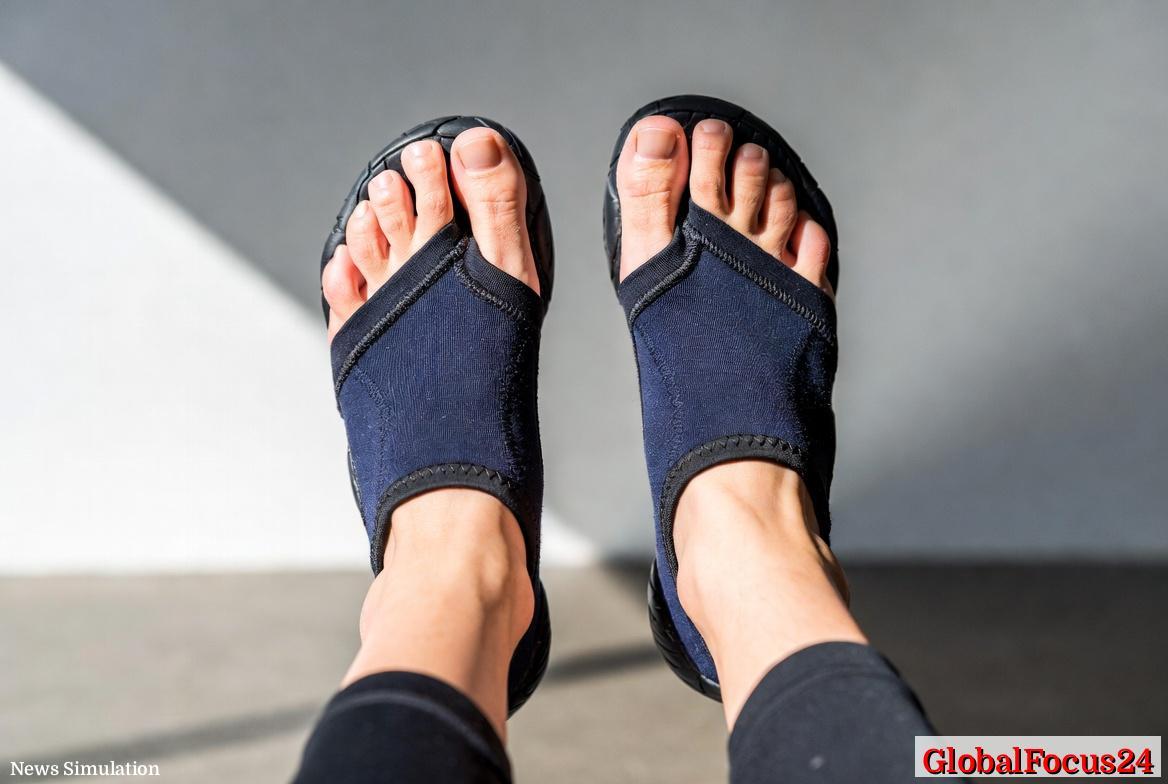
Barefoot Shoes and Toe Strength: What the New Fitness Trend Means for Mobility, Foot Health, and the Economy
Barefoot-style footwear has moved from niche wellness circles into mainstream fitness discussions, driven by a simple promise: strengthen the feet. The trend gained fresh momentum after a small study reported that six months of wearing barefoot shoes increased toe-muscle strength by 57%. While the figure remains preliminary, it reflects a broader shift in how people approach mobility—away from passive support and toward active, foot-driven movement.
For many consumers, the appeal is immediate and intuitive. Traditional footwear often compresses the toes inside narrow toe boxes, limiting natural splay and reducing how much the foot has to work. Barefoot shoes—typically characterized by a wider toe box, minimal cushioning, and a flexible sole—aim to restore more natural foot mechanics. That shift, proponents argue, can change not only how a person walks, but how the foot’s small intrinsic muscles adapt over time.
The Study Signal Behind the Trend
The reported finding—an increase in toe-muscle strength of 57% after six months—matters less as a definitive medical claim and more as a signal that consistent shoe choices may influence muscle adaptation. Toe strength is not a trivial metric. The intrinsic muscles of the foot help stabilize the arch, assist with balance, and contribute to the fine motor control required for walking on uneven surfaces, climbing stairs, and even maintaining posture when standing for long periods.
Barefoot shoe designs are built to encourage these muscles to participate. With less rigid structure and more space for toe movement, users may gradually increase the workload placed on the foot’s musculature. In turn, muscles adapt through strength gains, similar to how other tissues respond to training. The urgency behind the trend comes from the lived experience many wearers describe: improved stability, reduced fatigue, and greater awareness of how the foot contacts the ground.
Still, readers should interpret the magnitude cautiously. The “small study” label implies limited sample size, which can affect confidence intervals and generalizability. The finding should be treated as a starting point for more rigorous trials—ideally involving larger, diverse cohorts, standardized activity levels, and long-term follow-up to determine whether benefits persist beyond the wearing period and how they compare with other footwear or training approaches.
How Barefoot Shoes Differ From Conventional Footwear
Most everyday shoes are designed for comfort and injury prevention, but comfort-driven features can unintentionally shape biomechanics. Dense midsoles, supportive insoles, and structured heel counters may reduce the foot’s need to generate stability. Over time, some users may rely more on external support than on intrinsic control.
Barefoot shoes typically offer a different mechanical environment:
- Wider toe boxes that permit toe splay and reduce toe compression
- Flexible soles that allow natural foot movement during gait
- Low heel-to-toe drop, which may encourage a more balanced load distribution across the foot
- Minimal cushioning that increases sensory feedback from the ground
These design choices can alter how weight transfers from heel to midfoot and how toes contribute during push-off. In conventional shoes, the sole often acts as a buffer, and the toes may flex less because the shoe restricts movement. In barefoot-style shoes, the foot often has to do more work to control motion, especially during acceleration, uneven terrain navigation, or quick changes in direction.
Historical Context: From “Bare” Roots to Modern Support
The barefoot concept is not new. For most of human history, footwear was either absent or minimal, and societies developed movement skills with direct ground contact. Over centuries, shoes were introduced for weather, protection, and cultural norms, then later refined into performance and orthopedic systems. The modern era brought a major shift: footwear increasingly served as an engineered support platform, designed to correct, stabilize, or cushion the body.
Industrial and athletic footwear evolved alongside rising rates of sedentary lifestyles. Many people spend long hours sitting and then rely on shoes to compensate for weaker or less-trained lower-body mechanics. As public health discussions increasingly emphasize activity and mobility, barefoot-style footwear has become a practical tool for those seeking a different relationship with movement—one that treats the feet as active participants rather than passive passengers.
This historical swing also helps explain why barefoot shoes feel both radical and familiar. They promise a return to natural mechanics without requiring people to risk barefoot walking on unsafe surfaces. In that sense, the trend resembles earlier cycles in fitness and sports science, where innovations alternate between engineered support and training-based adaptation.
Toe Muscles, Balance, and Gait: Why Strength Matters
Toe-muscle strength is tied to more than athletic performance. The small muscles within the foot influence how the arch maintains stiffness and how the body counters sway during standing and walking. Greater toe engagement can contribute to:
- Improved balance on uneven ground
- Better control during push-off and toe-off phases of gait
- Enhanced stability during stair climbing or rapid direction changes
- Potential reductions in compensatory strain higher up the kinetic chain, such as the ankle, knee, and hip
When toe muscles strengthen, users may experience more secure footing and improved proprioception—the sense of where the foot is in space. This sensory feedback can be especially relevant for people who work on hard surfaces or commute on mixed terrain, where footing irregularities are common.
Importantly, stronger muscles do not automatically eliminate foot pain. Foot discomfort can stem from multiple causes, including overuse, plantar fascia irritation, tendon issues, biomechanical alignment, or insufficient recovery. However, in many cases, strengthening intrinsic foot muscles can serve as part of a broader rehabilitation or conditioning strategy—particularly when introduced gradually and paired with appropriate loading.
Economic Impact: A Footwear Category With Momentum
Barefoot shoes sit at the intersection of fitness, wellness, and orthopedic consumer trends. That positioning carries economic significance. In recent years, the footwear market has expanded into specialized categories—minimal running shoes, recovery footwear, stability sneakers, and in-shoe technology. Barefoot-style products fit neatly into that segmentation by offering a clear differentiator: they are designed to change mechanics rather than merely cushion them.
From a business perspective, the category benefits from:
- A strong consumer narrative around “natural movement”
- Visible product cues such as wider toe boxes and flexible soles
- A scalable direct-to-consumer model used by many modern brands
- Demand from niche communities that often influence broader adoption through social platforms
Economically, these shifts affect retailers, manufacturers, and allied service industries. More people experimenting with barefoot shoes can increase demand for:
- Podiatry consultations and gait assessments
- Physical therapy services focused on foot strengthening and mobility
- Specialty socks, insoles, and accessories designed for minimal footwear
- Training programs, mobility classes, and strength routines
The shoe trend can also influence labor markets indirectly. Some workplaces and occupations involve prolonged standing or frequent walking on hard floors. If barefoot-style footwear is adopted widely in certain segments—such as casual retail, fitness studios, or light industrial roles—it could alter worker comfort perceptions and potentially influence productivity and absenteeism. These downstream effects require evidence, but the pathway is plausible: comfort and stability affect how long people can comfortably stay on their feet.
Regional Comparisons: How Footwear Preferences Differ
Footwear adoption tends to reflect local culture, urban design, and consumer income patterns. Regions with dense transit networks and walkable neighborhoods often see faster adoption of mobility-focused product categories. In places where people regularly walk long distances—across sidewalks, stairs, and transit platforms—foot comfort becomes a daily priority, creating a market for shoes that emphasize natural mechanics and stability.
In North America and parts of Europe, the barefoot trend has gained traction alongside broader wellness movements, including strength training at home, mobility-focused routines, and preventive health messaging. In these contexts, consumers are more likely to experiment with footwear as a form of self-conditioning, interpreting shoe choice as an intervention rather than a mere accessory.
Meanwhile, in areas where footwear constraints are shaped by climate, infrastructure, and occupational demands, adoption can vary. For example, in regions with harsh winters or uneven outdoor conditions, barefoot shoes may require adaptation—either through seasonal variants with protection or through more cautious ramp-up plans to avoid discomfort during transition periods.
Despite these differences, the core appeal remains consistent: barefoot-style footwear offers a tangible way to change foot mechanics without specialized equipment. That universal logic supports steady global interest even when local adoption rates fluctuate.
Transition Risks and the Importance of Gradual Adaptation
The benefits reported in studies and by early adopters do not happen instantly, and transitioning too quickly can backfire. Barefoot shoes often increase loading on structures that previously received less demand from conventional footwear. That change can irritate muscles, tendons, or connective tissues if the shift is abrupt.
Common transition challenges include:
- Soreness in the toes and forefoot after initial use
- Calf tightness as lower-leg musculature adapts to altered mechanics
- Plantar discomfort for some users, especially if they increase mileage too fast
- Overuse symptoms when people replace all supportive footwear at once
A cautious ramp-up approach is widely recommended in the wellness and sports communities: start with shorter wear periods, gradually increase duration, and consider complementary strengthening exercises for the feet and calves. Many users also benefit from education on cadence and stride patterns, because minimal footwear changes how surfaces interact with the body. When people learn to move with less reliance on cushioning, the experience often becomes more stable over time.
Clinicians and trainers frequently emphasize that there is no one-size-fits-all footwear strategy. People with specific foot deformities, severe biomechanical issues, or certain medical conditions may require professional guidance before switching to minimal designs. For them, barefoot shoes might be appropriate in a controlled and supervised way, or they might be a poor fit depending on symptoms and history.
What the 57% Figure Suggests for Consumers
A single number—like a 57% increase in toe-muscle strength—can inspire enthusiasm, but it should be treated as a research prompt rather than a guaranteed outcome. Consumers typically want practical interpretation: What should they do with this information?
The most responsible takeaway is that toe muscles can strengthen in response to footwear-induced mechanics. That means people who choose barefoot shoes may see measurable improvements, especially when wearing them consistently for months. However, individual results likely vary depending on baseline strength, activity levels, walking patterns, and transition method.
For consumers evaluating the trend, the decision often comes down to four factors:
- Consistency: wearing the shoes regularly enough to allow adaptation
- Progression: increasing time and activity gradually to avoid overload
- Training support: incorporating toe and foot strengthening exercises where appropriate
- Sensitivity: monitoring discomfort and adjusting quickly if symptoms worsen
In practice, many wearers find that the biggest changes occur after weeks to months rather than days. The foot behaves like a muscle group under training: it adapts when loaded appropriately and recovers when stressed.
Public Reaction: A Shift Toward Active Foot Health
The barefoot shoe conversation has also changed how people talk about foot health. Instead of viewing shoes solely as protection against pain, more people describe their footwear choices as training tools. Online communities share personal timelines—how toe grip felt different after a few weeks, how balance improved after a transition period, and how certain activities became more stable.
At the same time, consumers are learning to distinguish between “feels good” and “safe for everyone.” Some people report immediate comfort, while others feel a learning curve. That range of experiences encourages more nuanced discussions: strength changes can be real, but they still require time and proper scaling.
For the general public, the message is clear: the foot is not a passive structure. It is a dynamic system of bones, tendons, ligaments, and muscles designed to respond to load. Barefoot-style footwear appears to push more of that system into action, which may explain why strength improvements—like the reported 57%—capture attention in the first place.
The Road Ahead: More Research and Better Guidance
The strongest question following the study is what comes next: how widely the findings apply across age groups, activity levels, and foot types. Future research would ideally examine:
- Larger samples to confirm whether toe strength consistently increases
- Comparisons between barefoot shoes and other minimal or supportive footwear categories
- Long-term follow-up to see whether improvements persist after discontinuation
- Injury and discomfort tracking to clarify who benefits most and who needs caution
- Standardized programs that pair footwear with targeted strengthening
In the meantime, the practical reality remains: consumers are experimenting, markets are responding, and footwear design innovation continues. Whether barefoot shoes become a lasting mainstream category or remain a specialized option may depend on the balance between reported benefits and clear, evidence-based transition guidelines.
Practical Bottom Line for Footwear Choices
Barefoot shoes are increasingly associated with toe-muscle strength gains, highlighted by a small study reporting a 57% increase after six months. While that specific percentage may not reflect every person’s experience, the underlying concept—shoe design influencing foot mechanics and muscle adaptation—offers a compelling explanation for why the trend has grown so quickly.
People considering the switch may want to think in terms of training rather than replacement. Start gradually, pay attention to comfort signals, and allow time for the foot and lower legs to adapt. When approached responsibly, barefoot-style footwear can become more than a novelty product; it can act as a catalyst for stronger, more responsive foot function—an outcome with clear personal benefits and growing economic ripple effects across the footwear and wellness ecosystem.