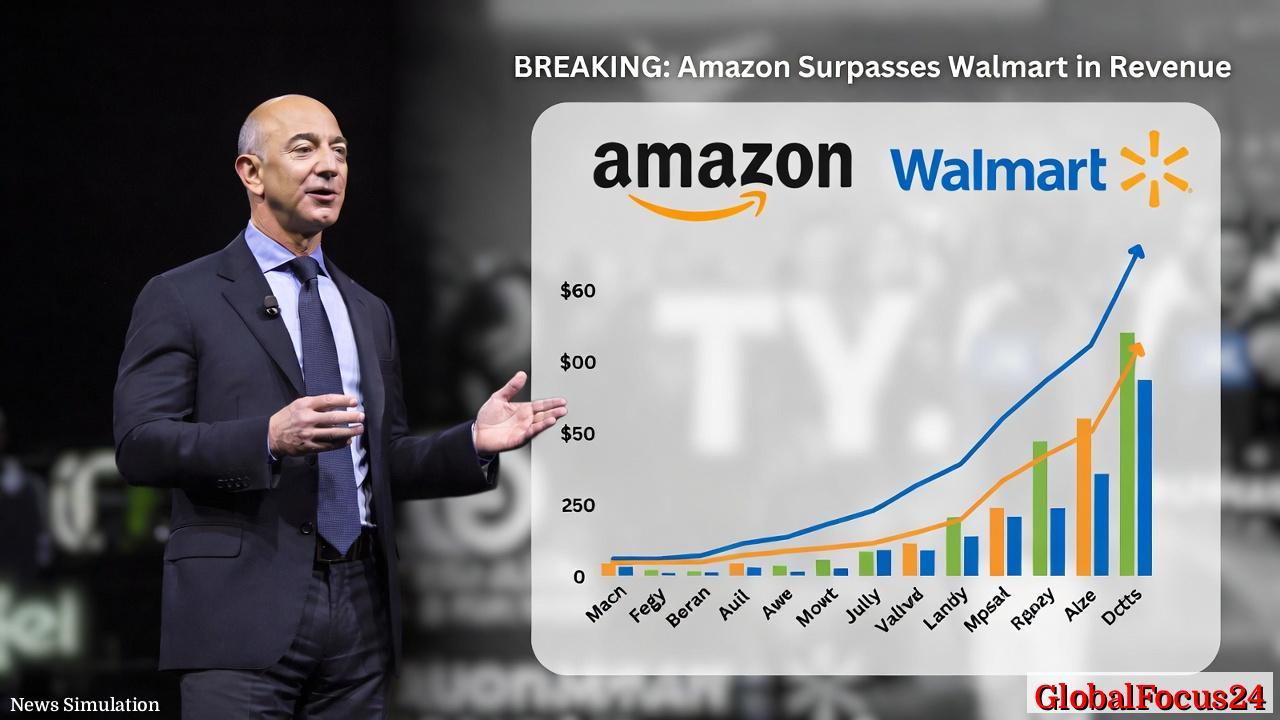
Amazon Surpasses Walmart to Become World's Largest Company by Revenue
Amazon has officially surpassed Walmart to claim the title of the world’s largest company by revenue, reflecting a historic shift in the global retail and tech landscape. The e-commerce and cloud computing giant reported 2025 sales of $716.9 billion, a milestone that underscores the company’s expansive reach across consumer, enterprise, and digital services.
Historical context: a dynamic shift in retail and tech leadership The ascent of Amazon over Walmart marks a rare pivot in the long-running narrative of American corporate power. Walmart, founded in 1962 as a bricks-and-mortar retail powerhouse, built its strength on scale, logistics, and price leadership. For decades, Walmart stood as the unquestioned anchor of global retail revenue, leveraging thousands of stores, a sprawling supply chain, and an ever-expanding international footprint.
Amazon, launched in 1994 as an online bookseller, gradually evolved into a diversified technology company with a multi-pronged business model. Its early emphasis on convenience, selection, and price online gave way to aggressive investments in fulfillment infrastructure, cloud computing through Amazon Web Services (AWS), digital media, advertising, and increasingly, sectors such as healthcare and logistics. The trajectory juxtaposed the traditional edges of retail, with Amazon redefining what “retail” means in a digital-first era.
The 2010s and 2020s were a period of converging growth engines for Amazon: e-commerce scale, AWS profitability, and a relentless push into consumer electronics, logistics, and innovation in last-mile delivery. Walmart responded with a multi-channel strategy that blended physical stores with online fulfillment, a renewed emphasis on private-label brands, and investments in technology and supply chain optimization. The 2025 revenue milestone signals that Amazon’s blended model—combining marketplace dynamics, cloud services, digital advertising, and an expansive ecosystem—generated more annual revenue than any single retailer has achieved in modern corporate history.
Economic impact: broader implications for markets, jobs, and consumer choice The leadership shift has wide-ranging economic implications. For shareholders and investors, Amazon’s dominance in revenue reinforces confidence in a diversified business model that pairs consumer demand with scalable infrastructure. AWS continues to be a critical profit engine, supporting continued investments in AI, machine learning, and enterprise software services that power businesses across industries. The platform’s advertising segment also contributes a steady growth stream, underscoring the monetization opportunities embedded in a vast customer base and global reach.
In the consumer economy, Amazon’s scale influences pricing dynamics, fulfillment expectations, and delivery speed benchmarks. The company’s investment in logistics—building fulfillment centers, regional sortation hubs, and air and ground transportation capacity—contributes to regional economic activity and job creation, even as it intensifies competition in the logistics and e-commerce sectors. The Walmart-Amazon dynamic remains a classic case study in how traditional retail and tech-enabled retail coexist, compete, and shape consumer behavior.
Regional comparisons: global footprint and growth strategies Amazon’s 2025 revenue achievement reflects not only robust domestic demand but also strategic expansion into international markets. Amazon’s global operations span e-commerce services, cloud infrastructure, and digital services in markets with diverse regulatory environments, consumer preferences, and competitive landscapes. The company’s success in multiple regions is supported by localized fulfillment networks, payment integrations, and tailored product assortments that meet regional needs.
Walmart, while still a massive revenue generator thanks to its extensive network of physical stores, has placed emphasis on omnichannel growth, supply chain resilience, and private-label expansion to maintain competitiveness. In some regions, Walmart’s brick-and-mortar advantage remains a decisive factor, particularly where customers value in-person shopping, immediate product access, and in-store services. The revenue leadership shift highlights how scale alone is no longer sufficient; the ability to integrate online platforms, logistics, and data-driven insights determines continued leadership in a rapidly evolving market.
Operational highlights behind the numbers
- E-commerce and marketplace dynamics: Amazon’s platform approach enables a broad product assortment, dynamic pricing, and a marketplace that leverages third-party sellers. This structure contributes to high gross merchandise value and resilient revenue streams, even as it faces scrutiny over competitive practices and regulatory considerations in various jurisdictions.
- Cloud computing and enterprise services: AWS remains a central pillar, delivering scalable computing resources, developer tools, and AI capabilities to enterprises worldwide. The cloud business provides durable profitability that supports broader corporate investments.
- Advertising and data services: Amazon’s growing advertising business capitalizes on a vast consumer traffic backbone, offering targeted opportunities for brands and publishers. This segment complements direct sales by expanding revenue per user and monetizing traffic across platforms.
- Logistics and fulfillment: A dense network of fulfillment centers, sortation facilities, and last-mile delivery capabilities underpins fast shipping promises. This infrastructure supports customer satisfaction while creating employment opportunities in logistics and technology roles.
Public reaction and market implications News of Amazon’s revenue-led leadership has elicited varied responses from investors, analysts, and business observers. Proponents emphasize the efficiency gains from scale, the acceleration of tech-enabled services, and the potential for continued innovation in AI, supply chain optimization, and customer experience. Critics focus on competitive concerns, regulatory scrutiny, and the social and labor implications of massive fulfillment networks. Overall, the market response reflects a recognition that Amazon’s business model—spanning consumer retail, cloud services, and digital advertising—creates a durable platform for growth in a competitive global economy.
Sustainability and governance considerations As Amazon assumes the position of the world’s largest company by revenue, governance practices, data privacy, and environmental impact gain heightened attention. Stakeholders increasingly expect transparent reporting on carbon footprint, supplier diversity, and responsible AI usage. The company’s long-term strategic direction will likely emphasize sustainable operations, efficiency improvements, and responsible innovation across its expansive ecosystem.
Implications for suppliers, partners, and workers For suppliers and partners, Amazon’s scale offers access to a vast customer base and robust fulfillment capabilities, while also introducing heightened competition and pricing dynamics. For workers, the company’s continued growth promises job opportunities across warehouses, technology development, and service roles, but also underscores the importance of safe working conditions, fair compensation, and career development pathways within a rapidly expanding enterprise.
Public perception and cultural impact The milestone reinforces Amazon’s role as a defining force in modern commerce and digital services. The company’s innovations—ranging from streamlined purchasing experiences to cloud-based infrastructure—have reshaped consumer expectations and business operations globally. As Amazon continues to influence shopping patterns, logistics, and enterprise IT, the broader public narrative increasingly centers on how digital platforms intersect with daily life, jobs, and regional economic development.
Looking ahead: what the revenue milestone may signal for 2026 and beyond
- Continued growth in cloud services: AWS is likely to sustain demand for scalable architectures, AI tooling, and enterprise-grade security, driving ongoing profitability and investment in new technologies.
- Expansion into new sectors: Amazon’s exploration of healthcare, logistics services, and digital media could broaden revenue streams and deepen customer engagement.
- Regulatory landscape: Antitrust and data privacy considerations are likely to shape strategic choices, potentially influencing product offerings, partnerships, and geographic expansion.
- Competitive dynamics: The Walmart-Amazon dynamic will continue to shape pricing, delivery expectations, and omnichannel strategies across retail and technology platforms.
Conclusion: a watershed moment in global business Amazon’s 2025 revenue figure of $716.9 billion marks a watershed moment in the global business landscape, signaling a year when a blended model of e-commerce, cloud services, and digital advertising achieved unprecedented scale. The shift underscores the evolving definitions of leadership in the corporate world, where technology-driven platforms and global logistics networks redefine what it means to be the largest company by revenue. As markets digest the implications, stakeholders will watch how Amazon maintains momentum, navigates regulatory environments, and sustains growth across its diverse array of businesses.