Amazon’s 2026 Investment Surge Sends Ripples Across Tech and Markets
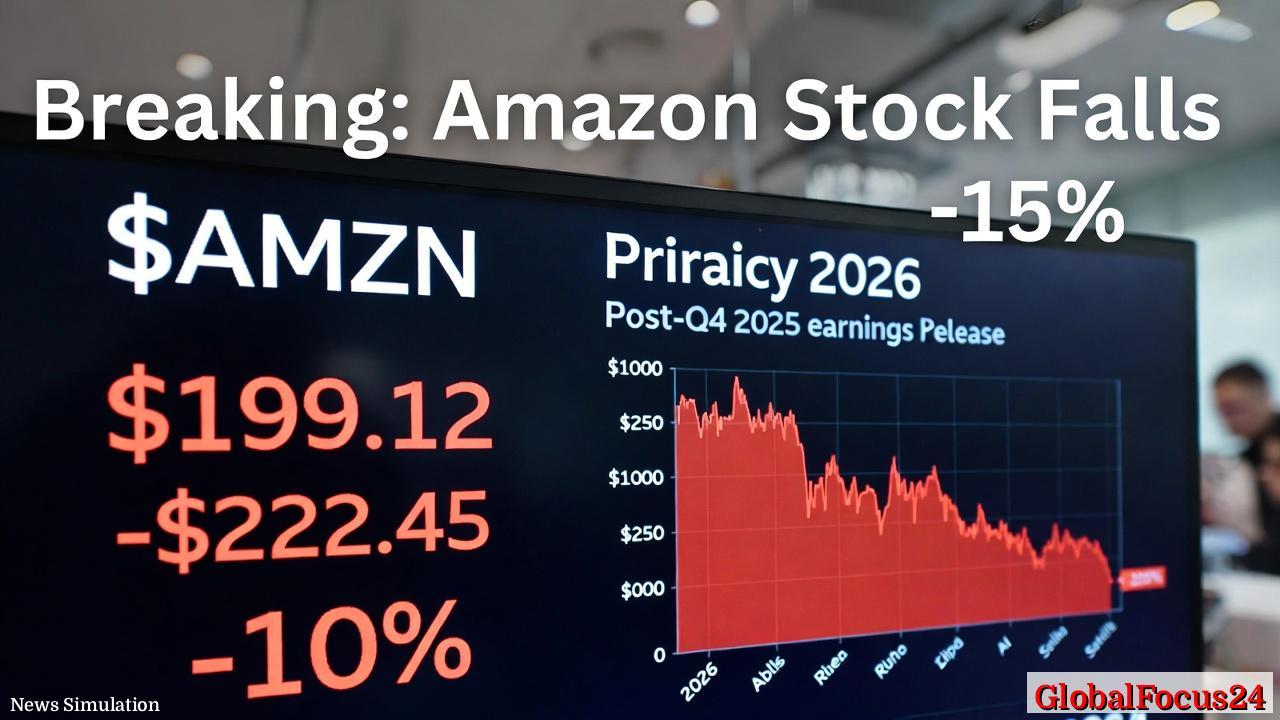
Amazon.com, Inc. faced a volatile trading session on February 5, 2026, as investor reactions to the company’s fourth-quarter earnings and a bold capital expenditure forecast dominateds. The stock closed at $199.12, down 10.49% from the prior close, after an opening at $222.45, a session high of $228.00, and a low of $198.22. The intraday move highlighted a growing debate among investors and analysts: can Amazon sustain rapid capital deployment while maintaining profitability and shareholder returns in an increasingly competitive technology landscape?
Contextualizing the Results
Amazon’s fourth-quarter results revealed revenue of $213.4 billion and earnings per share (EPS) of $1.95. The numbers stand in the context of a company that has long positioned itself as a platform economy cornerstone, spanning e-commerce, cloud computing, digital advertising, and growing hardware and services ecosystems. A standout across the report was Amazon Web Services (AWS) cloud revenue, which grew 24% year over year, underscoring continued demand for scalable cloud infrastructure in an era marked by digital transformation across industries.
The most striking element of the earnings release, however, was the forecast for approximately $200 billion in capital expenditures in 2026. This level of planned investment signals an aggressive expansion across multiple fronts, including artificial intelligence, semiconductors, robotics, and low-Earth orbit (LEO) satellite initiatives. While such a capex surge has the potential to accelerate long-term revenue growth and strategic moat creation, it also raises near-term concerns about cash flow, margin pressure, and the need for disciplined capital allocation to sustain shareholder value.
Historical Perspective
To understand the implications of a $200 billion capex plan, it helps to place Amazon’s spending in a historical frame. Over the past decade, Amazon has repeatedly used large-scale investment to cement leadership in high-growth segments—most notably AWS, which transformed how businesses run software, analytics, and data management. The company’s spend profile often reflects a strategic bet on long-term superiority rather than short-term earnings accelerators. In recent years, Amazon’s emphasis on automation, logistics infrastructure, and AI-driven services has complemented its core e-commerce platform, creating a dense network effect that’s challenging for competitors to replicate.
Amazon’s capital allocation philosophy contrasts with peers who have sought to optimize for near-term profitability or use buybacks to support the stock price. By committing to substantial expansions in AI, chip design and manufacturing capabilities, robotics, and space-based infrastructure, Amazon appears to be betting on a multi-decade growth runway rooted in platform economics, data center utilization, and an expanding universe of intelligent devices and services.
Economic Impact
- Cloud and enterprise services: AWS remains a major driver of Amazon’s overall profitability and cash generation. A 24% year-over-year AWS revenue increase signals sustained demand for cloud computing, data analytics, and AI infrastructure. For enterprises and public sector entities shifting to hybrid cloud models, AWS continues to represent a leading option for scalable workloads, machine learning training, and secure data storage. The flow-on effects include job creation in cloud engineering, cybersecurity, and software development, alongside heightened competition among cloud providers for enterprise contracts.
- AI and semiconductors: The planned capital outlay in artificial intelligence and chip initiatives positions Amazon to influence the broader AI hardware ecosystem. Investment in custom silicon and related AI accelerators could yield performance advantages for workloads across AWS, consumer devices, and edge computing deployments. If successful, such initiatives may contribute to lower marginal costs per compute unit and improvements in service quality, which in turn can foster higher usage and larger long-term customer lifetime value.
- Robotics and logistics: The push into robotics aligns with Amazon’s long-standing objective to automate fulfillment, distribution, and last-mile delivery. Advanced robotics can reduce reliance on human labor, improve speed, and enhance safety in warehouses, particularly during peak seasons. This channel not only improves efficiency but also potentially expands capacity to serve a growing order volume driven by e-commerce growth and cross-border trade.
- LEO satellite initiatives: The inclusion of low-Earth orbit satellites indicates a strategic tilt toward global connectivity, potential coverage enhancements for rural and remote areas, and new data services. A satellite backbone could augment terrestrial networks, support edge computing, and enable resilient communications for critical operations. The economic effects include potential partnerships with telecommunications providers, new revenue streams from data services, and potential synergies with other AWS offerings.
- Regional and global spillovers: Regions with robust digital economies, manufacturing sectors, and logistics hubs stand to benefit from improved infrastructure and AI-enabled services. Conversely, capital-intensive bets may introduce sensitivity to interest rate cycles and macroeconomic shifts, affecting funding costs and project timelines. Regions with favorable regulatory environments and skilled workforces could attract related suppliers, developers, and research initiatives.
Regional Comparisons
- North America: As Amazon’s home market and primary growth engine, the company’s capex plan is particularly consequential for the U.S. technology ecosystem. The scale of investment across AI, semiconductors, and logistics robotics is poised to attract ancillary industries, including hardware startups, software-driven logistics firms, and AI services firms. A thriving local supply chain may bolster regional job creation and productivity.
- Europe: The European market has been intensifying competition in cloud services, digital infrastructure, and data security. Amazon’s expansion could intensify price and capability competition among hyperscale providers. At the same time, European regulators and customers increasingly prioritize data sovereignty and ethical AI practices, shaping the deployment and governance of ambitious projects.
- Asia-Pacific: The APAC region presents a mix of mature markets and rising economies, with strong demand for cloud services, smart manufacturing, and e-commerce growth. Large-scale capex plans could cultivate partnerships with regional manufacturers, silicon suppliers, and research institutions, especially in countries prioritizing digital transformation and AI adoption.
- Emerging markets: In markets where digital adoption accelerates the most, Amazon’s investments in AI, robotics, and connectivity may catalyze new capabilities in logistics networks and cloud-based services. However, capital expenditure exposure also introduces sensitivity to currency fluctuations, political risk, and varying regulatory regimes.
Strategic Considerations
- Balancing growth and profitability: Investors will scrutinize how Amazon translates heavy capex into revenue and margin expansion over time. The company’s track record suggests it can leverage scale to improve operating leverage, but market conditions and competitive dynamics will influence the pace of earnings improvement.
- Pricing and services mix: The trajectory of AWS and other services will play a critical role. A durable cloud growth rate, coupled with AI-driven services, could offset some of the margin pressure from capital-intensive initiatives if pricing power and utilization trends remain favorable.
- Financing the plan: The source of funds for a $200 billion capex program matters to investors and credit rating agencies. Whether funded through cash flow, debt, or a combination, the plan will shape interest costs, leverage ratios, and credit metrics. Transparent communication about capital allocation strategy will be essential for maintaining investor confidence.
- Competitive landscape: The tech industry’s competitive dynamics—spurred by Microsoft, Google, Alibaba Cloud, and others—will influence the effectiveness of Amazon’s capex plan. Success will depend not only on spending but also on execution in product differentiation, customer experience, and time-to-market for new capabilities.
- Regulatory environment: Antitrust scrutiny, data privacy laws, and export controls could affect strategy. Proactive governance, robust compliance, and transparent disclosure will help mitigate regulatory risk as investments scale.
Public Reception and Market Sentiment
Public reaction to the capex-heavy forecast has been mixed. Some market participants view the plan as a bold bet on next-generation platforms, AI infrastructure, and global connectivity. Others express concern about the potential for near-term earnings volatility and the risk that hyper-growth investments may outpace revenue generation in the short term. Nevertheless, the long-term narrative remains compelling: a company steering its platform to become indispensable across commerce, cloud computing, and intelligent services.
Historical parallels can offer insight. In past cycles, major technology companies embarking on large-scale capital programs often faced initial stock volatility as investors weighed near-term earnings trajectories against longer-term growth potential. As operational milestones materialize and revenue growth proves durable, the market often reassesses the capex plan in light of realized efficiency gains, customer adoption, and competitive differentiation.
Operational Implications
- Supply chain and supplier ecosystem: A program of this magnitude will cascade through Amazon’s supplier network. Vendors of semiconductors, robotics components, software, and aerospace-grade materials could experience increased demand. Improved procurement scale may yield favorable terms, while production challenges could test supply resilience.
- Talent and human capital: Attracting and retaining top-tier talent across AI research, hardware engineering, and robotics will be critical. The plan could bolster job creation in technology hubs, universities, and research centers, reinforcing regional ecosystems that support advanced computing and automation.
- R&D and collaboration: Substantial capex often goes hand in hand with accelerated research and development. Collaborative initiatives with academic institutions, startups, and industry consortia may emerge, accelerating breakthroughs in AI training, chip design, and satellite communications.
- Customer experience and reliability: In the short term, heavy investment can influence service prices, delivery times, and product availability. If the capex translates into faster fulfillment, more reliable cloud services, and broader connectivity, customers may experience tangible improvements that reinforce brand loyalty and usage.
Future Outlook
Analysts will be monitoring several indicators to gauge the effectiveness of Amazon’s capex strategy. These include:
- AWS growth trajectory and operating margins as a function of scale and pricing power.
- Unit economics of logistics automation and robotics deployments.
- AI service adoption rates across enterprise and consumer segments.
- Progress and timelines for chip development and satellite initiatives.
- Cash flow generation, debt levels, and capital efficiency metrics.
In a macro environment characterized by evolving interest rates and shifting global demand, Amazon’s investment program represents a high-stakes bet on the enduring relevance of a platform-driven business model. If the investments pay off, the company could redefine cost structures and service capabilities across multiple industries, reinforcing its role as a central hub in a rapidly digitizing economy.
Regional and Global Implications
- For investors: The price action on February 5 underscored the market’s sensitivity to large-scale capex announcements. Long-term investors may view the plan as an opportunity to participate in a multi-year growth curve, while risk-averse investors may seek more clarity on how near-term cash flows will evolve.
- For suppliers and partners: The scale of Amazon’s planned investments could unlock demand for hardware components, software platforms, and logistics technologies. Suppliers may need to scale capabilities and deliver reliable performance to meet ambitious deployment timelines.
- For customers: End-user benefits could include faster shipping, enhanced cloud services, and new AI-powered features across devices and platforms. A more connected and capable ecosystem could amplify consumer engagement and enterprise adoption of Amazon’s services.
Historical performance and current trajectory suggest that Amazon’s leadership team intends to leverage its extensive infrastructure and data capabilities to deliver a comprehensive and differentiated value proposition. The capital expenditure plan, while ambitious, is positioned as a structural investment in the company’s ability to serve evolving customer needs and to sustain its competitive advantage in a dynamic market.
Additional Context: Regional Comparisons and Market Dynamics
- In the United States, the technology sector continues to drive productivity gains and job creation, even as macroeconomic conditions fluctuate. Large-scale capex programs in AI, cloud infrastructure, and robotics align with government and private sector priorities around digital modernization and national competitiveness.
- In Europe, stringent regulatory regimes and data protection standards influence how cloud providers deploy services and how satellite and connectivity initiatives are governed. Market participants will watch for progress in scaling operations while maintaining compliance with evolving standards.
- In Asia-Pacific, robust consumer markets and manufacturing ecosystems create a fertile ground for cloud adoption and AI-enabled services. Regional competition and supply chain resilience will shape the effectiveness of Amazon’s investment in AI chips and robotics.
- In emerging markets, the potential for transformative improvements in connectivity and logistics could have outsized effects on local economies. The capex plan may catalyze new capabilities in underserved regions, contributing to broader digital inclusion.
Conclusion
Amazon’s fourth-quarter performance, underscored by a substantial capital expenditure forecast, marks a pivotal moment for the company and the broader tech ecosystem. The forecast signals confidence in long-term growth enabled by artificial intelligence, advanced chips, robotics, and space-based connectivity. As the market weighs near-term earnings volatility against the promise of durable, platform-driven expansion, the coming quarters will reveal how effectively Amazon translates this ambitious plan into sustainable value for customers, employees, and shareholders. The unfolding narrative will be closely watched by market participants, policymakers, and industry observers seeking to understand how one of the world’s largest technology companies steers its vast operations toward a future defined by intelligent systems, automated logistics, and global connectivity.