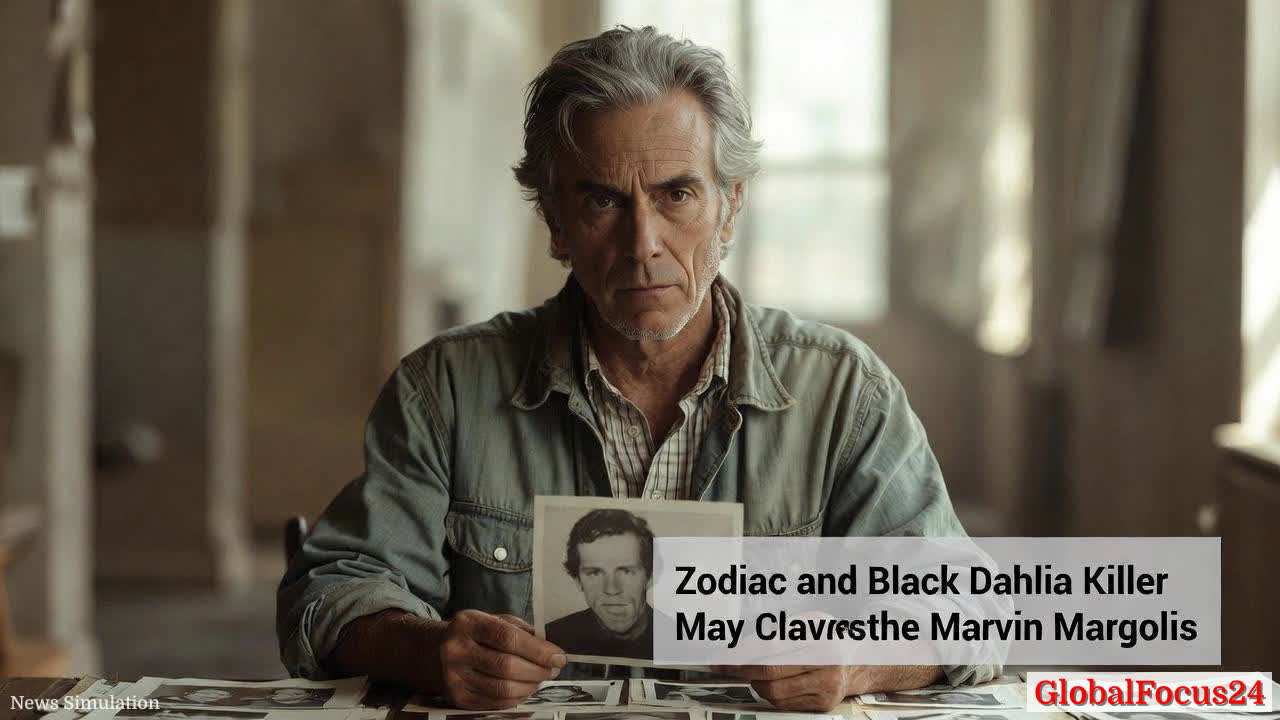
Zodiac and Black Dahlia Cases Linked by Amateur Sleuth in Unconventional Theory
An independent investigator, who traces cryptographic puzzles and historical crime narratives as a personal vocation, has advanced a provocative theory tying two of America’s most infamous unsolved murders to a single individual. The claim centers on the Zodiac killings in the late 1960s and early 1970s, and the long-cold Black Dahlia case from 1947, suggesting that the same man was responsible for both. While the assertion has sparked intense discussion within crime analysis circles, it also raises questions about methodology, evidentiary standards, and the role of amateur investigators in high-profile cases.
Historical Context: Two Cases, One Enigma
The Zodiac case emerged in Northern California in the late 1960s, enthralling the public with taunting letters, coded clues, and a chilling persona that seemed to operate beyond conventional police boundaries. The killer’s communications, some of which included complex ciphers, captured the public imagination and catalyzed a broader cultural fear about serial violence. The 1969-1970 period featured the most famous taunts, sightings, and confirmed victims, but definitive identification or a conviction has remained elusive for decades.
The Black Dahlia murder, now recognized as the 1947 murder of Elizabeth Short in Los Angeles, predated the Zodiac era but has continually haunted public memory as a benchmark for Hollywood crime lore. The case was marked by sensationalized media coverage and a theater of rumors, with investigators over the years compiling witness statements, forensic notes, and procedural records that reflect both the era’s investigative limitations and the persistent allure of a mystery unsolved.
In this latest assertion, the investigator contends that a single individual—an American man who lived in the Midwest and later moved across the country—engineered both crimes, leveraging a background in military medicine and a life marked by shifting residences. The theory draws on a hybrid of cryptographic analysis, cross-referencing of public records, and reconstructive crime-scene considerations. As with many high-profile cold cases, the narrative marries technical sleuthing with long-form storytelling about motive, opportunity, and capability.
Methodology: From Cipher to Candidate
The investigator began with a well-known Zodiac cipher, a 13-symbol sequence that starts with the phrase “My name is” and has long challenged cryptographers and amateur codebreakers alike. Utilizing contemporary artificial intelligence tools and programmatic name-generation methods, the researcher produced millions of potential 13-letter names. The process, while computationally intensive, is a common starting point in modern cryptanalytic work when attempting to map symbolic puzzles to possible real-world identifiers.
Crucially, the approach then shifted from code-breaking to corroboration. The candidate list was systematically narrowed through a multi-layered triangulation: witness descriptions from unsolved elements of the Zodiac narrative, specific crime details, and public-records research. The method favored a discipline of reducing broad possibilities into a single plausible figure through converging lines of evidence rather than relying on a single sensational clue.
A pivotal turn in the argument is the linkage to Marvin Margolis, who used the alias Marvin Merrill after involvement in research surrounding the early Black Dahlia case. The investigator’s narrative claims that Margolis’s military background as a Navy medic—his battlefield surgical training and exposure to amputations—could theoretically align with the alleged killer’s apparent anatomical knowledge observed in certain crime-scene depictions.
Regional and Temporal Considerations
The Zodiac killings were concentrated in Northern California during a period when the Bay Area and adjacent regions experienced rapid population growth, shifting demographics, and evolving urban infrastructure. The case unfolded within a climate of investigative resource constraints and evolving forensics. The Black Dahlia murder, by contrast, occurred in Los Angeles during the late 1940s, a time of postwar social tension, sensational press coverage, and a different state of medical and forensic science.
If the same individual indeed linked the two cases, it would suggest a trajectory of mobility across states and a willingness to adapt or reinvent personal identity. The theory posits that the suspect’s post-war relocation to California and his later use of an alias reflect a deliberate attempt to distance his past, a pattern that could be described as a form of identity engineering. The geographic spans involved—Midwestern roots, West Coast residence, and transient periods across the country—would fit a broader historical pattern of mid-20th-century migration within the United States as families and individuals sought new opportunities in postwar America.
Economic and Social Implications
While the immediate economic impact of attributing landmark crimes to a single person may seem abstract, the broader consequences touch on several areas:
- Public memory and tourism: Regions associated with famous unsolved cases often experience enduring tourist interest and media attention, influencing local economies and cultural narratives.
- Forensic science investment: High-profile cases frequently catalyze investments in investigative capabilities, including cryptography, digital forensics, and interagency data-sharing infrastructure.
- Police resource allocation: The prospect of a single serial offender operating across multiple jurisdictions could affect how agencies coordinate case reviews, share intelligence, and prioritize cold-case initiatives.
- Historical scholarship: Reframing a pair of emblematic crimes invites renewed archival research, including review of police reports, psychiatric assessments, and postwar military records.
Credibility and Skepticism
The claim has generated a spectrum of responses within professional and lay communities. Supporters emphasize the circumstantial strength of cross-domain connections—the cipher solution, the revival of archival newspaper reports, and the alignment of Margolis’s wartime background with elements of the case narratives. In interviews and public statements, some observers highlighted the breadth of corroborating threads as indicative of a well-constructed theory.
Skeptics point to several critical concerns. First, the leap from cipher interpretation to a real-world suspect relies on a chain of inferences that can be vulnerable to confirmation bias. Second, the quality and completeness of historical records—from wartime medical duties to postwar housing and aliases—can be uneven, creating gaps that invite alternative explanations. Third, the absence of direct forensic evidence tying Margolis to the victims or scenes remains a significant barrier to establishing a definitive causal link.
Notably, a former high-ranking cryptanalyst with national-level credentials publicly acknowledged the investigator’s work, underscoring that cryptographic problems can yield surprising results when approached with rigorous, iterative methods. Yet even among experts, consensus on a link between the Zodiac and Black Dahlia cases has not formed, underscoring the difference between plausible patterns and demonstrable classification in criminal investigation.
Expert perspectives emphasize a measured stance: intriguing patterns warrant careful documentation and independent verification, but extraordinary claims demand extraordinary levels of corroboration. The timeline of Margolis’s life, the specifics of his aliases, and the retrospective interpretation of his handwriting, drawings, or equipment descriptions require meticulous archival cross-checking before any binding conclusions can be drawn.
Narrative Elements and Public Reaction
Public fascination with unsolved crimes often thrives on the drama of a potential breakthrough. The Zodiac cipher, the Black Dahlia’s unresolved tragedy, and the specter of a single culprit across decades create fertile ground for speculative storytelling. Public reaction to new theories can include renewed interest in archival material, re-examinations of old case files, and calls for interagency cooperation to revisit dormant leads.
Media portrayals historically have amplified sensational aspects—uncovering correlations between crimes, highlighting the killer’s purported knowledge of anatomy, or presenting a solitary genius who uncovered “hidden truths.” In responsible journalistic practice, such narratives should be balanced with transparent recognition of limitations, rigorous sourcing, and a clear separation between hypothesis and proof.
Looking Ahead: What It Would Take to Move from Theory to Confirmation
To move from an intriguing theory to a widely accepted conclusion, several steps would be essential:
- Independent verification: Researchers outside the original investigator would need to replicate the cross-referencing process, including cipher interpretation, source validation, and the alignment of timelines with verifiable records.
- Forensic linkage: Any claim of a single offender across separate cases would require material evidence that could be independently tested or corroborated, such as DNA, handwriting analysis, or reliable exhibit correlations with recovered artifacts.
- Archival access: Comprehensive access to police reports, military service records, housing histories, and witness affidavits would be necessary to confirm or refute key nodes in the proposed linkage.
- Professional review: Endorsement by established law enforcement professionals and recognized forensic scientists, based on transparent methodology and reproducible findings, would carry substantial weight in credibility assessments.
A Note on Responsible Inquiry
The ongoing nature of such discussions highlights the importance of rigorous standards when evaluating historic crimes. Amateur investigators contribute to public interest and can inspire constructive curiosity; however, establishing verifiable conclusions about violent crimes requires methodical evidence, peer review, and careful detachment from sensational storytelling. The tension between compelling narrative and empirical certainty is a perennial feature of crime analysis, especially when the cases in question have endured in the public imagination for decades.
Regional Comparisons and Global Context
Across the United States, cold-case investigations have benefited from advances in data analytics, digital archives, and cross-jurisdictional collaboration. Regions with robust archival repositories and cooperation among city, county, and state authorities often produce more fertile ground for reexaminations of unsolved cases. Beyond the United States, comparable historical mysteries have likewise attracted renewed scrutiny as data-driven approaches and open-access archives expand the possibilities for reinterpreting old evidence. In all cases, the responsible path remains one that emphasizes corroborated connections over speculative associations.
Public Risk and Ethical Considerations
Publicly circulating theories about real-world individuals connected to violent crime must balance curiosity with respect for victims and families. The potential for misidentification, wrongful implications, or renewed trauma underscores the need for cautious publication and careful sourcing. Ethical reporting should place victims’ dignities at the forefront, avoid sensational language, and clearly differentiate between hypothesis and proven fact.
Conclusion: A Compelling Narrative, but a Call for Verification
The proposition that a single, relatively little-known postwar figure could be the perpetrator behind both the Zodiac and Black Dahlia cases represents a bold synthesis of cryptography, archival research, and historical inquiry. It captures the enduring human desire to resolve mysteries that have persisted for generations. Yet the strength of any such claim rests on rigorous, reproducible evidence and independent validation. As investigators continue to refine methods and as archives yield new details, the evolving story will either gain credible traction within the professional community or remain a provocative hypothesis that invites further investigation and critical scrutiny. In the meantime, the dual mysteries continue to endure as powerful reminders of the limits of certainty and the enduring appeal of a mystery that resists easy answers.