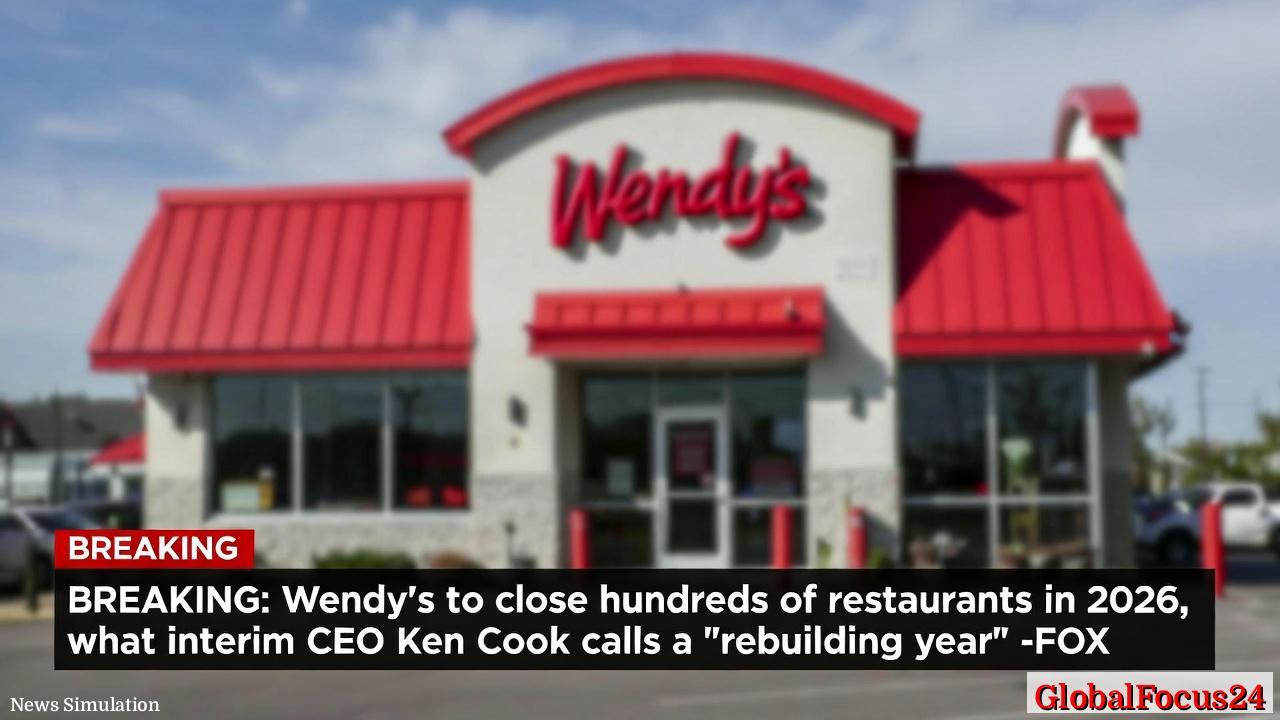
Wendy’s to Close Hundreds of Restaurants in 2026 as InterimCEO Calls 2026 a “Rebuilding Year”
In a bold reorientation of its growth strategy, Wendy’s announced plans to close hundreds of restaurants in 2026, signaling a strategic pivot from rapid expansion toward systemic renovation and long-term resilience. The decision, disclosed by interim Chief Executive Ken Cook, marks a pivotal moment for a company with a long-standing footprint in the fast-food sector and a history of both rapid growth and occasional market retrenchment. Industry analysts describe the move as a calculated effort to reallocate resources toward modernizing operations, upgrading technology, and enhancing customer experience in core markets while streamlining underperforming locations.
Historical context: a shift from expansion to consolidation
Wendy’s has navigated waves of expansion and contraction since its founding in the 1960s. The brand’s early growth relied on aggressive location strategy, franchise partnerships, and a standardization of the menu that helped it scale quickly across the United States and into international markets. In the 1990s and 2000s, the chain pursued a more aggressive real estate strategy, often prioritizing new store openings over refurbishments of aging sites. The 2010s brought a wave of modernization, with the introduction of upgraded digital ordering platforms, revamped interior designs, and a focus on “fast-casual” cues within traditional quick-service formats. Yet, as consumer expectations shifted toward digital convenience, delivery reliability, and fresher menu options, gaps emerged in some locations where the experience failed to keep pace with competitors.
In this broader arc, the 2020s intensified the imperative to optimize the portfolio. Market conditions, supply chain volatility, and rising labor costs underscored the cost of maintaining underperforming sites. Wendy’s decision to close a substantial number of locations in 2026 aligns with a long-standing industry trend where mature brands recalibrate their store counts to protect profitability and invest in higher-return formats. The move also mirrors a wider industry pattern of portfolio optimization observed across quick-service brands that face evolving consumer preferences, inflationary pressures, and the accelerating importance of digital channels.
Economic impact: balancing short-term costs with long-term gains
The planned closures reflect a broader strategy to boost profitability by reducing operating expenses tied to underperforming locations. Analysts expect a combination of cost savings from lease renegotiations, labor optimization, and more efficient supply chains. While the immediate effect will be a hit to near-term sales and an anticipated temporary reduction in same-store sales growth, the company projects a steadier, higher-quality revenue trajectory over the medium term.
Key financial considerations include:
- Capital reallocation: Resources previously spread across an expansive store network will be redirected toward higher-return initiatives such as modernized kitchens, automated order-taking, and enhanced drive-thru throughput. Those investments are intended to improve average unit volumes and reduce service times, helping to compete with other major fast-food brands that have prioritized speed and reliability.
- Digital and delivery acceleration: The closures free up capital to expand digital platforms, including mobile ordering, loyalty programs, and partnerships with delivery aggregators. In a market where consumers increasingly expect seamless omnichannel experiences, these upgrades are critical for maintaining relevance and competitive differentiation.
- Real estate optimization: A leaner footprint can reduce fixed costs and improve asset utilization. Higher-traffic, higher-growth markets may receive renewed emphasis, with stores upgraded to reflect contemporary brand standards and sustainability-minded design elements that appeal to a broad customer base.
- Labor strategy: The reductions will influence staffing structures, potentially enabling more efficient scheduling, higher per-store throughput, and better alignment with peak demand periods. The industry has been grappling with labor shortages and wage pressures; a streamlined store network can mitigate some of these pressures by concentrating talent where it yields the greatest impact.
Regional context: how different markets factor into the plan
The United States remains the centerpiece of Wendy’s operations, with a network of stores that spans urban centers to suburban corridors. In the past decade, regional performance has shown divergence: fast-growing metro areas with dense competition often demand continuous reinvestment to maintain market share, while some rural or smaller markets face slower growth and demand adjustments that can render certain locations economically marginal.
Internationally, Wendy’s has pursued selective expansion in regions with favorable demographic trends and robust consumer spending. In markets where brand recognition is strong, the company has found opportunities to tailor menus and service models to local tastes while maintaining core brand identity. As part of the 2026 strategy, international locations are subject to careful review to determine which sites align with long-term profitability goals. The company stresses that not all closures will be domestic; some reductions will occur overseas where performance economics warrant consolidation or exit.
Regional comparisons reveal a few notable patterns:
- Market maturity: In mature markets with saturated competition, incremental gains require higher investment for differentiation. The closures will target underperforming stores in these areas to reallocate resources toward higher-return opportunities.
- Demographics: Regions with aging populations and slower population growth may experience reduced traffic to traditional fast-food formats, prompting a shift toward more efficient models or relocation of stores to higher-growth corridors.
- Economic resilience: Areas with stronger consumer spending and higher wage levels tend to sustain profitability even as other markets tighten. The company’s redeployment toward these high-opportunity zones is a common strategy across the industry.
Operational implications: modernization across the board
Beyond closed doors, Wendy’s emphasizes a sweeping modernization program designed to elevate guest experience and operating efficiency. Central to this effort is a comprehensive overhaul of kitchen equipment, point-of-sale systems, and order fulfillment processes. By deploying closed-loop inventory and analytics-driven scheduling, the company aims to reduce waste, shorten wait times, and improve consistency across remaining locations.
Key operational priorities include:
- Technology integration: Upgraded POS systems, digital menu boards, and integrated loyalty programs will enable smoother transactions, personalized offers, and more accurate data capture for marketing and operations. The digital backbone is expected to support more precise demand forecasting and dynamic pricing where applicable.
- Customer experience: Modernized interiors, improved lighting, sound dampening, and clean, welcoming environments contribute to a more enjoyable visit. Improved drive-thru design, multiple ordering channels, and faster service times will be central to retaining brand loyalty.
- Menu strategy: A refreshed menu strategy aims to balance profitability with consumer demand for value and novelty. While core offerings will remain, limited-time items and regional flavors may be introduced selectively to test appeal and optimize margins.
- Sustainability: A focus on energy efficiency, waste reduction, and responsible sourcing aligns with broader consumer expectations and regulatory trends. Stores selected for renovation will showcase sustainability improvements as part of the brand’s long-term positioning.
Public reaction and consumer sentiment
Public reaction to the announcement has been mixed, reflecting concern about job losses and the social impact on communities that rely on Wendy’s presence. Local governments, franchisees, and workers’ groups have called for transparency around closure timelines, severance packages, and opportunities for relocation within the company’s network. At the same time, many consumers express cautious optimism about the prospect of faster service, cleaner stores, and more consistent menu options in the remaining locations. For some loyal customers, the status quo is less important than the reliability and quality of the dining experience, which the company asserts will be strengthened through the rebuilding year.
Industry significance: how Wendy’s move compares to peers
The decision to close a large number of stores positions Wendy’s alongside other legacy brands that have undertaken portfolio optimizations to restore profitability and reinvest in core capabilities. Competitors have pursued different paths, with some expanding through smaller-format stores, others emphasizing digital integration and delivery networks, and a few prioritizing geographic refocusing to capture high-density urban markets. Wendy’s approach—targeted closures paired with aggressive modernization—resonates with a broader industry shift toward efficiency, resilience, and experience-driven growth.
From a macroeconomic perspective, the fast-food sector continues to navigate inflationary pressures, rising labor costs, and the ongoing transformation of consumer dining habits. As the U.S. and global economies adjust to a post-pandemic landscape, the ability to balance affordability with quality and speed becomes increasingly critical. Wendy’s strategy can be viewed as a test case for how established brands recalibrate their portfolios to thrive in a shifting economic environment.
Supply chain considerations
The timing of store closures intersects with ongoing supply chain realities. Operations teams will need to adapt to fluctuations in commodity prices, sourcing reliability, and logistical costs. By concentrating procurement in a smaller set of high-traffic locations, Wendy’s aims to achieve better vendor terms, reduce delivery frequencies, and streamline inventory management. The company’s emphasis on automation and digital forecasting could mitigate some of the volatility that has challenged the broader sector in recent years.
Management philosophy: leadership, accountability, and transparency
Ken Cook, stepping into the interim CEO role during this critical transition, has framed 2026 as a rebuilding year rather than a period of retreat. His leadership message centers on accountability, a focus on what the business does best, and a disciplined approach to capital allocation. The announcement reflects a management philosophy that prioritizes long-term value creation over short-term gains, a stance that resonates with investors looking for sustained profitability and strategic clarity.
The long arc of return to growth will depend on multiple factors, including execution accuracy, macroeconomic stability, and the speed with which the organization can translate store-level learnings into scalable best practices. History demonstrates that successful portfolio refinements can restore investor confidence, improve margin profiles, and accelerate pace of innovation when executed with discipline and clear communication.
Conclusion: a measured course toward sustainable profitability
Wendy’s decision to close hundreds of restaurants in 2026 is a defining moment that signals a deliberate shift from volume-driven growth to value-driven resilience. By concentrating capital on modernization, technology enhancements, and high-potential markets, the company aims to strengthen its competitive position in a dynamic industry landscape. The strategy acknowledges the realities of an evolving consumer base, inflationary pressures, and the importance of a seamless, modern dining experience.
As the year unfolds, observers will watch how the closures unfold across regions, how quickly renovated locations begin to deliver improved performance, and how the company manages the transition for employees and communities affected by the changes. If the rebuilding year achieves its intended balance between efficiency and guest satisfaction, Wendy’s could emerge with a leaner, more efficient footprint that supports sustainable profitability and a refreshed brand narrative in a market where pace, reliability, and value increasingly define consumer choice.