Hundreds of Los Angeles Hospice Licenses Suspended Amid Expanding Federal Fraud Investigation
Sweeping Suspensions Hit Health Care Sector
Federal authorities have suspended licenses for 447 hospice facilities and 23 home health agencies across the Los Angeles area in what officials describe as one of the largest anti-fraud operations ever undertaken in California’s health care system. The crackdown, announced Wednesday by Vice President JD Vance’s anti-fraud task force, targets an estimated $600 million in fraudulent activity connected to Medicare billing.
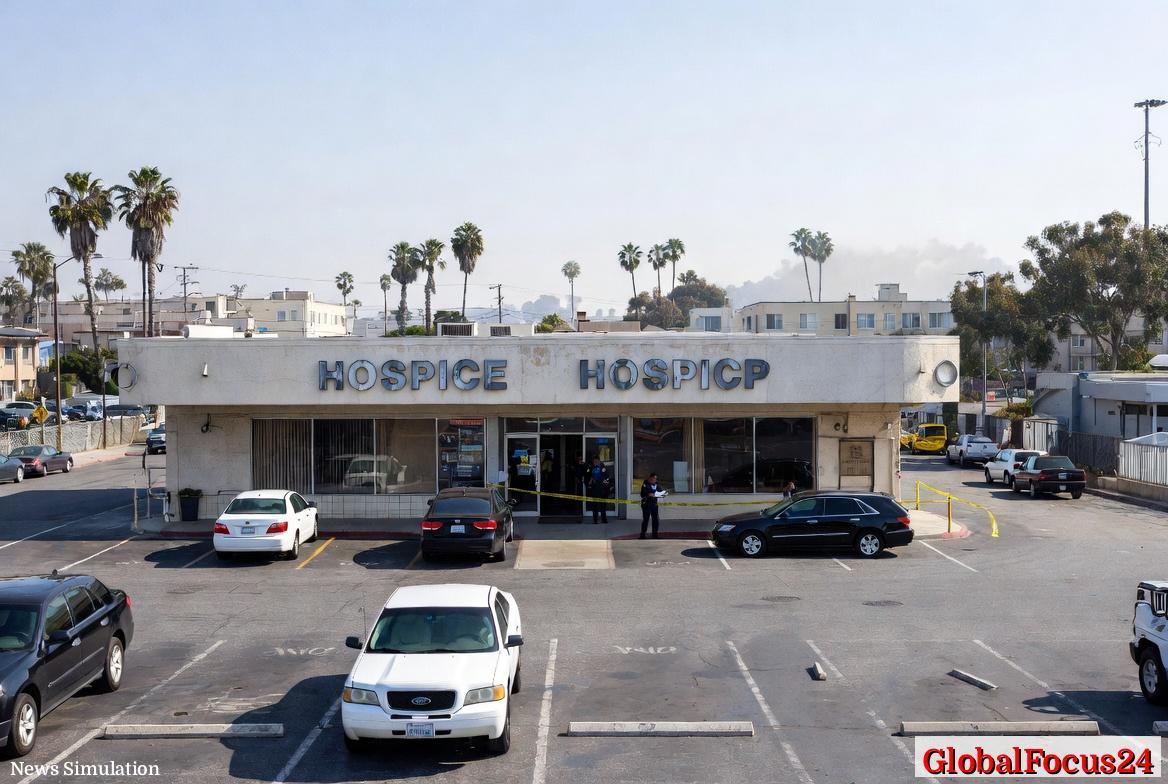
Investigators have uncovered a network of sham hospices operating out of empty storefronts, parking lots, auto parts stores, and even addresses that do not physically exist. In many cases, owners of these facilities allegedly billed Medicare for services provided to patients who were either deceased or never received hospice care at all. The scale of the suspensions highlights a rapidly expanding probe that federal officials say could lead to criminal charges and permanent closures for dozens of providers.
A White House official, speaking on condition of anonymity, signaled that the latest operation is just the beginning: “The anti-fraud task force is reviewing and pursuing every possible lead. These suspension numbers, and the dollar values saved, are only going to increase.”
California’s Health Care Fraud Crisis Deepens
The suspension wave comes less than two weeks after Centers for Medicare & Medicaid Services (CMS) Administrator Dr. Mehmet Oz announced a separate action to halt operations at 221 hospice providers statewide. Whether the newly announced suspensions are in addition to those April 2 closures remains unclear, but officials say the cumulative impact could force a comprehensive restructuring of California’s hospice industry.
Dr. Oz confirmed Wednesday that “every single hospice in California is now under investigation,” signaling the breadth of concern within CMS over a pattern of suspicious billing and phantom patients across the state. Agents from the Department of Health and Human Services Office of Inspector General (HHS-OIG) and the Federal Bureau of Investigation have joined the effort, underscoring the federal government’s heightened focus on Medicare fraud concentrated in Los Angeles County.
The crackdown marks a dramatic escalation of federal oversight. CMS has shifted away from its long-standing “pay and chase” model—which allowed claims to be processed and later audited—to what Oz described as a “stop and clot” strategy. Under the new approach, Medicare payments to clinics under suspicion are being immediately frozen, cutting off cash flow before fraudulent operators can withdraw or redistribute funds. The “clot” method is being hailed by officials as a preventive measure that could save billions in taxpayer dollars.
The Physician at the Center of the Investigation
Among the most striking revelations is the case of Dr. Fariba Javaherian, a physician linked to at least 63 hospice facilities across California as a medical director, attending physician, or consultant. Federal records show her National Provider Identifier (NPI) was used for more than 6,000 claims totaling nearly $36 million during the past year alone. Between January 2018 and September 2025, her identifier appeared on over 31,000 claims at 130 different agencies, generating roughly $173 million in total billings.
Authorities allege that Javaherian may have lent her credentials to multiple hospice networks in exchange for compensation, allowing them to submit fraudulent claims under her name. Her Medicare billing privileges have now been revoked, and 16 hospice facilities directly tied to her have been suspended. The FBI is working with CMS investigators to determine how many of those organizations were part of coordinated fraud schemes that exploited Medicare’s reimbursement system.
An official familiar with the investigation said that this pattern—where a single provider’s credentials appear on claims from hundreds of different agencies—has become a key marker in identifying hospice fraud rings. The case also underscores the risk posed by gaps in the federal credentialing system, which historically allowed providers to affiliate with multiple facilities without real-time verification of their activity.
Economic Ripple Effects Across Southern California
The suspensions have sent shockwaves through the Los Angeles health care economy. Hospice and home health services represent a major segment of regional health spending, with analysts estimating that fraudulent operations account for as much as $3.5 billion annually in Southern California alone. Legitimate providers now face heightened scrutiny, with billing delays and compliance audits slowing reimbursements throughout the sector.
Industry representatives fear the fallout may hurt vulnerable patients who rely on in-home medical and end-of-life care. Some legitimate firms, now caught in sweeping verification measures, report that payments have been temporarily withheld as part of the CMS freeze. Health care advocacy groups are calling for clearer communication between federal agencies and licensed providers to prevent service interruptions.
Nevertheless, government officials argue that the crackdown is essential to restoring public trust. Fraudulent billing practices inflate costs for taxpayers, divert resources from patients in genuine need, and distort Medicare’s long-term sustainability. By halting suspect payments early, officials say they hope to prevent criminal entities from laundering money through complex shell company structures—a problem that has plagued California’s Medicare system for more than a decade.
Historical Context: The Rise of Hospice Fraud
Hospice and home health care fraud in California has been a persistent problem dating back to the early 2000s, when rapid growth in elderly and homebound populations created lucrative reimbursement opportunities under federal health programs. Loopholes in licensing and billing oversight allowed criminal operators to establish networks of nominal hospices that appeared legitimate on paper but provided little to no actual care.
Between 2010 and 2018, CMS and the Department of Justice launched multiple task forces targeting similar schemes in Miami, Houston, and Dallas—cities historically associated with high rates of Medicare fraud. However, the Los Angeles metropolitan area emerged as the new epicenter in recent years. Experts attribute this shift to dense urban demographics, high concentrations of retirees, and fragmented oversight across state and county licensing agencies.
In response, Congress has expanded federal whistleblower protections and authorized CMS to strengthen its authority to suspend payments without formal court approval when fraud is suspected. These moves have enabled the current wave of enforcement actions to be executed more swiftly than earlier efforts.
Comparing Regional Enforcement Trends
The Los Angeles investigation mirrors actions taken nationwide to combat health care fraud. In Texas, federal prosecutors have indicted administrators tied to home health scams valued at more than $250 million since 2022. Florida’s hospice market also underwent a major purge in 2023, when more than 180 facilities lost accreditation after repeated violations. However, the California operation stands out for its scale and coordination across federal, state, and local authorities.
Health economists note that Los Angeles County’s unique mix of small, independently owned hospice agencies presents higher vulnerability to abuse than regions dominated by large hospital systems. Many operators entered the market during the pandemic-era surge in demand for remote and end-of-life care, when federal emergency waivers loosened credentialing requirements to address shortages. Those temporary measures, experts say, inadvertently opened the door for fraudulent claims to multiply.
Broader National and Fiscal Implications
The estimated $600 million in suspended payments represents only a fraction of potential exposure. Officials suggest that nationwide hospice and home health fraud could exceed $10 billion annually if similar patterns hold across metropolitan areas. Federal watchdogs view the Los Angeles operation as a blueprint for further crackdowns in cities such as Chicago, Atlanta, and Phoenix, where billing anomalies have recently surged.
Stopping fraud before funds are disbursed could generate substantial savings for Medicare and Medicaid, programs that together account for roughly one-third of the federal budget. Analysts project that even a modest 2 percent reduction in fraudulent payments would yield several billion dollars in yearly savings—money that could be redirected toward legitimate patient care, provider reimbursements, and new technology systems aimed at preventing future abuses.
As CMS and the Vice President’s task force intensify enforcement, they face a delicate balancing act: aggressively pursuing fraud while ensuring that authentic hospices continue to serve dying patients with compassion and dignity. That tension is particularly acute in communities like East Los Angeles, where hospice organizations often provide culturally tailored care and bilingual nursing services for families navigating the end-of-life process.
Public Reaction and Next Steps
Public reaction in Los Angeles has been mixed—ranging from outrage over the scale of deception to concern about disruptions in patient care. Families who had placed loved ones in hospice programs are seeking reassurances that their care will continue uninterrupted. Meanwhile, state health officials have opened hotlines to assist patients whose facilities were impacted, helping them transfer to verified agencies that remain operational.
Vice President Vance’s office has confirmed that investigations will continue “until every fraudulent operator is shut down.” The task force has pledged to recover illegally obtained funds and pursue civil and criminal charges where warranted. For now, the suspensions stand as one of the most decisive federal interventions in California’s health care landscape in decades.
As the investigation deepens, more suspensions and potential indictments are expected. The unfolding crackdown not only reshapes the state’s hospice industry but also marks a turning point in the federal government’s approach to combating health care fraud—a message that officials insist will resonate far beyond Los Angeles.