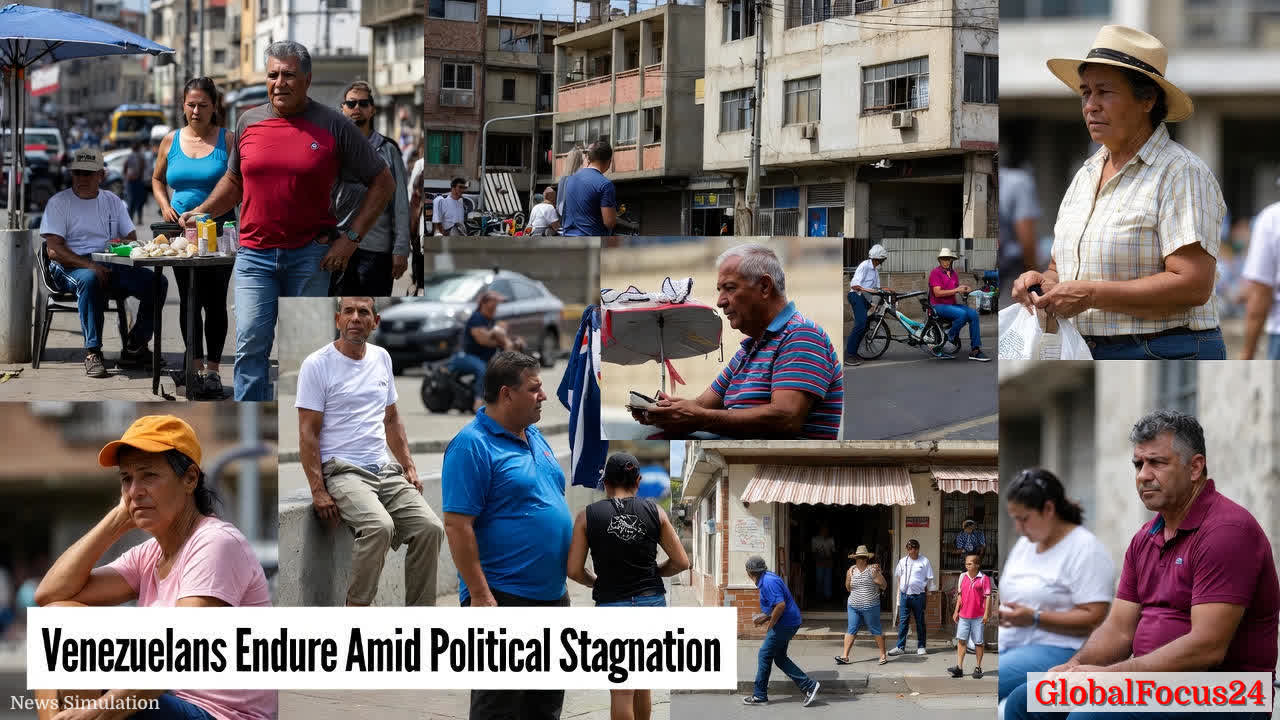
Venezuelans Endure Amid Political Stagnation
Venezuela’s political landscape has settled into a prolonged stagnation, marked by repeated electoral rhetoric, sporadic protests, and a steady grind of daily life that centers on survival. After years of economic upheaval, international sanctions, and shifting alliances, many Venezuelans have learned to navigate uncertainty with a pragmatic mindset. The result is a nation that remains politically unsettled on the surface, yet deeply attentive to practical concerns that influence every resident’s daily routine—from food availability to access to healthcare and the reliability of basic services.
Historical context helps illuminate the current moment. The country’s modern political arc has repeatedly collided with cycles of upheaval and negotiation. The early 2000s featured bold public demonstrations and a series of constitutional and electoral moves that reshaped the balance of power. In the ensuing decade, economic volatility amplified political fault lines, driving mass migrations, divergent regional responses, and a patchwork of local governance strategies. When international pressure and domestic discontent converge, the result is a political environment where rhetoric often outpaces reform, and policy changes unfold at a measured pace, if at all. This pattern, repeated across administrations, has left many voters weary of promises that appear to recede behind new timelines and new set of contingencies.
The economic dimension remains central to understanding daily life in Venezuela. Persistent inflation, liquidity shortages, and fluctuating access to essential goods have reshaped consumer behavior and financial planning. Households commonly prioritize essential needs, with budgeting guided by the relative availability of staples, medical supplies, and energy resources. Local markets often reflect a mosaic of formal and informal supply chains, where small businesses and street vendors adapt to shifting import regimes and currency dynamics. In major urban centers and rural districts alike, residents demonstrate resilience through diversified sourcing strategies—employing a mix of formal employment, informal work, remittances, and community networks to bridge gaps created by national policy oscillations.
The regional economic impact reveals both shared challenges and distinctive local responses. In coastal and border areas, trade patterns are particularly sensitive to regulatory flux and international demand for commodities. Inland regions, historically tied to agriculture and extractive industries, experience varying degrees of price volatility and infrastructure constraints. Across regions, access to electricity and reliable water supply remains a critical determinant of economic activity, influencing everything from small enterprise operations to school attendance and healthcare delivery. Local governments frequently adopt pragmatic approaches to service provision, prioritizing maintenance of essential infrastructure and targeted social programs that can be deployed with relative speed given administrative capacity and funding sources.
Public sentiment toward the political process has evolved in nuanced ways. While large-scale demonstrations have diminished in frequency, civic engagement persists through community organizations, neighborhood councils, and grassroots committees that mobilize around practical concerns—sanitation, schooling, and vaccination campaigns, among others. This form of civic life underscores a shift from national-level mobilization toward community-level problem solving, especially in under-resourced municipalities where residents collaborate to fill gaps left by slower policy reform. Public reaction to policy announcements often centers on practical implications rather than rhetoric, with residents scrutinizing how new measures would affect price stability, employment prospects, and access to social services.
From a regional comparison perspective, several neighboring countries illustrate parallel experiences of political inertia interacting with economic stress. In some markets, stabilization initiatives and structural reform have yielded modest improvements in macroeconomic indicators, though social and political reconciliation remains a continuing challenge. In others, political transitions have sparked temporary bursts of optimism followed by recalibration as realities set in. These patterns offer a lens through which observers can assess Venezuela’s trajectory: sustained endurance among the populace, tempered expectations about rapid reform, and a cautious optimism anchored in tangible improvements—like steady electricity supply, predictable medicine availability, and reliable cash or digital payment options.
Policy developments in response to ongoing challenges reflect a blend of continuity and change. Governments and international partners frequently emphasize infrastructure investment, social protection programs, and efforts to stabilize currency and price levels. The effectiveness of these measures hinges on a spectrum of factors, including political will, international sanctions, domestic capacity, and the broader global commodity market. When successfully coordinated, these strategies can alleviate acute pressures and create a more predictable environment for households and small businesses. Even so, the pace of improvement remains a critical concern for citizens who measure progress in weeks and months rather than years.
The human story behind these macro trends is the major driver of the narrative. Families adjust routines to manage energy outages, transit disruptions, and healthcare access during peak periods of strain. Students and workers adapt to irregular service provision and the uncertain cadence of public programs. Community leaders, teachers, and healthcare workers often shoulder additional responsibilities, sustaining networks that support vulnerable members of society. In many neighborhoods, residents share resources, exchange information, and coordinate mutual aid to weather periods of heightened stress. This social fabric, though tested, endures as a stabilizing force amid political stasis and economic fluctuation.
Looking ahead, observers identify several potential inflection points that could alter the present equilibrium. International diplomacy and sanctions policy will continue to influence economic performance and external leverage. Domestic governance reforms, if implemented with clarity and consistency, could improve the predictability of markets and services, fostering a more confident climate for investment and consumer activity. Population dynamics, including migrations and demographic shifts, will shape regional needs and opportunities, particularly in urban centers where demand for housing, transportation, and healthcare remains acute. In parallel, the growth of grassroots initiatives and local partnerships may drive incremental improvements in service delivery and resilience, contributing to a gradual reshaping of the social contract between citizens and the state.
Historical context, economic realities, and regional comparisons together suggest a trajectory defined by endurance and measured progress rather than rapid transformation. The narrative of a country enduring through political stagnation is not simply a chronicle of disillusionment; it reflects a population that continually adapts to constraint with practical strategies that preserve stability and dignity. The resilience displayed across communities—whether through informal economies, neighborhood alliances, or persistent civic engagement at the local level—illustrates a form of social capital that often underpins longer-term recovery.
In terms of media and information ecosystems, the public’s consumption patterns have evolved alongside access to digital platforms and traditional outlets. People increasingly rely on social networks, messaging apps, and independent content creators to verify facts, share experiences, and coordinate responses to evolving conditions. This shift underscores the importance of credible reporting and transparent communication about policy changes, service delivery, and economic conditions. Journalists and researchers who document ongoing developments play a critical role in translating complex policy moves into accessible information for everyday readers, while maintaining an objective, nonpartisan stance that informs rather than inflames.
Economic indicators to watch include inflation trajectories, currency stability, and the affordability of essential goods and services. While broad macroeconomic data can be opaque, indicators such as consumer price changes, import availability, and wage trends offer insight into the living standards of households. An emphasis on inclusive growth—policies that support small businesses, provide targeted social protection, and improve access to healthcare—can act as a stabilizing force amid uncertainty. Regional cities and rural municipalities may experience uneven gains, highlighting the need for tailored approaches that recognize local conditions and capacities.
Public health and social well-being also intersect with the political environment in meaningful ways. Stable access to healthcare, nutrition, and preventive services contributes to the overall resilience of communities, reducing vulnerability during periods of heightened deprivation. Programs that bolster vaccine campaigns, maternal and child health, and chronic disease management can yield long-term benefits, not only for individuals but for local economies, by supporting a healthier workforce. In this context, transparent reporting on health outcomes and service reliability becomes essential for maintaining public trust and guiding policy priorities.
Cultural life remains an important barometer of national mood and identity. Art, music, and literature often reflect the collective experience of enduring hardship while pursuing improvement. Cultural institutions—museums, theaters, and libraries—serve as community anchors, offering spaces for dialogue, learning, and shared memory. When political progress stalls, people frequently turn to culture as a medium for reflection, connection, and hope, reinforcing social cohesion even as external circumstances test endurance.
The regional outlook emphasizes the need for coordinated, data-informed actions that bridge national and local perspectives. Policymakers, business leaders, and civil society organizations can collaborate to identify pragmatic steps that deliver tangible benefits—improved electricity reliability, better access to medicines, streamlined administrative processes, and safer, more efficient public transportation. By prioritizing these practical improvements, authorities can foster a sense of momentum that complements ongoing democratic processes, supporting a healthier, more resilient society.
In sum, the current moment in Venezuela is characterized by patient endurance within a framework of political stasis. The interplay between historical legacies, economic pressures, and regional dynamics shapes a narrative of cautious, incremental progress rather than dramatic upheaval. The population’s adaptability—reflected in how households manage scarce resources, how communities mobilize for essential services, and how citizens engage with civic structures at the local level—constitutes a durable foundation for future change. As external conditions evolve and internal governance evolves, the path forward will likely hinge on steady, transparent policy implementation, enhanced service delivery, and a renewed commitment to inclusive growth that can restore confidence and drive sustainable, long-term improvement.