)
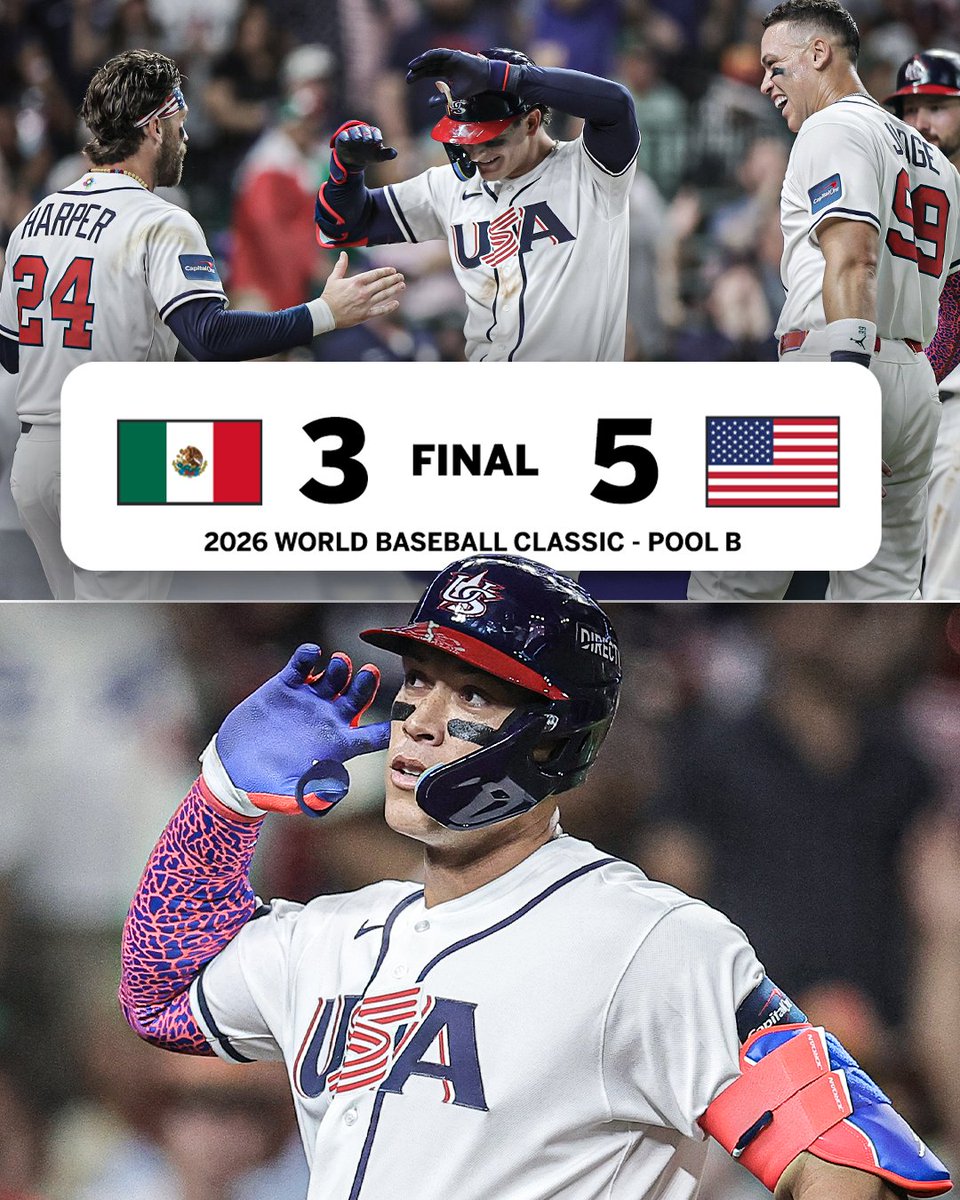
USA Hangs On to Defeat Mexico and Moves to 3-0 at the World Baseball Classic
A Hard-Fought Victory With Historic Meaning
In a matchup steeped in history and pride, Team USA edged out Mexico in a tense 6–5 showdown Tuesday night at Chase Field in Phoenix, improving to a perfect 3–0 record at the 2026 World Baseball Classic. The victory carried extra weight: it marked the United States’ first win over Mexico in the tournament in two decades, breaking a streak that had frustrated American fans and fueled one of international baseball’s fiercest rivalries.
The game began with the kind of energy that only a U.S.–Mexico matchup can generate. A sea of red, white, and blue mixed with waves of green and white filled the stands, creating a split atmosphere of passion and pressure. The stakes were clear — bragging rights across North America and a crucial step toward securing top seeding in Pool C. For the U.S. squad, the win reinforced a powerful statement: after years of inconsistency on the global baseball stage, Team USA is again playing as the world expects.
Early Offensive Burst Sets the Tone
The Americans wasted little time setting the tone. Leadoff hitter Mookie Betts reached base with a sharp single in the first inning, followed by a booming double from Mike Trout that brought the partisan crowd to its feet. Paul Goldschmidt’s RBI grounder plated the first run, and a two-run homer from Kyle Tucker extended the lead to 3–0 before Mexico’s starter could settle in.
But as history has often shown, Mexico never fades quietly in these showdowns. In the bottom of the third, Randy Arozarena ignited the Mexican offense with a double off the wall, followed by a sharp RBI single from Joey Meneses. Two innings later, Alex Verdugo tied the game at three with a line-drive homer, sending the Mexican section of the stadium into a deafening chant of “¡Sí se puede!” (“Yes, we can!”).
From there, every pitch carried postseason-level tension. Both bullpens traded zeros until the eighth inning, when Team USA capitalized on a defensive miscue. Trea Turner’s infield single and Betts’ patient walk loaded the bases, and Trout — fittingly the captain — delivered again with a two-run double to left. That cushion proved just enough to survive Mexico’s final rally in the ninth.
Breaking a Two-Decade Drought
The United States’ inability to defeat Mexico in the World Baseball Classic had become an enduring talking point in global baseball. Since their first meeting in the inaugural 2006 tournament — a stunning 2–1 loss that knocked the U.S. out of contention — Mexico had claimed victory in all subsequent WBC confrontations, including a decisive 11–5 win in 2023 that set the tone for that year’s group play.
Those defeats highlighted the difficulty the U.S. faced in assembling consistent international rosters. While Mexico leaned on national pride and continuity from players in the Mexican and Japanese leagues, Team USA often featured rosters determined by player availability rather than long-term synergy. That pattern began shifting in recent years, particularly after the United States’ championship win in 2017 renewed interest among top MLB talent.
“This one means a lot,” said U.S. manager Mark DeRosa after the win. “To finally get over that hump against Mexico, in front of a crowd like this—it’s special. But we know the job isn’t done.”
Crowd Atmosphere and Emotional Stakes
Phoenix provided the perfect stage for the long-awaited American breakthrough. Home to one of the largest Mexican-American communities in the country, the city offered a charged but balanced environment. Fans of both teams turned the ballpark into a boisterous mosaic of national spirit, flags draped across seats, and painted faces shouting every pitch into the desert night.
“It felt like a home game for both sides,” said Betts. “You could feel the energy—the pride, the noise. You wanted to win not just for your team but for everyone watching back home.”
The rivalry runs deeper than just baseball. The shared border, intertwined cultures, and intertwined baseball legacies create an emotional undercurrent every time the nations meet. For younger fans, the game also signified a new chapter — one less defined by old records and more by fresh competition between two world-class baseball programs.
Economic and Cultural Impact of the WBC
Beyond the scoreboard, the economic footprint of this matchup was significant. The World Baseball Classic, now firmly established as the premier global baseball event, injects millions into host cities. Local hospitality businesses reported record attendance across restaurants, hotels, and entertainment venues. In Phoenix’s downtown corridor, the influx of international visitors transformed the area into a weeklong celebration of baseball culture.
“Every time the WBC comes to town, it’s a huge win for us,” said Maria Ramirez, a local restaurant owner near the stadium. “Fans come from all over — Mexico, Texas, California — and they spend days eating, shopping, and celebrating. You can feel how the game connects people.”
The global reach of the Classic has transformed the way baseball markets itself internationally. Once viewed predominantly as an American pastime, the sport now thrives in regions that were once considered secondary markets. Mexico’s Liga Mexicana de Béisbol has experienced surges in interest following each WBC participation, mirroring trends seen in Japan, South Korea, and the Dominican Republic.
Regional Comparisons and Growing Competition
The United States remains a powerhouse in terms of baseball infrastructure and player development, but regional competition continues to tighten. Japan’s emphasis on discipline and precision, the Dominican Republic’s explosiveness, and Mexico’s growing depth of pitching talent all pose serious challenges. The U.S. victory in Phoenix signals that while American baseball remains elite, the era of guaranteed dominance is long gone.
In Latin America, baseball carries a different cultural resonance. Mexico’s development of local talent has flourished through both domestic leagues and cross-border partnerships with MLB organizations. Mexican-born stars like Arozarena and Meneses have become household names not only for their play but for their enthusiasm representing their homeland.
Team USA’s roster, built primarily from Major League Baseball’s top echelon, reflects the country’s unique challenge: managing expectations while fostering national unity in a sport traditionally rooted in local identity. The win over Mexico may help rekindle that connection among casual fans who often view the WBC as secondary to MLB competition.
Economic Ripple Effects for Major League Baseball
Major League Baseball’s front office has closely tracked the increasing appeal of the World Baseball Classic as both a fan engagement tool and a financial driver. The event boosts early-season interest, expands merchandise sales, and introduces young audiences to international storylines. Team USA’s strong showing this year could further enhance domestic television ratings and bolster ticket sales for upcoming MLB games.
Sports economists note that successful national performances tend to translate into surges in youth participation rates. The 2017 U.S. championship, for example, correlated with a measurable uptick in Little League registrations and baseball camp enrollments across several states. If history repeats, this year’s WBC momentum could yield similar benefits, particularly as baseball continues to compete with basketball and soccer for young athletes’ attention.
Looking Ahead for Both Teams
With the win, the United States clinches advancement to the quarterfinals and stands poised to maintain its undefeated run heading into the elimination rounds. Mexico, now 1–2, faces a steep climb to remain in contention but has earned respect for its resilience and fight against one of the world’s deepest lineups.
The Americans will next face South Korea, another regional power known for disciplined pitching and aggressive small-ball tactics. Mexico turns its focus to a crucial game against Colombia, where even a single misstep could end its tournament hopes.
For both nations, the stakes transcend wins and losses. Baseball’s global renaissance depends on matchups like this — tightly contested, emotionally charged, and filled with the kind of moments that remind fans why this tournament matters.
A Rivalry Renewed
When the final out was recorded and fireworks crackled above the Phoenix sky, the U.S. players celebrated with controlled relief rather than exuberance. They knew this was not the destination but a milestone — a reversal of a 20-year narrative that had long favored their southern rivals.
Fans lingered after the game, waving flags and trading chants, a testament to the respect shared across borders. The great North American baseball rivalry had just added another classic chapter — one that may shape how both nations approach the sport for years to come.
For now, Team USA’s message is clear: the stars and stripes are back on top of the baseball world, and they intend to stay there.