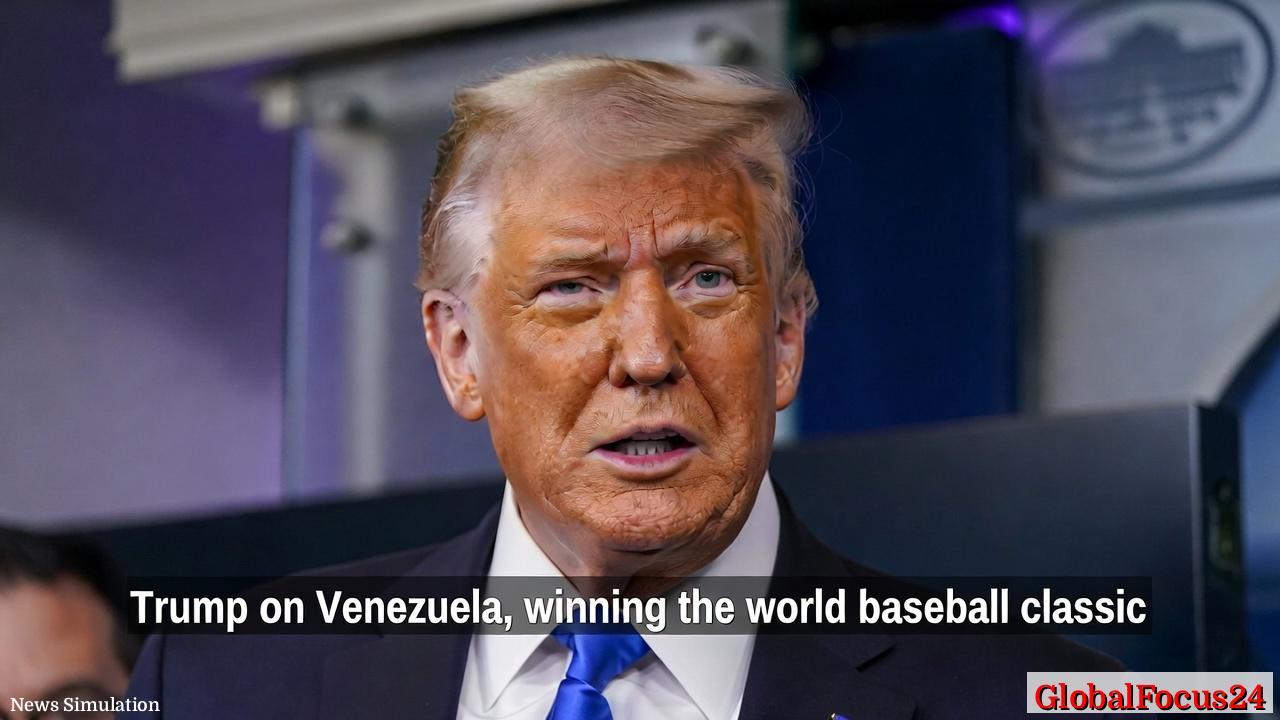
Trump Reacts to Venezuela’s World Baseball Classic Win with “Statehood” Comment
Venezuela Clinches Historic Victory Over Team USA
Venezuela secured its first-ever World Baseball Classic (WBC) championship on Tuesday night, edging out Team USA in a dramatic 3–2 victory that captivated fans across two continents. The intense final, held before a sold-out crowd at loanDepot Park in Miami, marked a watershed moment for Venezuelan baseball—an achievement decades in the making and fueled by generations of players who have defined the sport both at home and abroad.
The championship capped a month-long global tournament that featured 20 national teams competing for the crown. Venezuela’s victory not only ignited an outpouring of national pride in Caracas, Maracaibo, and beyond, but also carried swift global reverberations. Among the most unexpected reactions came from former U.S. President Donald J. Trump, who posted on his social media platform minutes after the game, declaring “STATEHOOD!!! President DJT.”
The statement followed an earlier post from Trump in which he congratulated Venezuela on its advancement to the final, writing, “Good things happening to Venezuela. STATEHOOD, #51, ANYONE?” The comment drew immediate attention—and confusion—from political observers and sports fans alike, many interpreting it as a tongue-in-cheek reference to the United States' long-standing debates on territorial statehood for regions such as Puerto Rico and Washington, D.C.
A Historic Night for Venezuelan Baseball
For Venezuela, the moment was monumental. The nation’s baseball culture runs deep, and its players have long been among the most dominant exports to Major League Baseball. Icons like Miguel Cabrera, José Altuve, Ronald Acuña Jr., and Salvador Pérez have shaped the modern game, yet the WBC trophy had long eluded their homeland.
Tuesday’s victory came on the heels of several heartbreaking exits in past tournaments, including a semifinal loss to the United States in 2023. This year, Venezuela fielded a lineup brimming with both youth and veterans, united by a singular goal: to bring home the championship for a country that has endured years of economic hardship and political turmoil.
The final game delivered everything fans could ask for—tension, precision, and emotion. A pitching duel unfolded between Team USA’s emerging star Logan Webb and Venezuela’s experienced right-hander Pablo López. For much of the night, both kept the crowd on edge with strikeouts, groundouts, and a steady stream of close calls.
A decisive rally in the seventh inning turned the tide. With two outs and runners on base, Venezuela’s Luis Arráez delivered a clutch single that scored the go-ahead run. The Venezuelan bullpen preserved the narrow lead through the final two innings, sealing the 3–2 triumph and sparking celebrations from Miami to Caracas.
Public Reaction Across the Americas
In Venezuela, jubilant scenes erupted almost immediately. Thousands took to the streets of Caracas waving national flags, honking car horns, and singing the national anthem late into the night. “This is our dream come true,” said one fan outside the Estadio Universitario, where crowds gathered to watch the game on giant screens. “Baseball is who we are.”
In Miami, home to one of the largest Venezuelan expatriate communities in the world, celebrations mirrored those in the hometown streets. Calle Ocho transformed into a sea of yellow, blue, and red as people danced, embraced, and shouted “Campeones!” (“Champions!”)
U.S. fans responded with a mix of disappointment and admiration for Venezuela’s performance. Team USA entered the tournament as defending champions and heavy favorites, boasting a roster stacked with MLB All-Stars. Despite the close loss, many acknowledged Venezuela’s deserved victory. “They outplayed us when it mattered most,” said Team USA manager Mark DeRosa after the game. “They earned it.”
Trump’s “Statehood” Remark Sparks Curiosity
Trump’s post-game remark quickly became a trending topic across multiple social media platforms. Many users debated whether the former president was serious, joking, or simply riffing on the fervent patriotism surrounding the event.
Political analysts were quick to point out that Venezuela, an independent South American nation with a complex relationship with Washington, is not eligible for statehood in any literal or legal sense. The statement, however, fits a pattern familiar to Trump’s online persona: quick reactions that mix humor, provocation, and ambiguity.
Historically, Trump has leveraged sporting events—particularly those involving U.S. teams or international showdowns—to make symbolic or attention-grabbing statements. During his presidency, he frequently commented on the NFL, NBA, and Olympic Games, using sports narratives as an extension of cultural and political expression.
Baseball as a Shared Language
The World Baseball Classic, created in 2006, has steadily grown into one of the most globally recognized events in the sport. It reflects how baseball’s roots have stretched far beyond U.S. borders, thriving in Latin American countries such as the Dominican Republic, Cuba, Mexico, and Venezuela.
Venezuela’s victory reflects both athletic excellence and deep cultural significance. In a nation that has faced years of inflation, migration, and political uncertainty, baseball functions as a unifying force. Families gather to watch games regardless of social class or political affiliation. Youth academies continue to produce future stars despite limited resources.
The triumph is also likely to have ripple effects on the country’s sports economy. Merchandising, youth participation, and sponsorship interest are expected to surge, offering a rare positive storyline in a nation frequently confronted by economics. “Sports can remind us that unity is still possible,” said former MLB player and Venezuelan league commentator Omar Vizquel. “This generation gave Venezuela something to believe in again.”
Economic and Cultural Impact of the Win
Sports economists note that international victories can provide a measurable, albeit temporary, boost to a nation’s morale and consumer confidence. In neighboring Dominican Republic and Puerto Rico, previous WBC championship runs fueled similar surges in merchandise sales, tourism, and local investment in baseball infrastructure.
Venezuela may see comparable outcomes. Within hours of the final out, demand for team jerseys, caps, and memorabilia skyrocketed across online platforms. Airlines reported increased bookings from Venezuelan expatriates hoping to return home for the victory parades anticipated later this week.
In the broader context, Venezuela’s success also underscores the enduring importance of baseball diplomacy. For decades, the sport has served as a rare bridge between the U.S. and Latin America—a space where competition often turns into mutual respect. American scouts have long tapped Venezuelan talent for Major League Baseball, helping build a shared cultural connection that transcends politics.
Regional Comparison: A Shift in Power
Since the tournament’s inception, Japan and the United States have dominated the medal standings, while Cuba and the Dominican Republic have remained perennial contenders. Venezuela’s breakthrough marks a turning point—a realignment in the balance of baseball power.
With Japan’s tournament dynasty showing signs of transition and traditional powerhouses rebuilding their rosters, Venezuela’s championship signals the rise of a new contender capable of sustaining dominance. Baseball analysts have already pointed to the depth of Venezuela’s talent pool and the competitiveness of its domestic winter leagues as indicators that this victory is no fluke.
Looking Ahead
As the celebrations continue, attention turns to what comes next for both teams. The United States, driven by its narrow loss, will likely retool for the next WBC with an even more star-studded roster. For Venezuela, the pressure—and promise—of defending its newfound crown begins almost immediately.
Meanwhile, Trump’s “statehood” quip remains a curiosity in the background—a fleeting social media moment that momentarily linked geopolitics and baseball. Yet for millions of Venezuelans, the meaning of this week’s triumph stands apart from any political interpretation. It is a story of persistence, pride, and national identity crystallized in the crack of a bat and the cheers of a global crowd.
As dawn breaks over Caracas, the chants echoing from the streets capture the essence of this historic win: after decades of near-misses, Venezuela finally stands atop the baseball world.