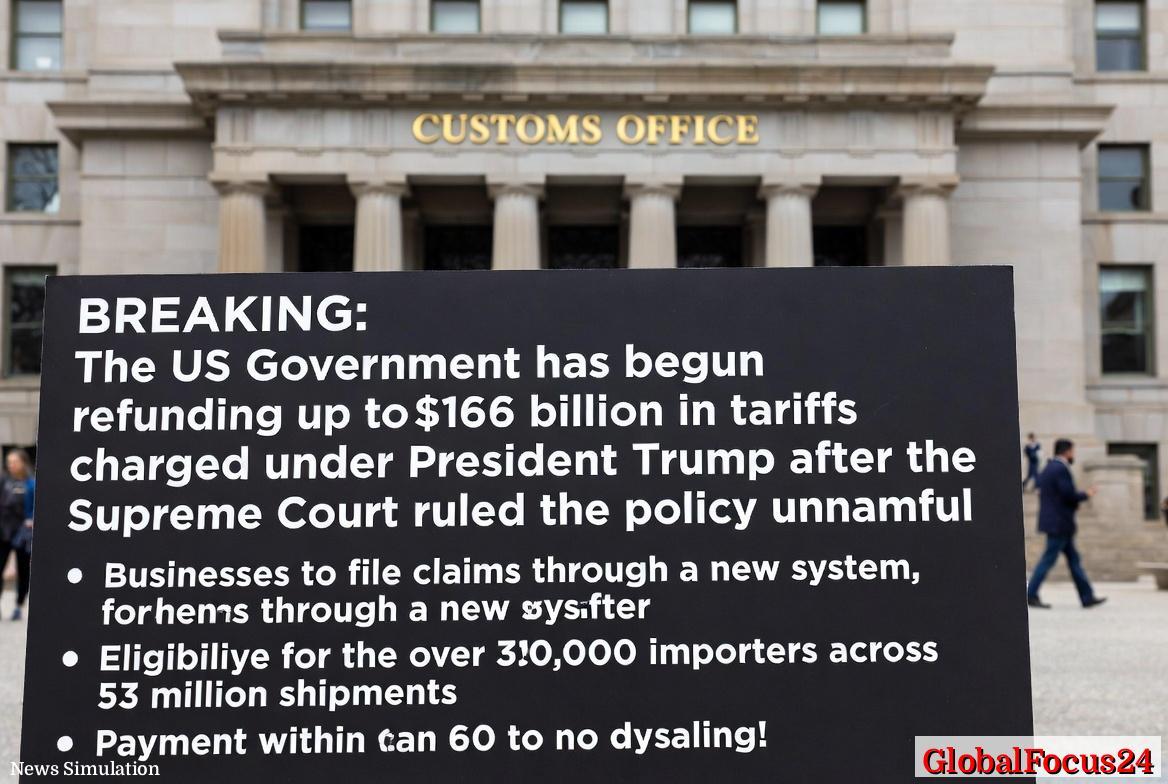
U.S. Begins $166 Billion Tariff Refund Program After Supreme Court Ruling
Massive Refund Effort Launched for Importers
The U.S. government has begun issuing refunds for tariffs collected under a previous trade policy after the Supreme Court determined the measures were unlawful. The program, which could return up to $166 billion to businesses, marks one of the largest financial reversals tied to trade policy in American history.
Starting today, eligible companies can file claims through a newly implemented customs processing system. Federal officials estimate that more than 330,000 importers are affected, covering approximately 53 million individual shipments that entered the United States during the period in question.
Refunds will include both the original tariff payments and accrued interest, with payments expected to be processed within 60 to 90 days after claims are approved.
Background of the Tariff Policy
The tariffs at the center of the ruling were introduced during the Trump administration as part of a broader effort to address trade imbalances and protect domestic industries. These measures targeted a wide range of imported goods, including industrial components, consumer electronics, and raw materials.
At the time, the policy was framed as a tool to encourage domestic production and reduce reliance on foreign manufacturing, particularly from China. Tariffs were imposed under legal authorities that allow the executive branch to act in response to national economic threats.
However, critics argued that the scope and duration of the tariffs exceeded statutory limits. Legal challenges emerged almost immediately, with businesses and trade groups asserting that the measures imposed significant costs without proper congressional authorization.
The Supreme Court ultimately agreed, ruling that the tariffs were applied beyond the legal framework governing such trade actions. The decision invalidated key aspects of the policy and opened the door for financial restitution.
How the Refund System Works
The newly launched refund system is designed to handle a high volume of claims efficiently while maintaining strict verification standards. Businesses must submit documentation demonstrating tariff payments, shipment details, and eligibility under the court ruling.
Key features of the system include:
- A centralized digital platform managed by U.S. Customs and Border Protection (CBP).
- Automated verification tools that cross-reference shipment data and payment records.
- A structured review process to prevent fraudulent claims or duplicate filings.
Once a claim is validated, the refund amount is calculated based on the original tariff paid plus interest accrued over time. Officials say the inclusion of interest reflects both legal requirements and an effort to compensate businesses for the extended period during which funds were held.
Economic Impact on Businesses
For many companies, particularly small and mid-sized importers, the refund program represents a significant financial reprieve. Over the years, tariffs increased costs across supply chains, often forcing businesses to absorb expenses or pass them on to consumers.
Industries expected to benefit most include:
- Manufacturing firms reliant on imported components.
- Retailers that paid tariffs on finished goods.
- Logistics and distribution companies affected by increased import costs.
In some cases, businesses report that tariff payments strained cash flow and limited investment in expansion or hiring. The sudden availability of refunds—especially with interest—could improve liquidity and support renewed growth.
Economists note that the injection of up to $166 billion into the private sector may have broader ripple effects. Increased business spending could stimulate job creation, inventory restocking, and capital investment.
Regional Effects Across the United States
The impact of the refund program is expected to vary by region, reflecting differences in industrial concentration and trade exposure.
On the West Coast, particularly in California, major port hubs such as Los Angeles and Long Beach handled a substantial share of tariff-affected imports. Businesses in logistics, warehousing, and retail distribution are likely to see significant financial returns.
In the Midwest, manufacturing-heavy states such as Ohio and Michigan could benefit from refunds tied to imported machinery and raw materials. These sectors were among the most directly affected by increased input costs.
Southern states, including Texas and Georgia, may also experience notable gains due to their roles in both import processing and industrial production.
Smaller regional economies that rely heavily on a limited number of import-dependent industries could see disproportionate benefits, potentially reshaping local economic conditions in the short term.
Comparison With Previous Trade Disputes
Large-scale tariff refunds are relatively rare in U.S. history, though trade disputes have frequently led to policy reversals and financial adjustments.
In earlier cases involving anti-dumping duties or countervailing tariffs, refunds were typically narrower in scope and applied to specific industries or products. The current program stands out for its scale and broad eligibility across multiple sectors.
Internationally, similar situations have occurred when trade rulings by organizations such as the World Trade Organization (WTO) forced governments to amend or withdraw tariff measures. However, the U.S. refund initiative is notable for its centralized execution and the inclusion of interest payments.
Compared to past trade corrections, the current effort reflects a more comprehensive attempt to address both legal compliance and economic impact.
Challenges and Administrative Complexity
Despite the streamlined digital system, the sheer scale of the refund process presents logistical challenges. Processing claims tied to 53 million shipments requires extensive coordination between federal agencies and the private sector.
Potential hurdles include:
- Incomplete or inconsistent documentation from older shipments.
- Disputes over eligibility criteria or tariff classifications.
- Delays caused by high submission volumes in the early stages of the program.
Government officials have indicated that additional staffing and automated systems have been deployed to handle the workload. Still, businesses are being encouraged to ensure accuracy in their filings to avoid delays.
Trade experts also caution that companies with complex supply chains may need to conduct detailed internal audits to identify all eligible claims.
Market Reactions and Business Sentiment
Initial reactions from the business community have been largely positive. Industry groups and trade associations have welcomed the refund program as a long-awaited resolution to years of financial uncertainty.
Some companies have already indicated plans to reinvest refunded funds into operations, including:
- Expanding inventory levels.
- Upgrading equipment and infrastructure.
- Increasing hiring or wages.
Financial markets have responded with moderate optimism, particularly in sectors heavily exposed to import costs. Analysts suggest that the refunds could provide a temporary boost to corporate earnings in affected industries.
At the same time, some caution that the one-time nature of the refunds limits their long-term economic impact, especially if broader trade policies remain unchanged.
Broader Implications for Trade Policy
The Supreme Court ruling and subsequent refund program may influence how future administrations approach tariff policy. Legal experts note that the decision underscores the importance of adhering to statutory limits and maintaining clear congressional authorization for trade actions.
The case also highlights the potential risks of expansive tariff measures, particularly when applied across diverse industries. Businesses may become more cautious in planning supply chains, factoring in the possibility of policy reversals or legal challenges.
In the global context, the ruling could affect how trading partners view U.S. trade policy stability. Predictability is often a key factor in international commerce, and large-scale reversals may shape future negotiations and agreements.
Timeline and Next Steps
The refund program is expected to unfold over several months, with the bulk of payments issued within the initial 60 to 90-day window following claim approval. However, more complex cases could take longer to resolve.
Businesses are advised to begin the filing process promptly, as early submission may reduce processing delays. Government agencies have also indicated that guidance materials and support resources will be available to assist applicants.
As the program progresses, additional data on total refunds issued and regional distribution is expected to provide a clearer picture of its economic impact.
The rollout marks a significant moment in U.S. trade policy, combining legal accountability with a large-scale financial correction that will be closely watched by businesses, policymakers, and global markets alike.