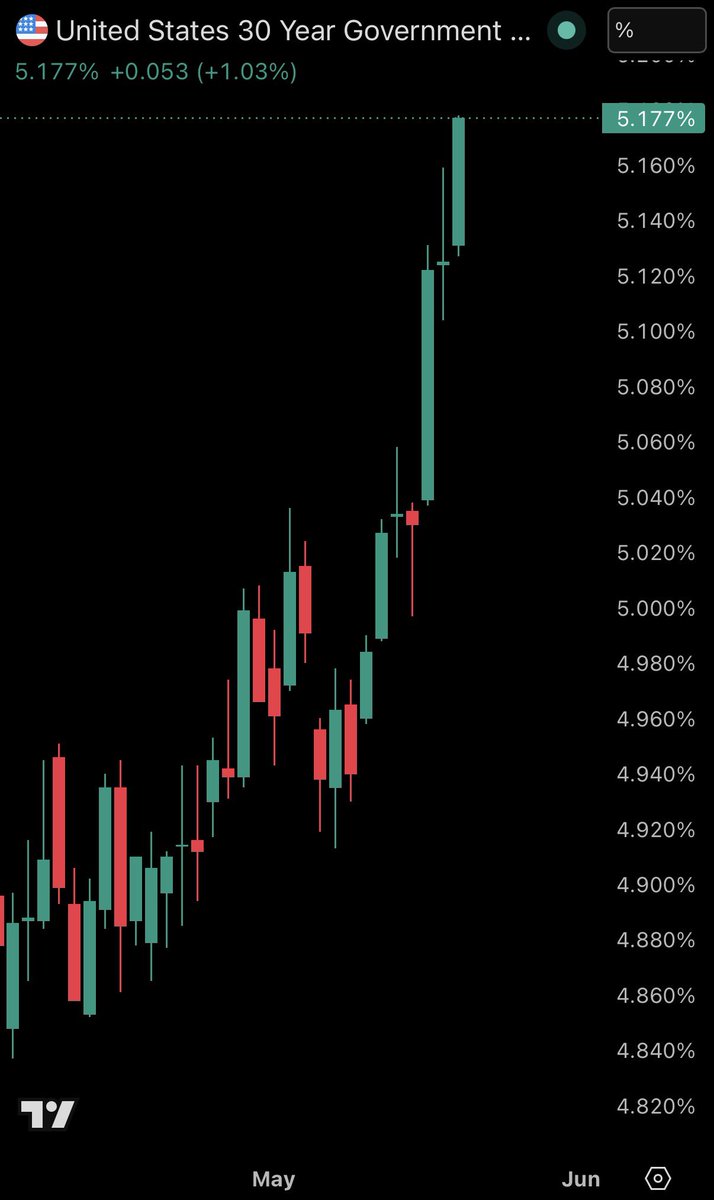
US 30-Year Treasury Yield Surges to 5.18% as Market Reassesses Long-Term Rates and Fiscal Dynamics
In a move that underscores shifting expectations for inflation, interest rates, and government borrowing, the yield on the 30-year U.S. Treasury note climbed to 5.18% on Tuesday, marking its highest level since July 2007. The rise signals renewed attention to the long end of the yield curve and has broad implications for mortgage costs, corporate finance, and the direction of monetary policy expectations.
Historical context: a long view of long-duration yields The 30-year Treasury yield sits at the far end of the fixed-income curve, effectively acting as a barometer for long-term borrowing costs across the economy. After a prolonged period of historically low yields in the aftermath of the Great Recession and the volatility of the early 2020s, investors have increasingly priced in the possibility of higher inflation levels or protracted policy normalization. The move above 5% echoes a period in the mid-2000s when the yield curve reflected a different mix of economic growth, inflation dynamics, and budgetary considerations. While daily swings are normal, the break above the 5% threshold is notable for the signal it sends about longer-horizon expectations.
Market drivers and sentiment Several forces together pushed the 30-year yield higher:
- Inflation expectations: Even with recent moderations, traders remain attentive to signals about price stability over a multiyear horizon. A steady coupling of inflation indicators with wage dynamics can sustain a higher real rate, contributing to higher nominal yields on longer maturities.
- Fiscal considerations: The size and servicing costs of the federal debt, in conjunction with anticipated deficits or surpluses, influence the supply landscape for long-term securities. A larger debt stock or expectations of persistent deficits tend to push yields higher to attract buyers for extended maturities.
- Monetary policy expectations: The trajectory of the federal funds rate, along with anticipated pace of policy normalization or maintaining restrictive conditions, feeds into the slope of the yield curve. When traders expect rates to stay higher for longer, long-end yields tend to rise even as shorter-term rates move differently.
- Global funding dynamics: International demand for U.S. Treasuries, currency considerations, and relative yields abroad affect the U.S. market. Shifts in foreign appetite for long-duration debt can amplify moves at the 30-year tenor.
Implications for mortgage rates and housing affordability Long-term yields have a direct, tangible impact on mortgage rates, especially for fixed-rate mortgages with 15- to 30-year terms. A rise to the 5% territory on the 30-year note tends to translate into higher average mortgage rates, increasing monthly payments for new borrowers and refinancing households. This can influence housing market activity, affecting home sales velocity, affordability calculations, and the broader real estate sector. In regions with high housing costs, even modest upticks in mortgage rates can alter demand dynamics and push buyers toward shorter maturities or adjustable-rate options, depending on lender pricing and borrower risk profiles.
Corporate finance and capital markets For corporations, long-term borrowing costs influence project evaluation, capital structure strategies, and growth plans. Higher long-duration yields can raise the cost of issuing 10-, 20-, and 30-year debt, potentially affecting profitability forecasts, hurdle rates, and investment calendars. Companies with large pension liabilities or long-term financing commitments may experience increased present-value of obligations, which feeds into the broader discussion about corporate balance sheets and risk management practices.
Public finance considerations Beyond investor behavior, the rise in the 30-year yield intersects with the federal budget outlook. The cost of rolling over existing long-term segments of the debt, as well as issuing new long-dated securities to fund programs or deficits, becomes more expensive when long-term rates climb. This dynamic can influence fiscal policy decisions, including the tempo of deficit reduction efforts, borrowing plans for infrastructure or social programs, and the overall narrative around fiscal sustainability.
Regional comparisons and international perspective Historically, regional borrowing costs and macroeconomic conditions can vary, but the 30-year yield often mirrors global risk appetite and inflation expectations. In regions with robust growth and stable inflation, long-term yields may align with or exceed U.S. levels, depending on local monetary policy and credit conditions. Comparatively, markets with more anchored inflation or differing debt structures can experience divergent paths in their own long-duration benchmarks. The current U.S. yield environment sits within a broader global context where investors evaluate the trade-off between securing yields and managing interest rate risk across currencies and regimes.
Investor behavior and market signals The move to 5.18% on the 30-year tenor is a signal that investors are calibrating their portfolios to a longer horizon. Fixed-income investors balance the need for income with the risk of price declines during any potential rate tightening cycles. Bond strategists watch for signs of a steeper or flatter yield curve, movements in inflation-protected securities, and the relative performance of Treasuries against corporate bonds, municipals, and international government debt. A higher long-term yield often shifts relative attractiveness toward shorter-duration assets or value-oriented strategies within fixed income, depending on risk tolerance and investment mandate.
Economic landscape and potential scenarios Several plausible scenarios could unfold from this yield move:
- Moderation in inflation alongside steady growth could allow for a managed path toward policy normalization, with long-term yields stabilizing as the market prices in a steady-state equilibrium.
- Persistent inflation or higher-than-expected wage growth could keep long-term yields elevated as investors demand a premium for the erosion of purchasing power over time.
- A more pronounced fiscal impulse, coupled with debt-financing needs, might sustain higher long-term yields if borrowers remain willing to accept higher borrowing costs in exchange for funding priorities.
Impact on consumer and business confidence Financial conditions, as reflected by long-duration yields, influence consumer confidence and business sentiment. Higher long-term borrowing costs can dampen the enthusiasm for large-ticket purchases, such as homes and commercial projects, at least in the near term. Conversely, if the path of yields stabilizes or declines, households and firms may regain momentum, supported by a more predictable interest-rate environment and clearer financing terms.
Public reaction and market communication News of rising long-term yields often prompts responses from policy elites, financial institutions, and market participants. Analysts may dissect the implications for next-year planning, investors may rebalance portfolios, and lenders may adjust mortgage and loan pricing strategies. In regional markets, the ripple effects can be felt in housing markets, municipal finance, and corporate investment cycles, where expectations for supply and demand interact with the cost of capital.
Sustained monitoring and policy signals As the economic calendar unfolds, traders will monitor updates on inflation data, employment metrics, and fiscal policy developments. The resilience or fragility of domestic demand, consumer savings rates, and business investment will shape the trajectory of long-term yields. For policymakers, maintaining transparent communication about targets, macroprudential considerations, and debt management strategies remains essential to navigate a financing environment where long-duration yields influence a wide array of market outcomes.
Conclusion: navigating a complex interest-rate landscape The climb of the 30-year U.S. Treasury yield to 5.18% highlights the interconnectedness of inflation dynamics, fiscal policies, and global capital markets. While daily fluctuations are expected, the level reached signals a shift in how investors price long-term risk and opportunity. For borrowers, lenders, and policymakers, the current environment underscores the importance of disciplined financial planning, prudent debt management, and clear communication about the outlook for interest rates and inflation. As markets digest these developments, households, businesses, and regional economies will adjust to a landscape where long-term borrowing costs, investment decisions, and growth prospects are inextricably linked.