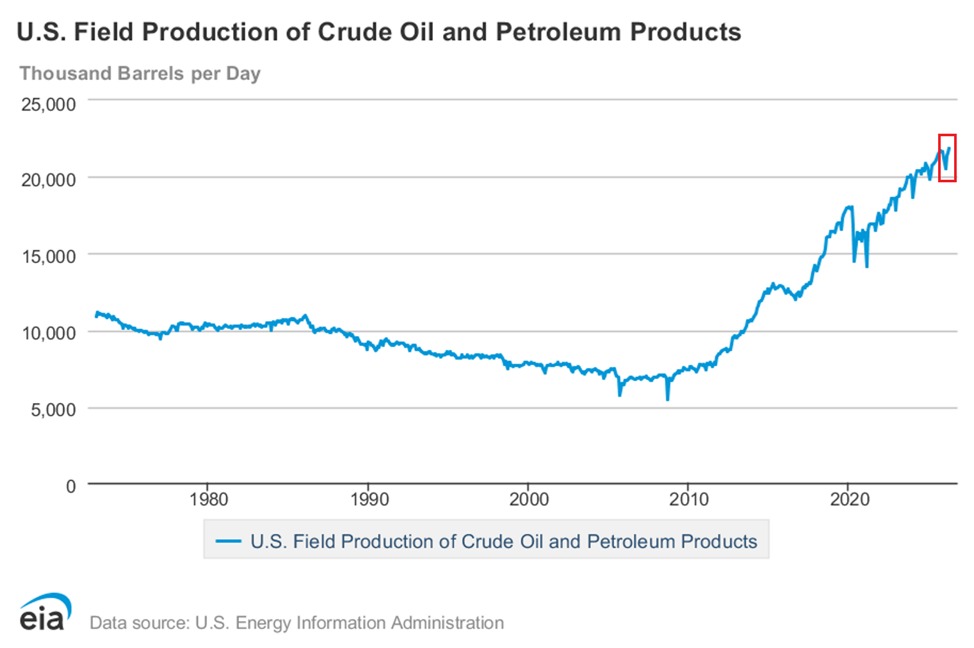
U.S. Crude Oil and Petroleum Production Surges to Record 21.84 Million Barrels Per Day in April
U.S. crude oil and petroleum product production rose again in April, increasing by 254,000 barrels per day to a record 21.84 million barrels per day. The month’s uptick marks a continued expansion in domestic energy output, reflecting both the resilience of U.S. upstream activity and evolving market dynamics that underpin the broader energy landscape.
Record production and year-over-year gains April’s combined output of crude oil and refined petroleum products reached an all-time high, underscoring a year-over-year expansion of roughly 1.01 million barrels per day, or about 4.9%. The sustained growth signals a shift in the domestic energy balance, anchored by advancements in drilling efficiency, ongoing investment in production infrastructure, and a favorable operating environment for producers in major basins across the country.
Crude oil production specifically rose by approximately 216,000 barrels per day in April, contributing substantially to the overall increase. This uplift aligns with a broader trend of production resilience in the shale and tight-oil regions, where producers have continued to optimize well performance, reduce breakeven costs, and respond to evolving pricing signals in global markets.
Historical context: from cycles to capacity To understand the April rise, it helps to place it in a longer arc of U.S. energy output. The United States has experienced cycles of production growth tied to technological advances, such as hydraulic fracturing and horizontal drilling, alongside shifts in the global price environment and domestic policy signals. Over the past decade, U.S. oil and gas producers have shown a capacity to sustain higher levels of output through periods of volatility, balancing the need to replace aging wells with the demand for new production to meet domestic consumption and export opportunities.
The April data continues a narrative of steadily increasing output that began in earnest in the mid-2010s and intensified through the later years of the last decade. As shale plays expanded and offshore projects matured, aggregate production rose, even as the industry faced price fluctuations and regulatory considerations. The latest figures reflect a culmination of that evolutionary curve, with producers leveraging technology, supply chain improvements, and the scale of U.S. refining and distribution networks to maintain higher output levels.
Regional dynamics and comparisons Regional performance varies across major U.S. production areas. In multiple shale-rich regions, a combination of strong drilling activity and optimized well completions have supported sustained crude oil gains. The Gulf Coast, home to a large portion of domestic refining capacity, continues to play a pivotal role in processing and distributing crude and refined products. Meanwhile, the Permian Basin—long a leader in U.S. oil output—has faced evolving well-level economics as prices and Federal land-use considerations influence drilling decisions.
In addition to crude production, the broader category of petroleum products—such as gasoline, diesel, jet fuel, and other refined products—has contributed to the record-level aggregate. Refined product output often tracks with refinery utilization rates, maintenance schedules, and seasonal demand patterns. High refinery runs can amplify total output figures, even when crude input remains flat or experiences modest fluctuations.
Economic implications: growth, pricing, and investment signals The April surge in production carries several potential implications for the broader economy. First, higher domestic production can influence global supply dynamics, potentially supporting a more balanced global oil market by contributing to supply resilience in times of uncertain geopolitical developments. Second, sustained growth in U.S. output can affect domestic energy pricing structures, including crude benchmarks and refined product prices, which in turn influence consumer energy expenditures and industrial input costs.
Another important consideration is the investment cycle for the energy sector. A continued run of production gains may reinforce investor confidence in upstream projects, from shale development to offshore initiatives, as operators weigh capital allocation decisions, drilling budgets, and debt management against expected cash flows and price trajectories. Sustained output growth also has implications for the job market within the energy sector, potentially supporting employment in drilling, transportation, refining, and related services.
Public and consumer reaction Public sentiment around rising energy production often hinges on perceptions of affordability, reliability, and environmental considerations. When domestic production climbs, consumers may experience more competitive fuel prices and improved energy security, particularly in periods of global supply disruption. At the same time, communities near production and refining facilities may weigh concerns about environmental impact, air quality, and local infrastructure demands. Balancing these interests remains a continuous challenge for policymakers, industry groups, and local governments.
Supply chain and operational considerations Higher production levels place emphasis on the efficiency and resilience of supply chains that support the energy sector. These include the availability of drilling equipment, skilled labor, and transportation networks to move crude and refined products from producing regions to end users. Additionally, refinery throughput and maintenance schedules—shaped by maintenance calendars, upgrades, and emissions considerations—play a critical role in translating crude input into usable fuel and other products. As production grows, attention to pipeline capacity, storage, and export logistics can become more prominent, impacting trading dynamics and regional price differentials.
Global context: how the U.S. produced volume fits into world markets The United States remains a significant player in global energy dynamics. A record level of domestic production interacts with international demand, OPEC+ output decisions, and geopolitical developments that affect crude prices and trade flows. While domestic production expansion supports energy security and can temper price volatility, it also interacts with global supply and demand imbalances. For buyers and traders, the movement of U.S. crude and petroleum products informs pricing signals, indices, and contract behavior across multiple markets.
Environmental and policy considerations As the energy landscape evolves, environmental and regulatory frameworks continue to influence production decisions. Operators must navigate air and water quality standards, methane emissions considerations, and land-use policies that shape the pace and nature of drilling activity. Policymakers, industry associations, and communities frequently engage in dialogue to align economic benefits with environmental stewardship and public health priorities. The ongoing transition toward lower-emission energy sources remains a parallel thread in the broader energy narrative, even as crude and product output expands.
Near-term outlook: what to watch next Looking ahead, several factors could shape the trajectory of U.S. energy production. Price trends for crude and refined products will influence drilling incentives and investment decisions. Technological advancements, such as enhanced oil recovery techniques and improvements in drilling efficiency, could sustain or accelerate output growth. Operational challenges, regulatory developments, and global market conditions will also play a role in determining whether the April gains represent a sustained trend or a temporary peak.
Regional and sector-specific indicators to monitor include:
- Crude oil rig counts and permit activity, which offer early signals of future production momentum.
- Refinery utilization rates and maintenance schedules, which affect total product output and inventory levels.
- Transportation and storage capacity, including pipeline integrity and bottlenecks, that can influence delivery times and regional price spreads.
- Export volumes and trade flows, which shape international demand for U.S. crude and refined products.
Impact on consumers and industries For American households, fluctuations in energy production can translate into changes in fuel prices, heating costs, and transportation expenses. Businesses that rely on energy inputs—such as manufacturing, logistics, and agriculture—may experience shifts in input costs and capital investment calculations. The net effect on the economy depends on how production levels interact with global demand, exchange rates, inflation pressures, and monetary policy stances.
Conclusion: a record-breaking milestone with broad implications April’s record-high production of crude oil and petroleum products underscores the United States’ continuing role as a leading energy producer. The month’s gains reflect a combination of technological progress, favorable market conditions, and a robust domestic energy system capable of delivering higher output while supporting economic activity. As the industry navigates environmental considerations, regulatory developments, and evolving demand patterns, the trajectory of U.S. energy production will remain a key lever in shaping energy prices, energy security, and the broader economic landscape.
Note on interpretation These figures represent a snapshot of production activity for a single month. While the data point to an uptick in April, ongoing analysis will determine whether the momentum persists in subsequent months and how it interacts with seasonal demand cycles, global supply conditions, and policy developments that influence the energy sector.