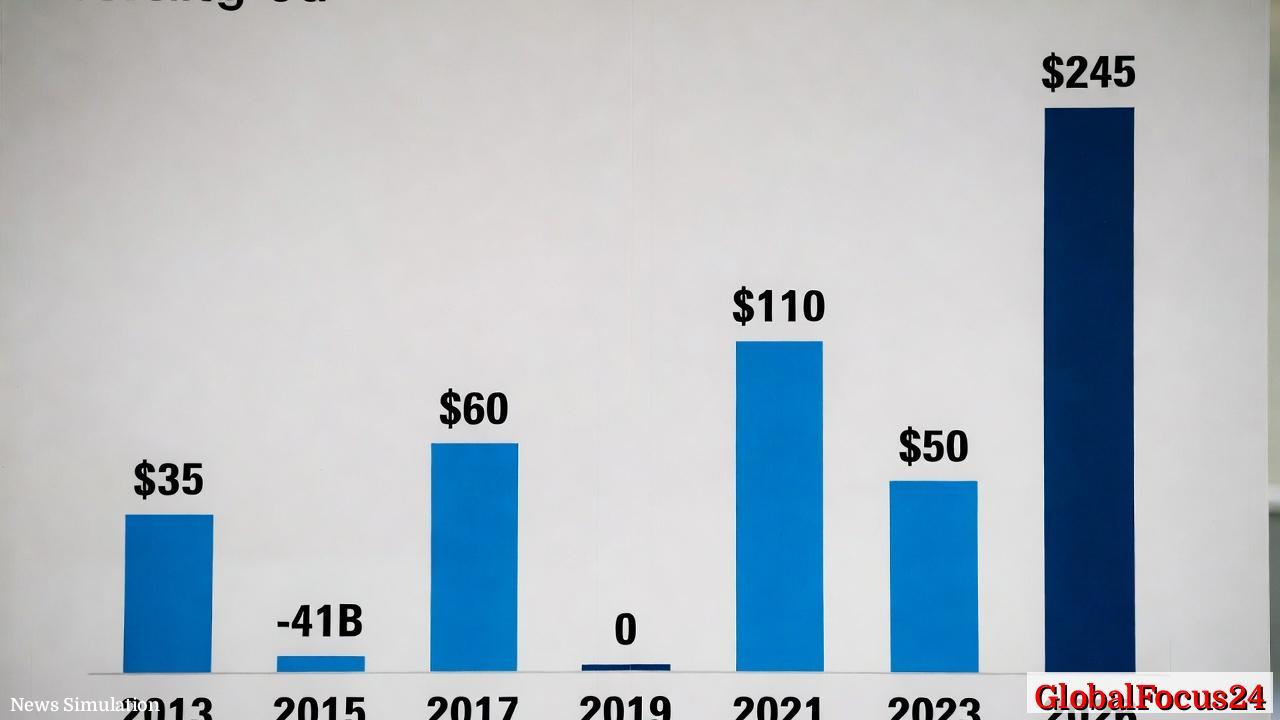
Record U.S. ETF Inflows Hit $245 Billion in Early 2026, Shattering Previous Benchmarks
In the opening weeks of 2026, U.S. exchange-traded funds (ETFs) attracted a record $245 billion in net inflows, according to Bloomberg Intelligence data. The surge marks a 94% year-over-year increase from the same period last year and represents the second consecutive annual rise in early-year flows. With more than 500 ETFs attracting at least $100 million in inflows during the six-week span, the landscape for passive investing and ETF product development has entered a new phase of scale and diversification.
Historical context: a longer arc of ETF adoption and shifting investor preferences ETFs emerged in the 1990s as a cost-efficient vehicle for accessing broad markets and niche strategies. Since then, the asset class has evolved from a handful of broad-market funds to a crowded field of thematic, sector-specific, smart-beta, and active ETFs. The early 2020s amplified this evolution as retail and institutional investors sought instant diversification, liquidity, and transparency amid volatile markets. The first six weeks of any year have long been a barometer for annual flow momentum, but the 2026 data underscore how far the ETF ecosystem has progressed from its earlier iterations.
A closer look at the weekly and quarterly rhythm helps illuminate how investors arrived at this milestone. Typically, January is a period of continued allocation shifts from cash positions or fixed income into equities or more targeted strategies. The pace accelerates when new funds launch, existing funds adjust weightings, or if macro narratives—such as inflation trajectories, central bank policy expectations, or geopolitical developments—fuel demand for specific exposures. In 2026, these catalysts appear to have coalesced into a broad-based reallocation that favored equities across sectors, with particular momentum in thematic and sector ETFs.
Regional comparisons: how U.S. flows align with global patterns The U.S. ETF market has long been a global hub for product development and liquidity, drawing assets not only from domestic investors but also from international buyers seeking access to U.S. benchmarks and innovative strategies. While theU.S. inflows reached a record, the broader global ETF landscape has shown varying degrees of strength, influenced by currency dynamics, cross-border tax considerations, and local regulatory frameworks. Regions with mature ETF ecosystems, such as Europe and Asia-Pacific, have continued to witness steady growth in passive and factor-based products, though the pace often reflects local market depth and investor education.
The extraordinary early-2026 inflows in the United States can be interpreted in several ways when viewed against international trends. First, U.S. investors have demonstrated a persistent appetite for diversification and cost efficiency, reinforcing the role of ETFs as a core component of portfolios. Second, the breadth of products achieving sizable inflows—spanning broad-market funds, sector-specific bets, and thematic ideas—suggests a maturation of investor confidence in passive vehicles as well as active, rules-based approaches embedded within ETFs. Third, a buoyant market environment, alongside favorable liquidity conditions, may have encouraged larger allocations across multiple funds, lifting average inflows per ETF and expanding the count of funds attracting meaningful capital.
Economic impact: implications for markets, fund providers, and market participants The record inflows into U.S. ETFs have multiple implications for the financial system and the broader economy. For fund providers, sustained demand translates into higher asset gathering capacity, more robust revenue potential from management fees, and increased incentives to innovate with new structures, such as fractional-share ETFs, liquid alternatives, and ESG-focused products. For investors, larger inflows can enhance liquidity and tighten bid-ask spreads in popular funds, reducing trading costs and slippage for participants with sizable orders.
From a macro perspective, elevated ETF flows can influence liquidity in underlying markets. When broad-based inflows occur, they often coincide with sustained buying pressure across major indices, sectors, and factor exposures. This dynamic can contribute to price discovery efficiency, particularly in transparent, exchange-listed vehicles where daily holdings and intraday liquidity are readily observable. However, market watchers also monitor potential risks, such as overconcentration in a small subset of funds or rapid shifts in exposure if market regimes change abruptly. Diversified, well-constructed ETF portfolios can help mitigate idiosyncratic risk by spreading allocations across asset classes and investment styles.
Product breadth and investor behavior: what’s driving the momentum Several structural factors appear to be driving the current inflow surge. First, the continued expansion of ETF lineups across asset classes—equities, fixed income, commodities, and alternatives—offers investors a consolidated platform for building complex, multi-asset strategies with transparent pricing. Second, the rise of thematic and sector-focused ETFs provides a convenient way to express views on growth themes, technology trends, or cyclical rotations without selecting individual stocks. Third, cost considerations continue to shape choices: many ETFs provide competitive expense ratios relative to traditional mutual funds, a factor that remains salient in a high-rate environment where every basis point matters.
Additionally, the data point of more than 500 ETFs attracting over $100 million in inflows signals a broadening distribution of capital. Rather than a few flagship funds driving gains, a wide array of exposures is attracting capital, suggesting that investors are refining their search for efficient, correlated sources of return and beta alternatives. This dispersion hints at a mature market where investors are comfortable blending core holdings with complementary satellites to achieve targeted risk and return profiles.
Case studies: representative fund activity and sector signals
- Broad-market ETFs continued to serve as core building blocks for many portfolios, with steady inflows reflecting a preference for diversified, low-cost exposure to large-cap and multi-factor strategies.
- Sector-focused funds, including technology, health care, and energy, demonstrated robust interest as macro narratives and earnings cycles influenced sector leadership. In particular, technology-oriented exposures benefited from ongoing optimism around cloud adoption, semiconductor cycles, and software growth.
- Thematic ETFs, spanning areas such as clean energy, robotics, and cybersecurity, attracted notable attention as investors sought to align portfolios with long-term secular trends and climate-related investment considerations.
- Fixed-income ETFs saw activity tied to duration preferences and inflation expectations, with investors balancing income needs against risk of rate swings in a rising or fluctuating rate environment.
Public sentiment and market psychology: urgency, optimism, and caution Public reaction to record ETF inflows has been mixed, reflecting a combination of enthusiasm for accessible, transparent investing and prudent caution about valuation levels in certain market segments. Enthusiasts point to ETFs as a practical solution for implementing diversified exposure, managing risk, and gaining access to strategies that previously required bespoke mandates or substantial capital. Critics, however, warn about potential overreliance on passive vehicles during episodes of heightened volatility or market dislocations, stressing the importance of due diligence, ongoing monitoring, and a balanced mix of active and passive approaches.
The broader societal and financial implications include ongoing discussions about financial literacy, the role of automated investment vehicles in retirement planning, and the importance of understanding liquidity, tracking errors, and fund-structure nuances. As while ETFs offer compelling advantages, they also require investors to be mindful of underlying holdings, replication methods, and potential tax considerations that can influence net performance.
Historical pipelines and future outlook: what comes next Looking back at the historical inflow patterns, the six-week window in early years often reflects a mix of equity allocation, product launches, and tactical rebalancing cycles. The 2026 milestone builds on a lineage of augmented asset inflows in years marked by shifting monetary policy expectations, evolving investor risk tolerance, and the emergence of new ETF formats. If the current trajectory continues, asset managers may respond with further innovation—such as more granulated sector ETFs, enhanced thematic baskets, and investment vehicles designed to minimize tracking error while delivering efficient exposure.
From a regional perspective, the U.S. market tends to set the tone for ETF innovation and liquidity. However, global markets closely watch these trends, as cross-border investors increasingly deploy U.S.-listed products through favorable tax regimes, accessible trading hours, and robust custody infrastructures. The interplay between domestic demand and international participation has the potential to reinforce the U.S. ETF ecosystem’s position as a primary hub for asset allocation and product development.
Risk considerations for investors and advisers While the record inflows signal confidence and growing market participation, investors should remain mindful of several risk considerations:
- Concentration risk: even with broad participation, a subset of funds may attract disproportionate inflows, potentially amplifying concentration risk in specific exposures.
- Tracking error and liquidity: some niche or highly specialized ETFs may exhibit tracking differences or limited liquidity during stressed market conditions.
- Tax efficiency and structure: different ETF structures (physical vs. synthetic, commodity-backed, or synthetic replication methods) can carry distinct tax implications and risk profiles.
- Market regime shifts: inflows during a sustained uptrend could reverse if macro conditions deteriorate or if interest rate expectations shift significantly.
Conclusion: a transformative moment for ETF investing The first six weeks of 2026 have delivered a watershed moment for U.S. ETFs, with inflows totaling $245 billion and a breadth of funds drawing substantial capital. This development reflects a matured market environment where investors across retail and institutional spectra increasingly rely on exchange-traded products to build diversified, cost-efficient, and flexible portfolios. The magnitude of inflows—and the breadth of funds involved—signals confidence in the ongoing evolution of the ETF landscape, as providers continue to innovate and market participants sharpen their approaches to allocation, risk management, and structural efficiency in an ever-changing macro environment. As the year unfolds, analysts will watch how these flows translate into price momentum, liquidity dynamics, and affect the broader health of markets, while policymakers and educators emphasize responsible investing and informed decision-making for a broad audience.