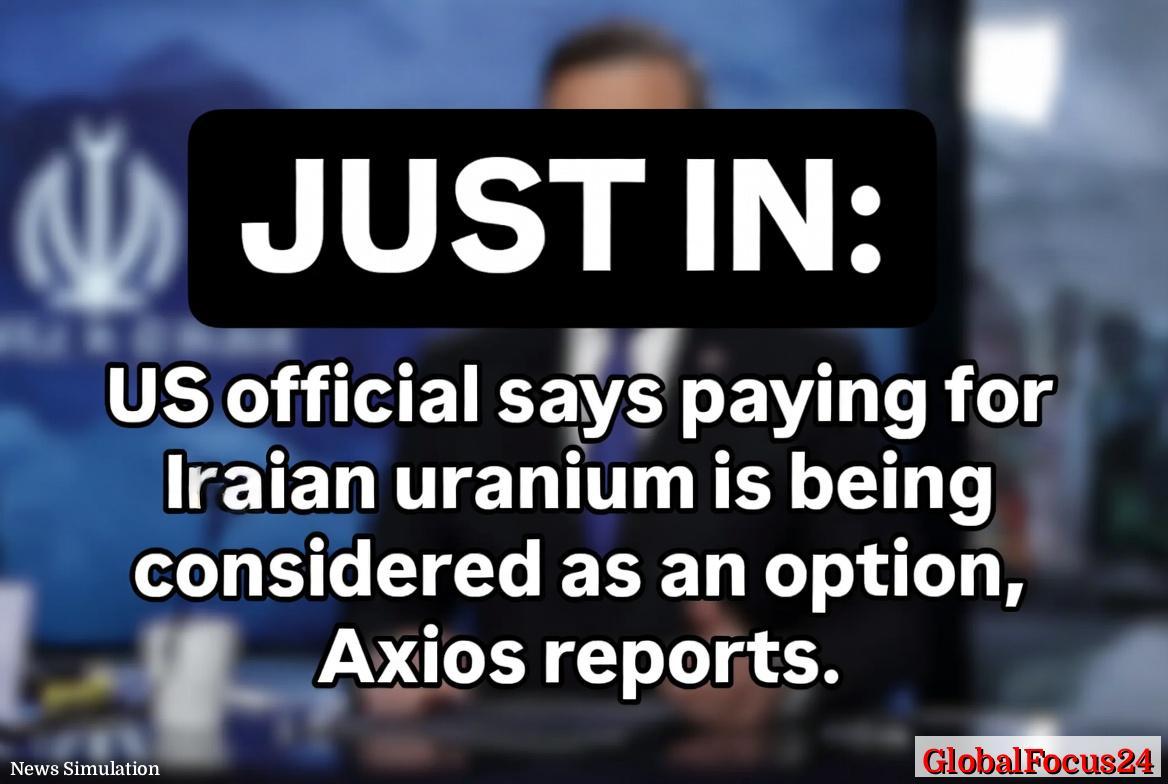
US Weighs Option of Paying for Iranian Uranium Amid Renewed Nuclear Concerns
Proposal Emerges in Ongoing Nuclear Policy Discussions
A senior US official has confirmed that policymakers are evaluating the possibility of paying for Iranian uranium as part of a broader strategy to manage nuclear risks and stabilize global supply concerns. The concept, still in a preliminary stage, reflects a shift toward exploring unconventional approaches to longstanding challenges surrounding Iran’s nuclear program.
The idea centers on the controlled purchase or compensation mechanism for uranium materials, potentially as part of a monitored framework designed to limit enrichment levels and ensure transparency. While no formal agreement has been announced, the acknowledgment of such an option signals renewed urgency in addressing nuclear proliferation concerns in the Middle East.
Historical Context of Iran’s Nuclear Program
Iran’s nuclear ambitions have been a focal point of international diplomacy for more than two decades. The issue gained prominence in the early 2000s when Western governments raised concerns about uranium enrichment activities that could potentially be diverted toward weapons development.
In 2015, the Joint Comprehensive Plan of Action (JCPOA) established strict limits on Iran’s nuclear program in exchange for sanctions relief. Under the agreement, Iran agreed to cap uranium enrichment levels, reduce its stockpile, and allow extensive inspections by international agencies.
However, the US withdrawal from the agreement in 2018 and the subsequent reimposition of sanctions led to escalating tensions. Iran gradually resumed and expanded its enrichment activities, increasing both the quantity and purity of uranium in its possession. Efforts to revive the agreement have faced repeated setbacks, leaving policymakers searching for alternative solutions.
The notion of paying for uranium reflects an attempt to revisit elements of earlier diplomatic strategies, including buyback arrangements that were once discussed as a way to limit stockpiles without dismantling infrastructure.
Economic Dimensions of Uranium Transactions
The potential economic implications of purchasing Iranian uranium are complex and far-reaching. Uranium is a critical resource for nuclear energy production, and global demand has grown steadily as countries seek low-carbon energy sources.
Introducing Iranian uranium into regulated markets could influence pricing dynamics and supply chains. Iran possesses significant uranium reserves, and its entry into formalized trade—under strict oversight—could ease pressure on global supply, particularly amid rising demand from Asia and Europe.
At the same time, financial transactions involving Iranian resources remain highly sensitive due to existing sanctions frameworks. Any payment mechanism would likely require carefully structured channels, potentially involving escrow accounts or multilateral oversight to ensure compliance with international regulations.
Economists note that such a system could create both opportunities and risks:
- It could stabilize uranium prices by increasing supply predictability.
- It may provide Iran with limited economic relief, potentially incentivizing compliance.
- It could complicate existing sanctions regimes, requiring adjustments or exemptions.
The broader economic ripple effects would depend heavily on how the arrangement is structured and enforced.
Regional Implications in the Middle East
The proposal carries significant implications for regional dynamics, particularly among neighboring countries that have closely monitored Iran’s nuclear activities.
Several Middle Eastern nations have expressed concern over the potential for nuclear proliferation, prompting some to explore their own nuclear energy programs. A mechanism that involves purchasing uranium could be viewed as a confidence-building measure if it effectively limits enrichment capabilities.
However, regional responses are likely to vary:
- Some countries may see the move as a pragmatic step toward de-escalation.
- Others could interpret it as legitimizing Iran’s nuclear infrastructure.
- It may influence ongoing discussions about nuclear energy development across the region.
The Middle East has seen increasing investment in civilian nuclear energy projects, particularly in the Gulf. Ensuring that these programs remain strictly peaceful has been a central objective of international oversight bodies. Any shift in how Iran’s uranium is handled could shape perceptions and policies across the region.
Comparisons with Global Nuclear Material Agreements
Efforts to manage nuclear materials through financial or trade-based mechanisms are not without precedent. Similar approaches have been used in other contexts to reduce stockpiles and prevent proliferation.
For example, after the Cold War, the United States and Russia implemented programs to downblend highly enriched uranium from dismantled nuclear weapons into fuel for civilian reactors. These initiatives demonstrated that economic incentives could play a role in reducing nuclear risks.
In another case, international fuel banks have been established to provide countries with access to nuclear fuel without requiring domestic enrichment capabilities. These systems aim to reduce incentives for developing sensitive technologies.
The concept of paying for Iranian uranium aligns with these broader strategies by attempting to separate economic value from potential security risks. However, the geopolitical complexities surrounding Iran make the situation uniquely challenging.
Technical Considerations and Oversight
Any arrangement involving uranium transactions would require robust verification and monitoring mechanisms. International agencies, particularly the International Atomic Energy Agency (IAEA), would likely play a central role in ensuring compliance.
Key technical considerations include:
- Verification of uranium quantities and enrichment levels.
- Secure transportation and storage of materials.
- Continuous monitoring to prevent diversion or unauthorized use.
Establishing trust in such a system would be critical. Past disputes over inspection access and reporting transparency have underscored the importance of clear and enforceable protocols.
Market Reactions and Industry Perspective
The global nuclear energy sector is closely watching developments related to Iran’s uranium. Energy companies, utilities, and commodity traders are assessing how potential changes could affect long-term planning.
Uranium markets have experienced fluctuations in recent years, driven by shifting energy policies and geopolitical tensions. The introduction of a new supply source—particularly one tied to diplomatic agreements—could alter expectations about future availability.
Industry analysts suggest that clarity and predictability will be key factors. A well-defined framework could encourage investment and stabilize pricing, while uncertainty could have the opposite effect.
Public reaction has been mixed, reflecting the complexity of the issue. Some view the proposal as a pragmatic solution to a persistent challenge, while others express concern about the broader implications.
Strategic Considerations for US Policy
For US policymakers, the exploration of this option reflects a broader effort to balance security objectives with practical constraints. Traditional approaches, including sanctions and diplomatic negotiations, have produced limited results in recent years.
By considering economic mechanisms, officials may be seeking to introduce new incentives into the equation. The goal would be to reduce nuclear risks while maintaining leverage and oversight.
At the same time, any such initiative would need to navigate legal, financial, and diplomatic hurdles. Coordination with international partners would be essential to ensure consistency and effectiveness.
Outlook and Next Steps
The idea of paying for Iranian uranium remains under consideration, with no immediate timeline for implementation. Further discussions are expected to involve technical experts, economic advisors, and international stakeholders.
Key questions that will shape the path forward include:
- How to structure payments in a way that complies with existing regulations.
- What safeguards are necessary to ensure non-proliferation objectives are met.
- How regional and global partners will respond to the proposal.
As the situation evolves, the proposal highlights the ongoing search for innovative solutions to one of the most complex issues in global security and energy policy.