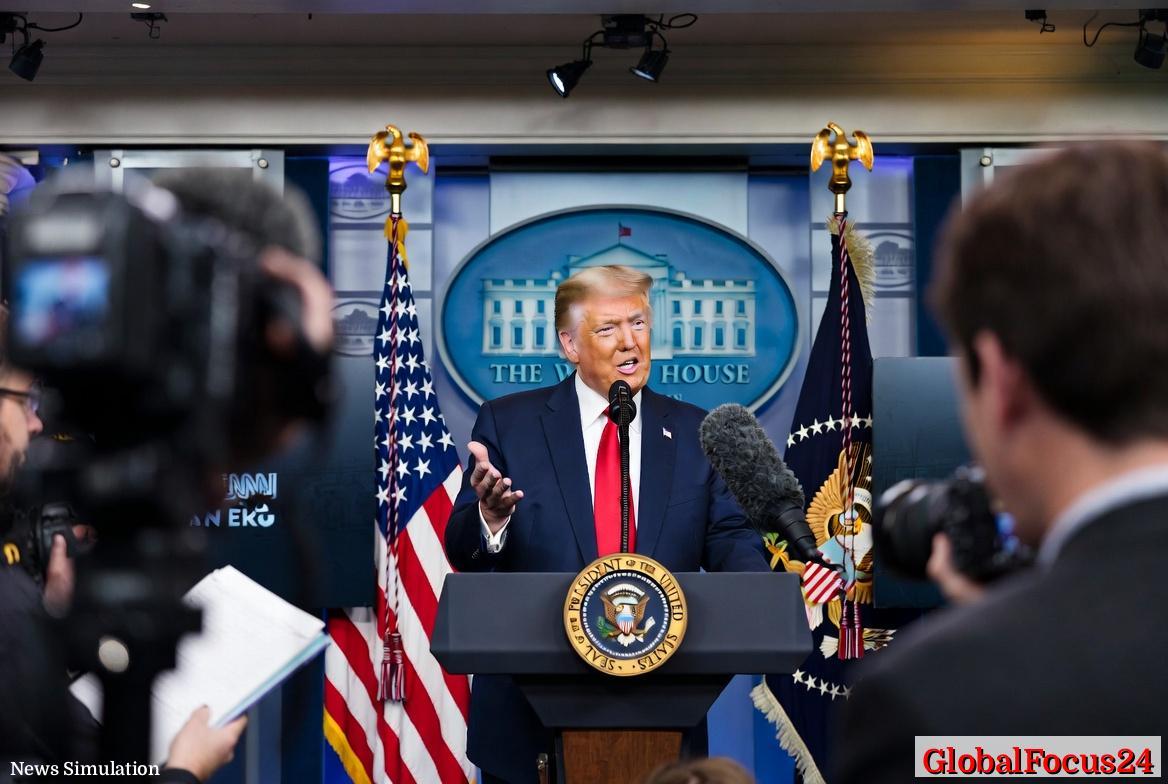
Trump Claims Iran Agreed to Remove Enriched Uranium as Tehran Denies Deal
Conflicting Statements Raise Questions Over Nuclear Negotiations
A sharp discrepancy between statements from Washington and Tehran has cast uncertainty over the status of ongoing nuclear discussions, after U.S. President Donald Trump said Iran had agreed to sweeping concessions—including the removal of enriched uranium—while Iranian state media rejected the claim outright.
Speaking publicly, Trump asserted that Iran had “agreed to everything,” specifically highlighting what would be a major breakthrough: the transfer or elimination of enriched uranium stockpiles. Such a move would mark a significant shift in Iran’s nuclear posture and represent a key objective long sought by U.S. negotiators and international partners.
However, Iranian state outlets quickly pushed back, stating that no agreement had been reached regarding the removal or export of enriched uranium. The denial underscores a familiar pattern in high-stakes diplomacy, where competing narratives emerge during sensitive negotiations.
The divergence in messaging has introduced fresh uncertainty into a process already marked by years of tension, stalled talks, and fragile diplomatic openings.
Why Enriched Uranium Is Central to the Dispute
At the heart of the disagreement lies enriched uranium, a material that can be used for both civilian energy production and, at higher levels of enrichment, nuclear weapons development.
Under the 2015 nuclear agreement formally known as the Joint Comprehensive Plan of Action (JCPOA), Iran agreed to limit uranium enrichment levels to $3.67%$ and reduce its stockpile to about 300 kilograms. These limits were designed to extend Iran’s “breakout time”—the period required to produce enough fissile material for a nuclear weapon—to at least one year.
Since the U.S. withdrawal from the JCPOA in 2018, Iran has progressively expanded its nuclear activities. Reports have indicated enrichment levels reaching up to $60%$, far above civilian needs and closer to weapons-grade material, typically defined at around $90%$.
Removing or transferring enriched uranium would significantly reduce Iran’s immediate nuclear capability and serve as a confidence-building measure. For this reason, it has remained a central demand in negotiations aimed at reviving or replacing earlier agreements.
Historical Context of U.S.-Iran Nuclear Talks
The current dispute is rooted in a long history of nuclear diplomacy between Iran and global powers.
- 2000s: International concerns grow over Iran’s nuclear program, leading to sanctions and negotiations.
- 2015: The JCPOA is signed between Iran and six world powers, offering sanctions relief in exchange for nuclear restrictions.
- 2018: The United States withdraws from the agreement, reimposing sanctions under a “maximum pressure” strategy.
- 2019–2024: Iran incrementally scales back its compliance, while intermittent talks attempt to restore the deal or establish a new framework.
Throughout this period, trust deficits have persisted on both sides. Verification mechanisms, timelines for sanctions relief, and the sequencing of commitments have all been recurring sticking points.
The latest exchange of claims highlights how fragile the diplomatic environment remains, even when negotiations appear to be progressing.
Economic Stakes for Iran and Global Markets
The outcome of any nuclear agreement carries significant economic implications, particularly for Iran’s energy sector and the broader global oil market.
Iran possesses some of the world’s largest oil and natural gas reserves, but sanctions have sharply limited its ability to export energy. A verified agreement involving nuclear concessions could pave the way for sanctions relief, potentially allowing Iran to increase oil exports by more than 1 million barrels per day.
Such an increase would have ripple effects across global energy markets:
- Lower oil prices due to increased supply.
- Greater stability in energy-importing regions facing inflationary pressures.
- Heightened competition among oil-producing nations, particularly within OPEC.
For Iran’s domestic economy, sanctions relief could unlock frozen assets, stabilize the currency, and improve access to international banking systems. However, these benefits depend heavily on the credibility and durability of any agreement reached.
The uncertainty created by conflicting statements may delay economic planning and discourage investment, both within Iran and among international stakeholders.
Regional Implications and Security Concerns
The Middle East remains highly sensitive to developments in Iran’s nuclear program. Neighboring countries have long expressed concern over both nuclear proliferation and regional security dynamics.
Countries such as Saudi Arabia and the United Arab Emirates have advocated for strict limits on Iran’s nuclear activities, while Israel has consistently opposed any agreement it perceives as insufficiently restrictive.
A confirmed deal involving the removal of enriched uranium could ease regional tensions by reducing the perceived risk of nuclear escalation. Conversely, continued ambiguity or breakdowns in negotiations may heighten security concerns and increase the likelihood of unilateral actions.
Regional comparisons also highlight differing approaches to nuclear energy. While several Middle Eastern nations are developing civilian nuclear programs, these initiatives typically operate under strict international oversight, including agreements that limit enrichment capabilities.
Iran’s program, by contrast, has been subject to more intensive scrutiny due to its scale and the level of enrichment achieved.
Diplomatic Messaging and Strategic Communication
The conflicting narratives from Washington and Tehran may reflect strategic communication as much as substantive disagreement.
Public statements in high-level negotiations often serve multiple purposes:
- Signaling progress to domestic audiences.
- Applying pressure on negotiating counterparts.
- Shaping international perception ahead of formal agreements.
Trump’s assertion that Iran has agreed to sweeping terms could be intended to project momentum or establish a negotiating baseline. Meanwhile, Iran’s denial may aim to preserve leverage and avoid appearing to concede under pressure.
Such dynamics are not uncommon in complex diplomatic efforts, where final agreements often emerge only after prolonged periods of public ambiguity.
What Comes Next in the Negotiation Process
Despite the conflicting claims, diplomatic engagement is expected to continue. Key factors that will shape the next phase include:
- Verification mechanisms: Any agreement involving enriched uranium will require robust monitoring by international inspectors.
- Sequencing of steps: Determining whether sanctions relief or nuclear concessions come first remains a critical issue.
- Political timelines: Domestic considerations in both countries may influence the pace and scope of negotiations.
Observers note that even partial agreements—such as interim measures to cap enrichment levels—could help stabilize the situation while broader terms are negotiated.
However, the gap between the two sides’ public positions suggests that significant work remains before any comprehensive deal is finalized.
A Fragile Moment in Nuclear Diplomacy
The current episode illustrates the complexity of modern nuclear diplomacy, where technical details, economic interests, and political narratives intersect.
While the prospect of Iran agreeing to remove enriched uranium would represent a major breakthrough, the immediate denial from Tehran highlights the challenges of translating diplomatic discussions into verifiable commitments.
As negotiations continue, the focus will remain on whether both sides can bridge their differences and establish a framework that addresses security concerns while enabling economic recovery.
Until then, the situation remains fluid, with global markets, regional actors, and international institutions closely watching each new development.