UN Warns of Possible Genocide in Sudan Amid Escalating Humanitarian Crisis
Mounting Evidence of Systematic Atrocities
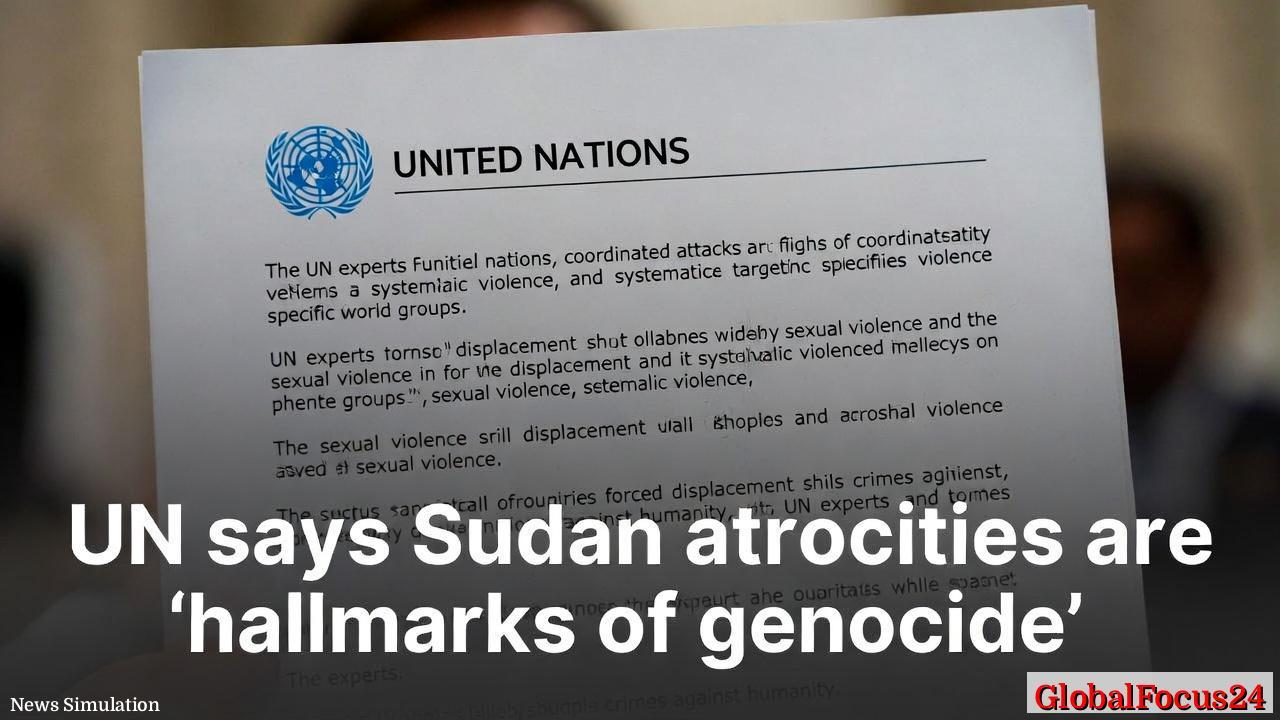
The United Nations has issued its starkest warning yet over the conflict in Sudan, stating that atrocities committed in parts of the country bear the “hallmarks of genocide.” Evidence gathered by UN investigators points to coordinated attacks, exterminatory rhetoric, and widespread violence directed at ethnic and community groups, suggesting an intent to destroy these populations in whole or in part.
The statement follows nearly two years of devastating conflict between the Sudanese Armed Forces (SAF) and the paramilitary Rapid Support Forces (RSF), a war that has displaced more than 8 million people, destroyed key infrastructure, and fractured the nation's already fragile political landscape. According to UN officials, the violence has been particularly severe in the western region of Darfur, where ethnic-based killings and mass displacement mirror patterns seen during the early-2000s conflict that left an estimated 300,000 people dead.
Renewed Fears of Genocide in Darfur
Witness testimony, satellite imagery, and on-the-ground reports indicate that the RSF and allied militias have carried out large-scale attacks on non-Arab groups, including the Masalit community in West Darfur. Entire villages have been razed, civilians targeted, and survivors subjected to sexual violence, torture, and forced starvation. The UN mission concluded that many of these acts appear to be premeditated and coordinated, reflecting intent to eliminate specific populations rather than isolated wartime excesses.
“The patterns we are seeing—the deliberate targeting of communities, the systematic nature of the violence—align with internationally recognized indicators of genocidal acts,” said the head of the UN fact-finding mission. The body’s interim report urges immediate international action to prevent further atrocities, warning that “inaction in the face of these crimes would repeat the mistakes of past genocides.”
Historical Context of Sudan’s Ethnic Conflicts
The current warnings revive painful memories of the Darfur war that erupted in 2003, when government-backed Janjaweed militias waged brutal campaigns against non-Arab ethnic groups. That conflict led to multiple international indictments, including an arrest warrant for former Sudanese president Omar al-Bashir on charges of genocide and war crimes by the International Criminal Court (ICC).
Although the government formally signed peace agreements over the years, underlying ethnic and political tensions never fully dissipated. The RSF itself evolved from the Janjaweed’s remnants, later integrated into Sudan’s security apparatus before breaking with the armed forces in April 2023. The power struggle between the SAF and RSF became the spark that reignited Sudan’s chronic cycle of violence, leaving civilians once again caught between warring factions.
Humanitarian Collapse and Regional Repercussions
The humanitarian toll in Sudan has reached catastrophic levels. The UN estimates that over half of Sudan’s 45 million people now require urgent humanitarian assistance. Food insecurity has deepened, with vast areas on the brink of famine due to disrupted agricultural production, blockades of aid corridors, and the destruction of markets and supply chains. The situation has been exacerbated by targeted attacks on humanitarian workers and the looting of relief convoys.
Neighboring countries, particularly Chad and South Sudan, are struggling to absorb the tide of refugees. Camps along the borders have become overcrowded, and local authorities fear disease outbreaks and resource scarcity could inflame tensions across borders. Regional analysts warn that if the violence continues unchecked, the crisis could destabilize the wider Horn of Africa region, already burdened by conflicts in Ethiopia and insecurity along the Red Sea.
International Response and Calls for Intervention
The UN Security Council has convened multiple emergency sessions on the situation in Sudan, but member states remain divided over the scale and form of intervention. While Western nations have called for targeted sanctions and referral to the ICC, others urge diplomatic mediation rather than punitive measures. African Union representatives have proposed a continental peacekeeping mission to protect civilians, though funding and logistical challenges have limited progress.
Human rights organizations have demanded a more robust international response. Amnesty International and Human Rights Watch say the UN’s findings provide sufficient legal grounds to trigger international investigations under the Genocide Convention. Both groups stress that failure to act now would compromise global accountability mechanisms and embolden perpetrators elsewhere.
Economic and Social Devastation
The ongoing conflict has devastated Sudan’s economy, once poised for partial recovery after years of sanctions and isolation. Currency collapse, runaway inflation, and the destruction of key industries—particularly agriculture and oil—have crippled production and trade. Black market activity has surged as basic goods vanish from shelves, and prolonged instability threatens the livelihoods of millions of Sudanese who once relied on farming and small-scale commerce.
The disruption of Sudan’s gold mining sector, a major revenue source, has further worsened the crisis. Reports suggest that armed groups are exploiting mines to finance their operations, diverting profits away from state institutions. Economists warn that even if hostilities ceased immediately, it could take years to rebuild confidence in Sudan’s currency, financial systems, and investment climate.
Comparisons with Other Regional Conflicts
Comparisons are increasingly being drawn between Sudan’s unfolding tragedy and recent conflicts in other parts of Africa, including Ethiopia’s Tigray region and the Central African Republic. Like those crises, the Sudan war reflects a convergence of ethnic hostility, competition for natural resources, and political fragmentation. However, the scale of displacement in Sudan now ranks among the largest in the world, rivaling Syria and Ukraine in terms of humanitarian emergencies.
International observers note that Sudan’s geographic position—bordering seven countries—gives the crisis global significance beyond Africa. Trade routes, migration pathways, and Red Sea security are all affected by instability in Sudan’s vast territory. This reality has spurred neighboring governments to advocate for a stronger global response, fearing a ripple effect on economic corridors and cross-border relations.
Legal Pathways and Accountability Measures
The UN’s latest report may reinvigorate efforts to hold Sudanese commanders accountable through international justice mechanisms. The ICC still maintains open cases related to Darfur, and some experts argue that current events could warrant updated charges or new investigations under the court’s jurisdiction.
Legal scholars point out that proving genocidal intent remains one of the most challenging aspects of international law. Prosecutors must demonstrate clear intent to destroy a group “in whole or in part,” a standard that historically has required extensive evidence, including documentation of targeted killings, hate speech, and internal communications. The UN mission’s evidence of coordinated strategy and rhetoric directed at specific ethnic populations could meet that threshold, but the process is likely to be lengthy and politically fraught.
A Race Against Time
As the UN and humanitarian agencies warn, time is running out to halt what some observers describe as “a war of annihilation.” Reports from the ground suggest that violence continues to spread into new areas, and civilians are trapped amid shifting frontlines with little access to food, medicine, or safety. With communications often cut off, the full scale of the devastation remains unclear, but satellite data has captured extensive burn patterns consistent with village-level destruction.
Diplomats continue to push for an internationally mediated ceasefire, but mistrust between the warring factions has derailed repeated attempts at dialogue. Without sustained pressure and enforcement from global and regional powers, experts fear that Sudan may slip further into chaos reminiscent of the country’s darkest chapters.
Outlook and Global Urgency
The UN’s warning represents a pivotal moment for the international community, highlighting both the moral imperative and the geopolitical necessity of addressing Sudan’s crisis. Preventing genocide has long been a stated priority of the UN system, yet past failures—in Rwanda, Bosnia, and Darfur itself—have underscored the consequences of delayed action. Today, with credible evidence mounting and millions at risk, the call for intervention has become not only a legal duty but a humanitarian necessity.
Sudan stands at a crossroads: one path toward continued destruction and fragmentation, the other toward painful but necessary reconstruction and reconciliation. Whether the world can mobilize the political will to alter that course may determine not only Sudan’s future, but also the credibility of the global commitment to prevent genocide in the 21st century.