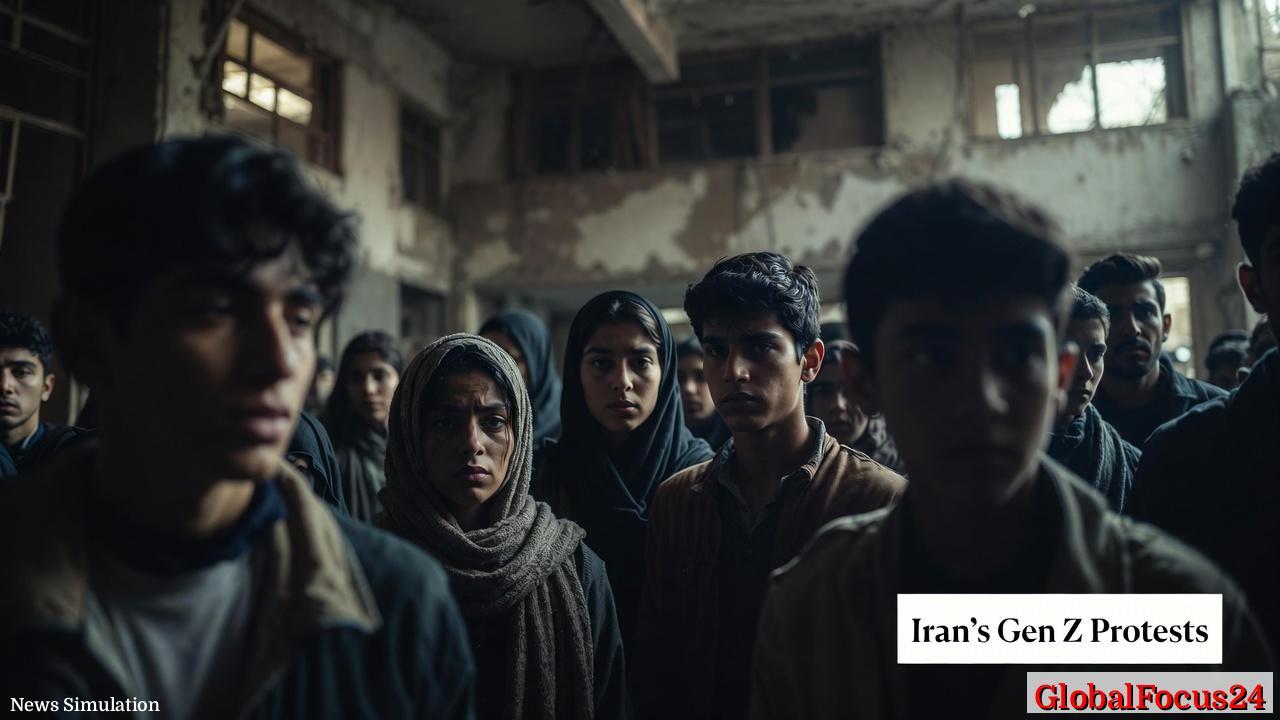
Iran’s Gen Z Lives on the Front Lines of Protests as Crackdown Expands
A volatile chapter in Iran’s contemporary history is unfolding with Technicolor urgency, as nationwide protests sparked by a young generation confront state power in a climate of intensified crackdowns. The scale of the recent crackdown has drawn international attention, but beneath thes lies a longer, multidimensional story: a society where generations diverge on values, where youth mobilization intersects with a shifting economy, and where regional comparisons illuminate both shared pressures and distinct trajectories.
Historical Context: A Generation Raised in Change
In the last decade, Iran’s political and social landscape has undergone rapid transformation. The rise of a digitally savvy generation—often described as Gen Z—has reshaped how Iranians communicate, organize, and imagine the future. Social media, encrypted messaging, and diaspora-connected networks created new avenues for rapid mobilization, even as authorities enforced strict information controls. The protests that began in late 2022 and intensified through the following years crystallized a generational fault line: a cohort that views access to information, personal autonomy, and political participation as non-negotiable expectations.
Historically, Iran has weathered waves of reformist sentiment and hardline governance in cycles of election, protest, and consolidation. The most recent protests are not isolated events but part of a longer continuum in which economic pressures, cultural norms, and political grievance intersect. The Gen Z cohort, raised amid a global information ecosystem and domestic economic pressures, became a catalyst for collective action. Their participation is notable not only for numbers but for organized street presence, digital storytelling, and a willingness to confront risk in pursuit of social change.
Economic Landscape: Youth, Jobs, and the Cost of Living
Economic conditions are a central driver of unrest. Iran’s economy has faced sanctions, inflation, and currency volatility that erode purchasing power and create uncertainty for households. For young people entering the labor market, the picture is particularly challenging. Youth unemployment has long hovered above national averages, while many graduates face limited job opportunities in both private and public sectors. The burden is compounded by rising costs of essentials—housing, food, and energy—often outpacing wage growth. These conditions intensify the appeal of demonstrations that combine moral and economic grievances, offering a narrative of collective resilience and potential reform.
In regional terms, Iran’s economic challenges echo broader trends across parts of the Middle East where youth populations are large and employment prospects are uncertain. Yet, Iran’s economic structure—reliant on a mix of state-directed industries, sanctions-driven adjustments, and a robust informal sector—creates a distinctive texture. Supply-chain disruptions, energy subsidies, and exchange-rate volatility influence daily life in cities, towns, and rural areas alike. When youth-driven movements emerge, they do so against this economic backdrop, transforming grievances over wages and prices into a broader call for political accountability and social liberalization.
Regional Comparisons: Similar Currents, Different Currents
Comparisons with neighboring countries reveal both similarities and divergences in youth-led movements and state responses. Across the broader region, countries facing demographic bulges and economic pressures have seen protests that blend economic discontent with civil liberties demands. In some contexts, governments have pursued swift security-oriented responses, while in others, reform-oriented dialogue has yielded mixed results. Iran’s approach, characterized by a combination of security measures, rhetoric about national cohesion, and limited policy concessions, reflects a balancing act between maintaining regime stability and addressing underlying grievances. Understanding these dynamics helps explain why the protests have persisted and how international attention affects both tactics and outcomes.
The Role of Gen Z: Digital Natives in the Public Sphere
Gen Z in Iran enters public life with a distinct set of tools and expectations. Access to information, connectivity, and peer networks shapes how this generation organizes, communicates, and responds to authorities. The protests have featured innovative street theater, synchronized demonstrations, and the rapid dissemination of narratives that challenge official accounts. The energy and creativity of young participants have become a powerful symbol of resistance, attracting sympathy from diverse segments of society, including students, professionals, and families seeking reform without sacrificing national stability.
Public Sentiment: Support, Fear, and the Aftershocks of Crackdown
Public reaction to the crackdown is complex and multifaceted. Among supporters of reform or moderate changes, there is a sense of urgency about safeguarding civil liberties and reducing economic hardship. Others emphasize the need for order, arguing that stability is essential for economic recovery and social harmony. Yet the human dimension—families who have lost loved ones, communities that have witnessed arrests, and individuals who fear for their daily safety—creates a powerful moral imperative that transcends partisan divides. Weathering the crackdown requires resilience from civil society, a commitment to nonviolent action where possible, and continued engagement with international institutions and humanitarian networks to ensure protection for civilians.
Human Cost and Memorialization
Reports of casualties, including teenagers and young adults, have intensified the moral gravity of the protests. Each loss reverberates through households and neighborhoods, shaping public discourse and influencing future protest strategies. Memorials and public remembrances—whether formal or informal—emerge as acts of collective memory, underscoring the stakes of the struggle and the hope that future generations will inherit a more open public square. The human cost is a somber reminder that political reform, while aspirational, exacts a price and requires sustained attention from the international community to advocate for human rights, due process, and civilian protection.
State Response: Security Measures and Political Messaging
Authorities have framed the response in terms of national sovereignty, public order, and cultural norms. The approach combines tactical security measures with political rhetoric designed to dissuade participation while preserving the impression of a lawful, orderly process. Analysts observe that the regime’s messaging seeks to delegitimize protesters by labeling them as unpatriotic or influenced by external actors, while simultaneously highlighting calls for stability and economic recovery. This dual-track strategy—emphasizing unity on the one hand and enforcing controls on the other—illustrates the delicate balance the government attempts to strike between legitimacy and legitimacy-in-waiting.
Legal and Human Rights Perspectives
Legal frameworks governing protests, assembly, and speech have come under scrutiny from international human rights organizations and foreign governments. Observers emphasize the importance of proportionality in law enforcement, due process in arrests, and clear avenues for redress for those who allege abuse. Civil society groups continue to document incidents, advocate for accountability, and provide humanitarian support to affected families. While external voices can influence diplomatic dialogue, lasting change often depends on internal reforms, transparent governance, and credible commitment to protecting fundamental rights.
Economic Implications: Short-Term Turbulence, Long-Term Recalibration
The immediate economic impact of the crackdown includes heightened uncertainty, capital flight, and potential disruptions to business operations in affected areas. In the medium term, government confidence and investor sentiment may face headwinds if social unrest persists or if policy responses fail to address core economic grievances. Conversely, periods of reform, even if incremental, can attract attention from international markets seeking stability and long-term growth potential. The net effect on the macroeconomy depends on the trajectory of sanctions, commodity prices, exchange rates, and the government’s ability to implement targeted reforms that stimulate employment and consumer confidence.
Civic Infrastructure: Education, Media, and Public Spaces
A resilient civil society requires safe spaces for dialogue, independent journalism, and inclusive education systems that empower youth with critical thinking skills and civic literacy. Universities, cultural centers, and community organizations play a pivotal role in sustaining dialogue, offering safe platforms for debate, and documenting human-rights concerns. Independent media and digital platforms continue to serve as vital channels for information, analysis, and diverse perspectives, even as authorities attempt to regulate content. The health of these civic institutions often signals the potential for durable, peaceful political change.
Regional Perspectives: Neighboring States, Shared Challenges
While each country’s path is shaped by unique history and institutions, a shared regional thread is the demand for economic opportunity, personal autonomy, and fair governance. In several regional cases, reforms have begun with targeted policy changes, social dialogue, and investment in education and job creation. Observers note that success stories—where youth voices influence policy in constructive ways—offer templates, though not direct blueprints, for Iran’s future. The ongoing conversation about how to balance reform, security, and economic resilience remains central to political stability throughout the region.
Future Outlook: What Comes Next
The coming months will test the delicate balance between civil liberties, security considerations, and economic imperatives. If the government pursues targeted reforms aimed at reducing inflation, expanding employment opportunities, and increasing transparency, there could be space for gradual, nonviolent change that channels public energy into constructive civic engagement. Alternatively, if crackdowns intensify without clear policy concessions, the protests may persist, evolve, and potentially broaden into new forms of social mobilization. The public’s appetite for reform, coupled with international attention and potential economic recalibration, will significantly shape the trajectory.
Public Health and Social Well-Being: Beyond Politics
Beyond the immediate political agenda, the well-being of society rests on health, education, and social cohesion. Prolonged instability can strain healthcare systems, disrupt schooling, and increase mental health challenges across communities. Policy responses that prioritize essential services, protect vulnerable populations, and maintain access to healthcare and education can mitigate some adverse effects of unrest and provide a foundation for a more stable recovery.
Conclusion: A Generationally Charged Moment in Iran’s Timeline
The protests driven by Iran’s younger generation reflect a broader pattern seen in many parts of the world where demographics, economic pressures, and digital connectivity converge to accelerate social change. The scale of the crackdown highlights the regime’s determination to maintain control, while the continued mobilization signals enduring demand for greater political participation and social freedoms. The path forward remains uncertain, but the persistence of youth-led protest movements underscores a central truth: when a generation questions the terms of its own governance, the implications extend far beyond the streets where demonstrations unfold. Economic recalibration, social reforms, and credible governance will determine whether this moment matures into incremental progress or a longer, transformative arc in Iran’s political and social landscape.