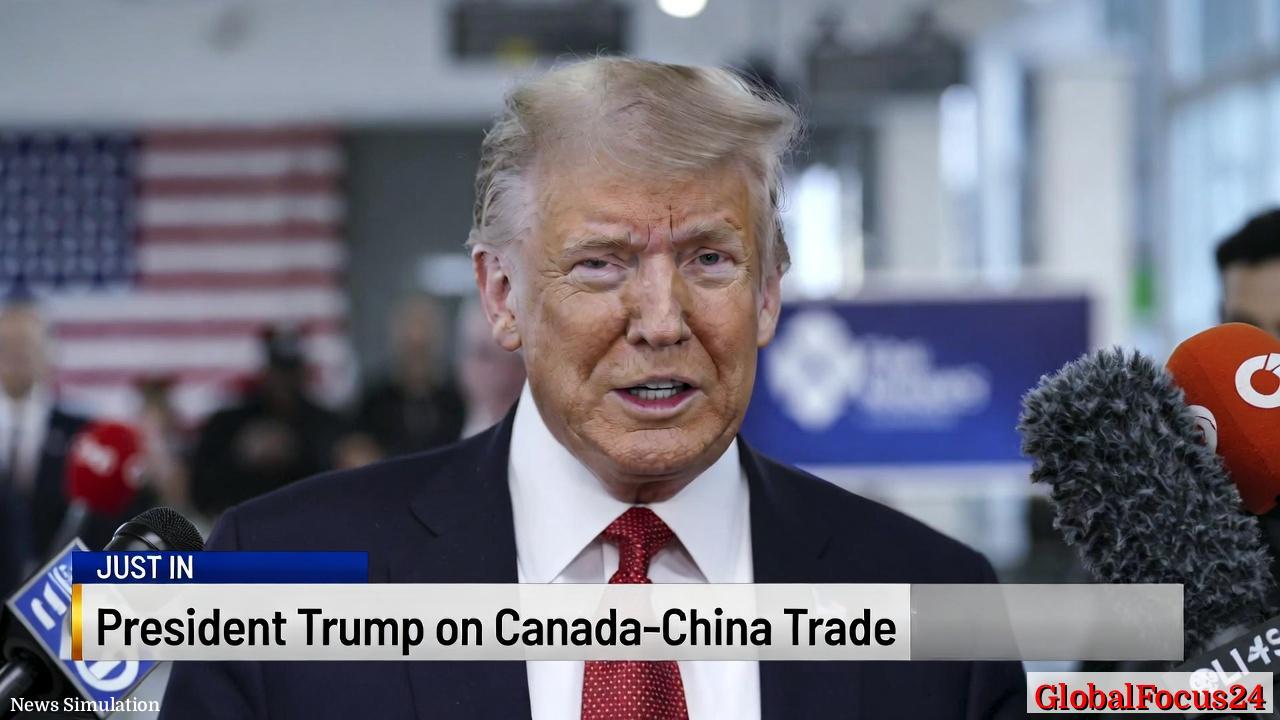
Trump Threats 100% Tariffs on Canada Amid Rising U.S.-China Trade Tensions
In a moment of heightened global trade friction, the United States has floated the prospect of imposing a 100% tariff on all goods entering from Canada, linking the move to evolving trade dynamics with China. The statement underscores a broader pattern of hardline tariff rhetoric that connects North American economic fate to tensions in the Asia-Pacific region. The remarks, delivered in a policy context that emphasizes national sovereignty over trade policy, signal a potential shift in how the United States squares its regional alliances with its emerging competition on the world stage.
Historical context: from orbiting alliances to tariff shocks
To understand the significance, it helps to revisit the arc of North American trade relations. The United States and Canada have long maintained a robust, rules-based trading relationship anchored by the United States–Mexico–Canada Agreement (USMCA) and a broader web of cross-border supply chains. Canadian exporters have benefited from proximity, stable rule sets, and a mutual interest in continental economic integration. Yet, this post-industrial era has also exposed vulnerabilities in just-in-time manufacturing and sensitive dependencies on global markets, including China.
Historically, tariff policy has been a blunt instrument used to recalibrate strategic priorities. The idea of a 100% tariff, while extreme in public rhetoric, evokes moments in history when governments used tariff walls to renegotiate leverage—whether in response to perceived unfair practices, to defend nascent industries, or to signal red lines in high-stakes diplomacy. The current discussion appears less about a finished policy proposal and more about signaling intent in a moment of strategic recalibration as U.S. policymakers weigh complex interdependencies with China while managing longstanding ties with Canada.
Economic impact: supply chains, prices, and regional dynamics
If enacted, a 100% tariff on Canadian goods would ripple across multiple sectors, with long and short-term consequences for prices, production planning, and regional competitiveness. Canada’s economy, closely tied to U.S. demand, would face immediate pressure on exports such as energy, automotive parts, agricultural products, and manufactured goods. U.S. importers relying on Canadian inputs could confront significant cost increases, prompting potential price pass-through to consumers and reshaping domestic production strategies.
For the Canadian economy, the impact hinges on diversification and resilience in supply chains. A sudden tariff spike could accelerate shifts toward alternative markets or geographic diversification, potentially muting the immediate effects through hedging and policy responses. In the broader North American economic landscape, the move could reconfigure proxy competition with China, as suppliers contemplate risk premia associated with regulatory changes and tariff volatility.
Regional comparisons illuminate the stakes. In the United States, border states with heavy Canada-related trade, such as those in the Great Lakes region and the Pacific Northwest, would feel amplified effects through disrupted cross-border flows and manufacturing adjustments. Conversely, regions with stronger domestic demand or diversified export bases might weather the shock more effectively, albeit with some price pressures and disrupted logistics. In Asia, Chinese manufacturers and intermediaries could recalibrate their own supply chain maps, potentially seeking new regional partners or shifting freight corridors to mitigate anticipated tariff-driven frictions.
Complexity beyond borders: trade agreements, retaliation, and policy coherence
The interwoven nature of modern trade means that tariff policy is rarely isolated. A 100% tariff on Canadian goods could invite reciprocal or strategic responses that escalate tensions and create spillovers into financial markets, energy pricing, and investment decisions. Market participants often weigh the cost of protectionism against the benefits of market access, and a drastic tariff move would intensify concerns about business uncertainty, investment delays, and the risk of stalling long-term planning.
Policy coherence matters. When tariff rhetoric intersects with ongoing negotiations around China, Greenland, or other geopolitical focal points, analysts watch for signals about strategic priorities—whether the administration intends to pursue a broader protectionist stance, recalibrate alliance structures, or pursue targeted leverage against perceived unfair practices. Observers would also examine how such a policy aligns with existing regional agreements, customs protocols, and the global rules-based trading system embodied in organizations such as the World Trade Organization.
Public reaction and business sentiment: urgency tempered by pragmatism
Public sentiment in cross-border communities often reflects a blend of anxiety and pragmatism. Businesses that rely on Canada’s proximity and integrated supply chains may advocate for predictability and stability, underscoring how sudden tariff changes disrupt production cycles and capital expenditure plans. Labor groups might emphasize the need to protect domestic jobs through diversified supply chains, while consumer advocates could highlight potential price volatility and reduced access to goods.
In Canadian circles, decision-makers and industry associations are likely to stress the importance of predictable trade rules and a stable environment for investment. Even as officials remind markets that a 100% tariff remains a hypothetical scenario, the mere possibility can catalyze quick reassessments of trade strategies, supplier diversification, and contingency planning among manufacturers, farmers, and exporters.
Global context: how this fits into a shifting trade map
Beyond bilateral implications, the episode sits within a broader reconfiguration of global trade relationships. Many economies are recalibrating dependencies to reduce exposure to concentrated supply chains, with resilience and regionalization becoming key themes. In this environment, tariff shocks in one quarter can trigger adaptive behavior globally: companies accelerate automation, build regional hubs, and explore nearshoring or re-shoring opportunities to minimize risk.
The role of China remains central in this narrative. As Beijing and Ottawa work to resolve tariff issues and reset bilateral relations, Canada’s stance toward its largest trading partner influences strategic calculations across North America. The dynamic is further complicated by domestic economic pressures, currency fluctuations, and inventory cycles—all of which interact with policy signals to shape investment decisions and the pace of recovery in sectors sensitive to price and availability of inputs.
What the future could hold: scenarios for policy, markets, and communities
If the 100% tariff scenario remains rhetorical, the likely near-term path would involve cautionary signals designed to deter certain behaviors without causing immediate economic disruption. In such a case, financial markets might price in heightened volatility, while policymakers focus on targeted measures aimed at particular sectors or trade practices. Firms would respond with hedging strategies, supplier diversification, and heightened due diligence to manage risk.
If the rhetoric translates into formal policy, the consequences would unfold quickly and distinctly. Short-term disruptions to supply chains could raise costs across industries reliant on Canadian inputs, with consumer prices potentially reflecting temporary increases in affected goods. Long-term effects would depend on policy design, such as exemptions for essential goods, tariff rate quotas, or sector-specific carve-outs that mitigate the most disruptive outcomes while preserving strategic objectives.
In all scenarios, regional communities could be prompted to invest in resilience: upgrading port infrastructure, logistics flexibility, and cross-border collaboration mechanisms that ease congestion and keep goods moving despite policy shifts. Public-private partnerships may emerge as a practical response to maintain stability, with a focus on maintaining critical supply lines and supporting workers who face transitional challenges.
Conclusion: a moment of strategic recalibration rather than a simple tariff decision
The discourse around a potential 100% tariff on Canadian goods amid broader China trade tensions underscores how intertwined modern economies have become. It highlights the strategic calculus policymakers weigh when balancing national interests, regional security, and global competitiveness. While a tariff policy of this magnitude would carry significant risks and uncertainties, the underlying current is a push toward reexamining how North American economies position themselves in a rapidly changing global marketplace.
As markets watch closely, the emphasis for businesses, workers, and governments will be on governance clarity, predictable rules, and practical steps to maintain supply chain integrity. The goal remains clear: sustainable growth that secures livelihoods, protects consumer access, and strengthens regional resilience in a world where trade policy and geopolitical tensions are continually evolving.