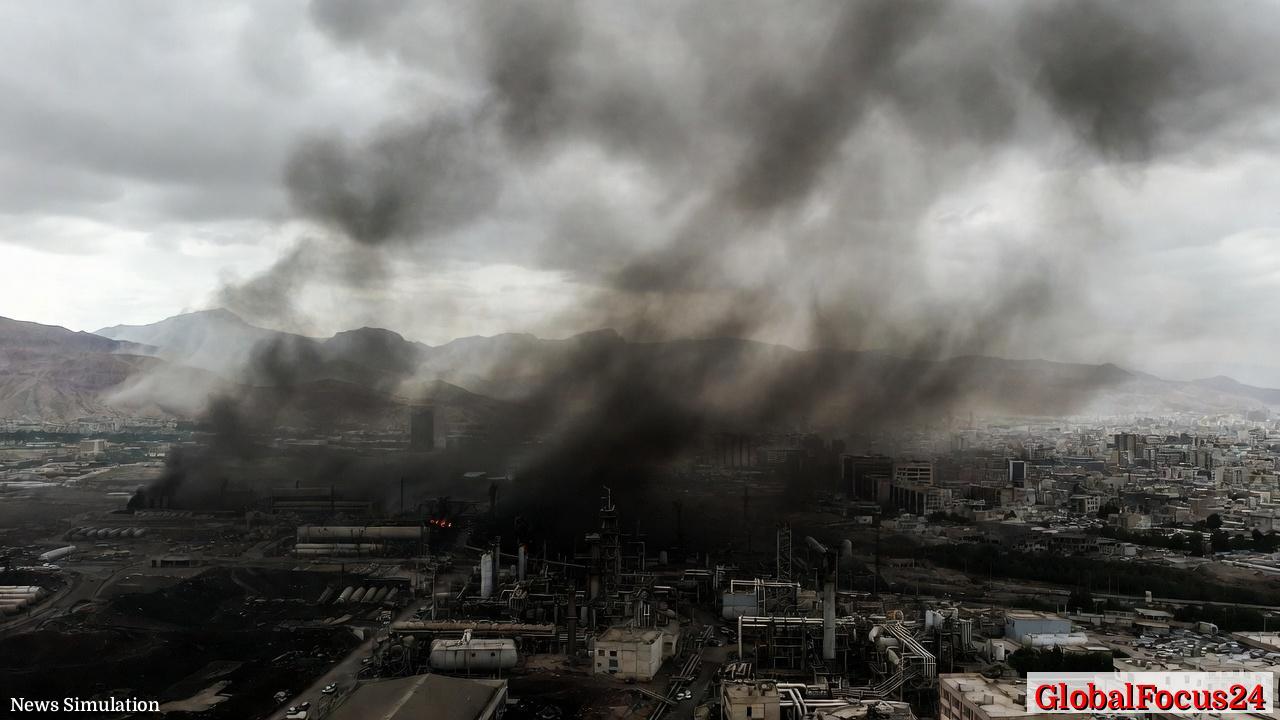
Tehran Struck by Severe Air Pollution After Industrial Fires and Targeted Attacks on Oil Infrastructure
A dense plume of toxic smoke and black rain has enveloped Tehran in the wake of coordinated strikes on oil depots and refineries, disrupting daily life, raising health concerns, and prompting authorities to issue shelter-in-place advisories. The incident marks a critical moment for Iran’s energy sector and raises questions about regional energy security, emergency response capacity, and the balance between industrial resilience and public health protection.
Historical context: Tehran’s environmental and industrial landscape Tehran sits at the foot of the Alborz mountain range, a topographical setting that often traps pollutants in temperature inversions. This geography, coupled with a historically large urban population and a concentration of fuel storage facilities, has long made air quality in the capital a persistent challenge. The city’s industrial backbone includes refining, petrochemical production, and logistics hubs that connect Iran’s energy exports to international markets. In recent decades, episodes of elevated smog, particulate matter, and hazardous chemical releases have underscored the vulnerability of dense urban centers to disruptions in energy infrastructure and war-like incidents.
The latest events intensified long-standing patterns of air pollution that have periodically pushed Tehran’s air quality into unhealthy ranges. When oil depots and refineries are damaged, both immediate and lingering effects appear—emissions of volatile organic compounds, sulfur oxides, and nitrogen oxides surge, contributing to the formation of fine particulate matter and secondary aerosols. The weather system around Tehran can either exacerbate or temporarily alleviate these conditions; in inversions, pollutants linger near the ground, compounding health risks for residents.
Economic impact: disruption to energy supply chains and regional markets The strikes on oil infrastructure reverberate through Iran’s economy, with direct effects on production capacity, logistics, and export prospects. Refineries convert crude oil into fuels and feedstocks used across multiple sectors, including transportation, manufacturing, and electricity generation. When assets at depots and refineries are damaged, maintenance and repair demands rise, while short-term production halts can tighten domestic fuel supplies and elevate prices in related markets.
Beyond immediate production losses, the incident affects downstream industries that rely on stable fuel inputs. Transport networks—rail, road, and shipping corridors—face higher operating costs and potential downtime as safety protocols tighten and crews assess structural integrity and air quality conditions. The broader regional energy picture may also shift as buyers reassess supply risk and alternative sourcing options in light of the disruption. Investors monitor the situation for signs of prolonged outages, potential renewal of grid-linked demand, and any changes in regulatory or safety standards that could influence long-term capital expenditure in the sector.
Regional comparisons: air quality events and industrial resilience Tehran’s experience mirrors broader patterns seen in large, oil-dependent urban centers that confront simultaneous public health and infrastructure challenges. In cities with similar topography and industrial mixes, episodes of heavy smoke or chemical contamination from fires or accidents have led to temporary evacuations, school closures, and heightened emergency responsiveness. Comparisons with other energy hubs in the region highlight how geographic factors, weather conditions, and industrial safety practices shape both the severity of air pollution events and the speed of recovery.
Urban air quality management typically combines monitoring networks, real-time public advisories, and industrial safety protocols. In Tehran, authorities have historically relied on a mix of weather-driven dispersion forecasts and localized air quality data to guide protective measures. The current situation emphasizes the importance of cross-agency coordination—between health, environmental, energy, and disaster response agencies—to deliver timely guidance on sheltering in place, medical readiness, and cleanup operations.
Health implications: protecting vulnerable populations The described smoke and black rain carry a mix of hazardous pollutants, including fine particulates smaller than 2.5 micrometres (PM2.5) and a suite of hydrocarbons, sulfur oxides, and nitrogen compounds. Short-term exposure can irritate the eyes, throat, and skin; provoke coughing or breathing difficulties; and pose acute risks to individuals with pre-existing respiratory or cardiovascular conditions. Infants, young children, older adults, and people with chronic illnesses face higher susceptibility to adverse health effects, including the potential for cardiovascular events and respiratory complications.
Protective actions often recommended by health authorities include staying indoors with windows closed, using high-efficiency air filters where available, limiting outdoor activity, and seeking medical attention for symptoms such as shortness of breath, chest pain, or persistent coughing. Long-term concerns focus on potential cardiovascular impacts, changes in blood pressure, and possible cognitive effects associated with prolonged exposure to certain airborne pollutants. Local medical facilities typically strengthen surveillance for respiratory and cardiac complications following such events, while public health messaging emphasizes hydration, rest, and adherence to medical plans for those with chronic conditions.
Environmental and atmospheric dynamics: why rain can become toxic Black rain, a term that evokes heavy pollution, occurs when rain scavenges soot, particulates, and chemical residues from the atmosphere, turning precipitation dark and potentially hazardous. In this scenario, the fires release hydrocarbons and other combustion byproducts that mix with rain, creating a corrosive and irritant-laden downpour. The resulting precipitation can transport contaminants to surfaces and waterways, complicating cleanup and posing secondary exposure risks for residents who come into contact with contaminated rain or runoff.
The combustion products involved can include benzene, toluene, acetone, and methylene chloride—substances with known health risks at elevated concentrations. Although pollutant concentrations vary, such events underscore the interconnectedness of air quality, industrial safety, and environmental stewardship. Communities facing similar risks may bolster monitoring networks, reinforce sheltering protocols during episodes of elevated emissions, and coordinate with meteorological agencies to predict dispersion patterns and inform protective actions.
Emergency response and public communication: lessons in preparedness Effective response to industrial fires and air pollution events hinges on rapid situational assessment, transparent communication, and efficient distribution of protective guidance. Key elements include real-time air quality monitoring, accessible public advisories, and clear instructions on when to shelter indoors or evacuate if necessary. Hospitals and urgent care centers often mobilize contingency plans to manage potential increases in respiratory and cardiovascular cases, while emergency services coordinate with energy sector operators to secure facilities and prevent further hazards.
Public reaction to air quality crises typically includes heightened concern about health, economic security, and the stability of daily routines. Authorities can support resilience by providing multilingual, easily accessible information about protective measures, available medical resources, and steps residents can take to reduce exposure in homes and workplaces. Transparent updates about the status of damaged facilities, timelines for repairs, and expected restoration of service help manage expectations and reduce panic during periods of disruption.
Industry resilience and policy considerations The incident prompts reflections on the resilience of energy infrastructure in the face of disruptions. For oil-dependent economies, maintaining continuity of supply while safeguarding public health requires robust safety protocols, redundant storage and refining capacity, and rapid repair capabilities. Policy discussions often focus on improving leak detection, fire suppression systems, and the structural integrity of depots and refineries. Additionally, the event highlights the importance of contingency planning for fuel distribution, including alternative transport routes and stockpile management to cushion sudden shortages.
Investments in environmental monitoring technologies, such as ambient sensors and satellite-based surveillance, can enhance early warning capabilities and provide data-driven basis for protective actions. Cross-border energy security considerations also play a role, as neighbors and trading partners monitor disruptions and adapt procurement strategies to mitigate spillover effects on regional markets. While this analysis avoids speculation on geopolitical motives, the economic lens emphasizes the tangible costs of disruption and the importance of resilient infrastructure for sustained growth.
Public health and economic recovery: moving forward As Tehran and its surroundings begin the process of recovery, the focus centers on restoring air quality, repairing damaged infrastructure, and supporting affected residents. Recovery efforts typically involve rapid debris clearance, environmental remediation, and the safe reclamation of polluted surfaces and waters. Health systems may prioritize screening programs for respiratory and cardiovascular conditions, particularly among vulnerable populations, while educational institutions resume normal activities once air quality improves.
From an economic perspective, restoring fuel supply chains and refinery operations is a prerequisite for stabilizing local markets and preventing cascading effects across industries. The broader regional economy benefits from a swift and transparent recovery, as it reduces the likelihood of price volatility, supply interruptions, and investor uncertainty. In the longer term, the event could spur policy reforms aimed at strengthening industrial safety standards, expanding strategic fuel reserves, and enhancing urban air quality management to better withstand similar shocks in the future.
Closing perspectives: a moment of heightened awareness The intersection of industrial risk, environmental health, and urban living is on full display as Tehran confronts the consequences of the damaged oil infrastructure and the resulting air pollution. The episode underscores the need for integrated approaches that combine public health protection, energy security, and environmental stewardship. As the city charts a path toward recovery, the emphasis remains on safeguarding residents, minimizing economic disruption, and reinforcing the resilience of critical energy assets against future challenges. The events are a reminder that air quality, public health, and economic stability are inseparable components of a modern, well-governed urban economy.