Ocean Depths Unveil Surprising Oxygen Source, Reshaping Oceanic Airs and Global Climate Narratives
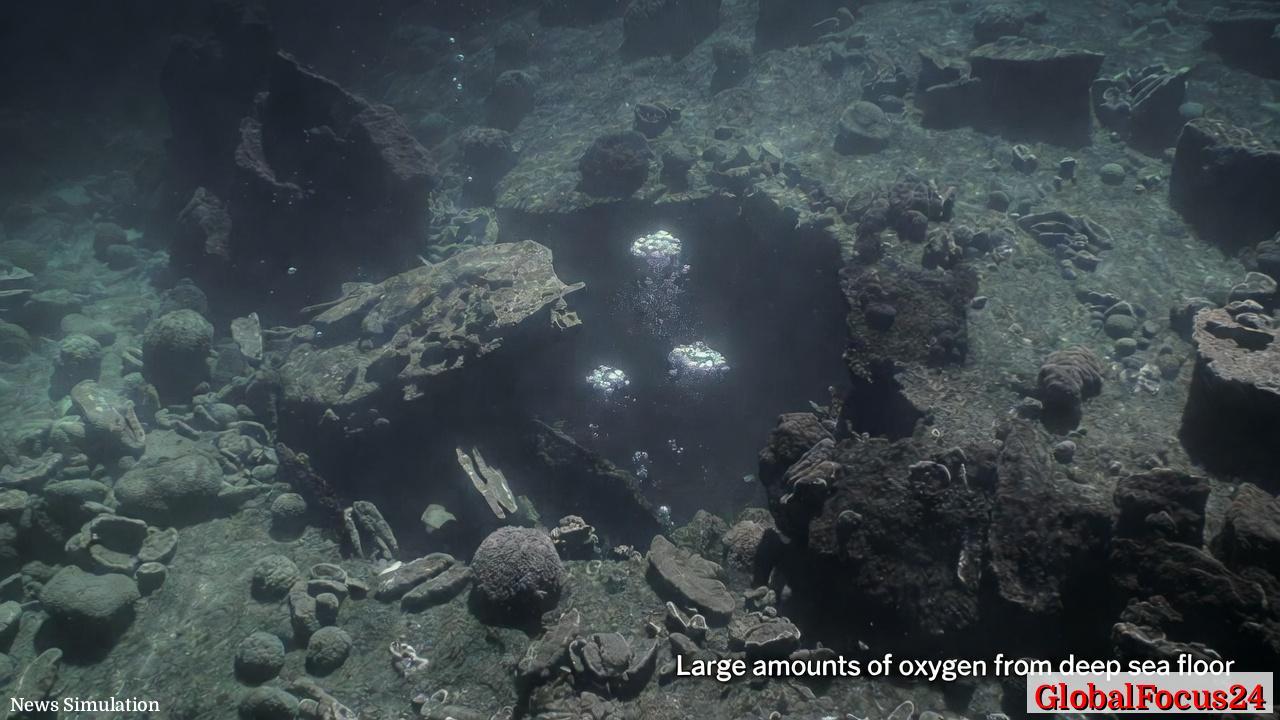
A groundbreaking finding from the deep sea is prompting scientists and policymakers to rethink how oxygen sustains marine ecosystems and influences climate models. Researchers have detected substantial quantities of molecular oxygen being produced far beneath the sunlit zone, in regions of the seabed where sunlight cannot drive photosynthesis. This discovery challenges long-standing assumptions about how the ocean maintains its oxygen levels and carries implications for regional economies, maritime industries, and climate projections.
Historical Context: The Oxygen Narrative in Ocean Science
For decades, the dominant narrative about oceanic oxygen production centered on photosynthesis by phytoplankton in the sunlit, photosynthetically active layer of the ocean. These microscopic plants convert carbon dioxide and water into organic matter, releasing oxygen as a byproduct. As a result, the health and extent of this surface layer have been viewed as primary determinants of global marine oxygen budgets. Beyond the surface, other processes such as physical mixing, wind-driven ventilation, and the exchange of gases with the atmosphere also play critical roles in maintaining oxygen levels at depth.
The new discovery shifts the lens toward the deep subsea environment, where specialized microbial communities and geochemical processes can contribute to oxygen budgets in ways that were previously underestimated. In particular, researchers have identified mechanisms by which oxygen can accumulate or be produced in subsurface zones, independent of sunlight, through rock-water interactions, microbial pathways, and recalcitrant chemical reactions. This emerging understanding reveals a more complex tapestry of oxygen dynamics, with deep-sea regions acting as potential reservoirs or generators of oxygen for the broader ocean system.
What Was Found: Deep-Sea Oxygen Production in Shadowed Realms
The observations come from a combination of deep-sea expeditions, autonomous instruments, and advanced geochemical analyses deployed across several abyssal and hadal environments. Scientists detected measurable concentrations of molecular oxygen at depths where light cannot penetrate, often in proximity to hydrothermal vent systems or zones with unique mineral compositions. In some sites, oxygen appears to be produced in situ through processes linked to water-rock interactions and the metabolism of chemolithoautotrophic microbes that can utilize inorganic energy sources to drive oxygenic reactions, or at least contribute to local oxygen accumulation in microenvironments.
While the precise proportion of total oceanic oxygen attributable to these deep, non-photosynthetic sources remains a subject of ongoing research, initial estimates suggest that they could supplement atmospheric oxygen exchange and influence the chemistry of deep-water habitats. The significance lies not in reversing the established role of photosynthesis but in revealing an additional, previously underappreciated piece of the global oxygen puzzle that could help explain regional disparities in dissolved oxygen, particularly in areas affected by subsurface circulation patterns and changing ocean temperatures.
Economic Implications: Fisheries, Energy, and Coastal Resilience
The discovery carries a suite of potential economic repercussions that extend across regions with intensive maritime activity. Oxygen levels in the ocean are closely linked to the health of fish stocks, coral communities, and other marine ecosystems that underpin commercial fisheries. Regions experiencing hypoxic zones—areas with low dissolved oxygen—face shifts in species distribution, reduced catch rates, and increased management costs. If deep-sea oxygen production proves to be a stabilizing factor in certain regions or seasons, fisheries managers could incorporate this insight into stock assessments and habitat conservation strategies, potentially smoothing short-term variability in yields.
Coastal economies that rely on tourism, sport fishing, and recreational diving may also benefit from more stable, oxygen-rich environments that support biodiversity and ecological resilience. Conversely, the broader recognition of complex oxygen dynamics could influence the siting and operation of offshore energy projects. For instance, deep-sea mining or subsea pipelines intersecting unique geochemical systems require careful environmental impact assessments that account for how subsurface oxygen dynamics interact with seabed habitats and benthic communities.
From an energy perspective, offshore platforms and subsea infrastructure operate within ecosystems where oxygen levels can affect corrosion rates, microbial activity, and the longevity of equipment. Understanding deep-sea oxygen sources could refine maintenance planning, reduce unplanned downtime, and inform environmental monitoring programs. While the direct economic impact of deep-sea oxygen production is still unfolding, the findings underscore the importance of integrating ocean chemistry insights into risk assessments, climate adaptation planning, and infrastructure design.
Regional Comparisons: How Ocean Oxygen Dynamics Vary by Environment
Different ocean basins exhibit distinct patterns of oxygen distribution driven by circulation, temperature, salinity, and nutrient inputs. In tropical regions, surface productivity tends to be higher, and robust ventilation maintains healthier oxygen levels in mid to deep depths. In contrast, high-latitude and coastal zones often experience seasonal fluctuations in oxygen due to changes in stratification and freshwater input. The new evidence of deep-subseafloor oxygen production adds a layer of regional nuance to these patterns.
- Mid-ocean ridges and hydrothermal vent neighborhoods: These locales host unique microbial ecosystems that can influence local oxygen chemistry through chemolithoautotrophic processes. The interplay between hydrothermal fluids, mineral surfaces, and microbial activity creates microhabitats where oxygen dynamics diverge from the surrounding water column.
- Subduction zones and trench environments: Deep-sea zones associated with tectonic activity may exhibit distinct oxygen production and consumption balances, influenced by mineralogical transformations and fluid migration.
- Continental margins and abyssal plains: These areas experience variable pressure, temperature, and nutrient regimes that shape oxygen budgets. The deep-sea oxygen production observed in these regions may help explain anomalies in dissolved oxygen measurements and support models predicting ecosystem resilience under warming scenarios.
- Polar regions: Cold, dense water sinking gradients contribute to vertical mixing and oxygen transport. Deep-sea oxygen production mechanisms could interact with these processes to affect oxygen inventories in the deepest basins, with potential implications for polar marine life adapted to low-temperature environments.
Science, Technology, and Methodology Driving the Discovery
Advances in oceanography and microbial geochemistry enabled researchers to peer into depths once considered out of reach. The deployment of deep-sea observatories, moored sensors, and autonomous underwater vehicles (AUVs) has dramatically expanded the ability to monitor oxygen concentrations, redox conditions, and microbial communities in real time. High-resolution sampling, isotopic analyses, and molecular sequencing have revealed signatures that distinguish biological oxygen production from physical transport processes.
Collaboration among oceanographers, geochemists, microbiologists, and climate modelers has been essential to translate these measurements into a coherent narrative about deep-sea oxygen production. The work also underscores the importance of long-term datasets, as ocean oxygen dynamics respond to climate variability, ocean acidification, and changing circulation patterns on decadal timescales.
Environmental and Climate Implications: A Nuanced View of Ocean Health
Oxygen is a fundamental determinant of marine life, and its availability governs everything from microbial metabolism to the distribution of apex predators. Regions with robust oxygen levels tend to harbor healthier ecosystems, higher biodiversity, and more productive fisheries. The potential contribution of deep-sea oxygen production to the global oceanic oxygen budget adds a new dimension to climate models and marine health assessments.
Climate relevance arises because dissolved oxygen in seawater is a function of temperature, salinity, pressure, and biological activity. Warmer waters hold less dissolved oxygen, and stratification can trap low-oxygen pockets in certain layers. If deep-sea oxygen production helps offset some declines in surface oxygen due to warming or enhanced stratification, it could partially mitigate the ecological consequences of climate change in specific regions. However, researchers caution that this potential offset is unlikely to reverse broad trends and must be integrated into comprehensive climate projections with careful uncertainty analysis.
Public Perception and Regional Reactions
Public interest in ocean science often centers on dramatic discoveries and immediate implications for coastal communities. The notion that oxygen could be produced far below the sunlit zone captivates audiences because it reframes the ocean as a more dynamic and interconnected system than previously understood. Local stakeholders—fishermen, divers, conservation groups, and coastal planners—are likely to welcome the prospect of a more oxygen-rich subsea environment, while also seeking assurance that these processes are sustainable and resilient in the face of ongoing environmental stressors.
In regions where coastal economies rely heavily on marine resources, agencies may accelerate monitoring programs and invest in sensors capable of tracking deep-water oxygen variability. Public communications from scientific bodies and policy makers will emphasize the adaptive potential of ecosystems, the need for responsible stewardship of marine habitats, and the importance of reducing other stressors such as pollution and overfishing to maximize the benefits of natural oxygen dynamics.
Future Research Directions: Questions That Drive Next Steps
Several key questions guide ongoing and planned research:
- What are the precise chemical and biological pathways by which oxygen is produced in deep-sea environments, and how do these pathways vary across geologic settings?
- To what extent do deep-sea oxygen production processes influence regional and global oxygen budgets, and how do they interact with atmospheric oxygen exchange?
- How does deep-sea oxygen production respond to long-term climate change, ocean warming, and shifts in ocean circulation?
- Can improved models that incorporate deep-sea oxygen dynamics enhance predictions of hypoxia events, fish stock resilience, and coastal ecosystem health?
- What are the implications for marine protected areas and fisheries management in light of new oxygen dynamics that extend beyond surface processes?
Policy and Management Implications: Integrating New Knowledge
The emergence of deep-sea oxygen production as a component of ocean chemistry invites policymakers to update risk assessments, conservation strategies, and climate adaptation plans. Key policy considerations include:
- Strengthening multidisciplinary ocean monitoring programs to capture deep-sea oxygen dynamics alongside traditional surface measurements.
- Incorporating deep-sea chemistry insights into ecosystem-based management approaches for fisheries, with attention to habitats affected by unique oxygen regimes.
- Supporting international collaboration on deep-sea research, given that oceanic processes transcend national boundaries and have global relevance for climate regulation.
- Ensuring that offshore development and seabed exploration activities incorporate robust environmental baselines that reflect the full spectrum of oxygen dynamics, including subsurface sources.
- Encouraging the development of climate-informed models that integrate both surface-driven and deep-sea oxygen production processes to improve risk forecasting.
Conclusion: A More Nuanced Ocean, A More Informed World
The discovery of significant oxygen production in deep, sunlight-free regions of the ocean marks a pivotal moment in marine science. It enriches our understanding of how the ocean maintains its vitality, informs climate projections, and shapes regional economic prospects. While photosynthesis in the sunlit zone remains the dominant source of marine oxygen, the deep-sea processes now emerging from the research frontier add a crucial layer of complexity to the story. As researchers continue to map these dynamics and translate them into practical tools for management and policy, coastal communities and global stakeholders alike stand to benefit from a more accurate, nuanced view of ocean health and resilience in an era of rapid environmental change.