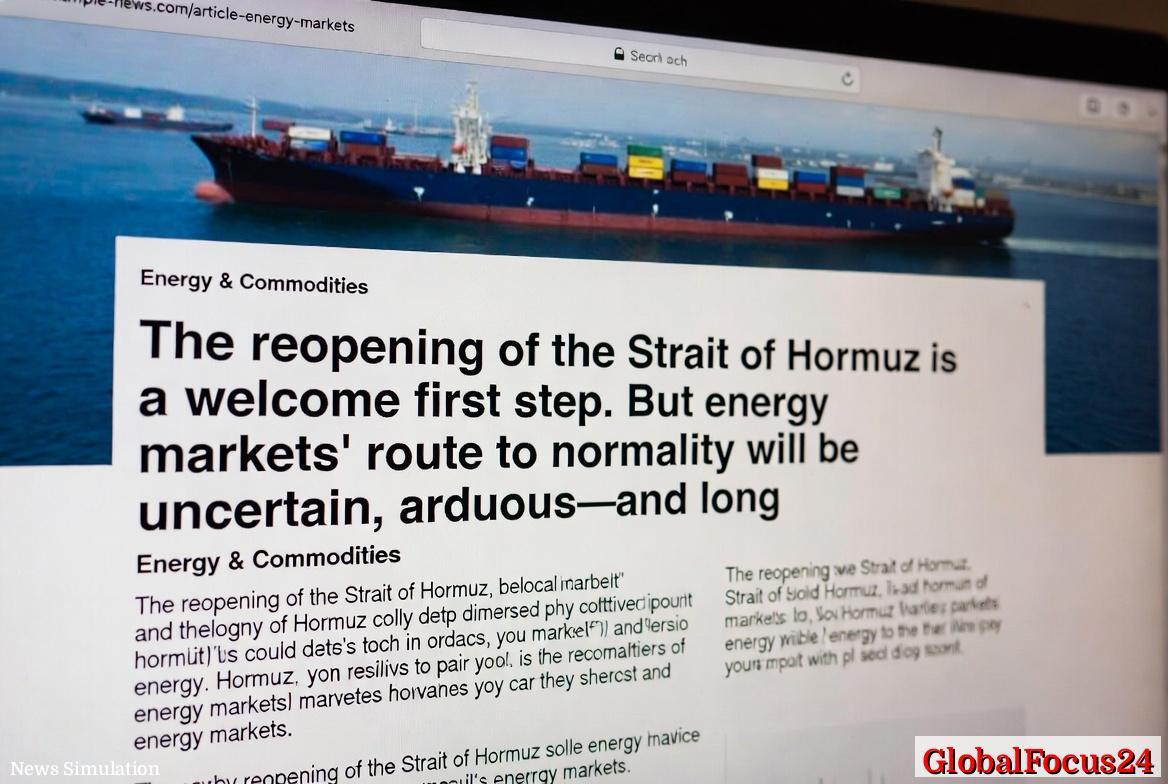
Strait of Hormuz Reopens, but Global Energy Markets Face a Long Road to Stability
A Critical Waterway Resumes Traffic
Shipping traffic has resumed through the Strait of Hormuz, restoring passage along one of the world’s most strategically vital maritime chokepoints. The narrow corridor, which connects the Persian Gulf to the Arabian Sea, carries roughly a fifth of global oil supply and a significant share of liquefied natural gas exports. Its reopening marks a crucial turning point after a period of disruption that rattled energy markets and heightened concerns across importing and exporting nations alike.
Tankers have begun to transit the strait under heightened security protocols, and early indications suggest that flows of crude oil and refined products are gradually returning to pre-disruption levels. However, industry analysts caution that reopening the waterway is only the first step toward normalization. The broader energy system—spanning production, transport, insurance, and pricing—remains under strain.
Immediate Market Reaction and Volatility
Energy markets responded swiftly to news of the reopening, with benchmark oil prices initially retreating from recent highs. Brent crude and West Texas Intermediate both saw sharp intraday declines as traders priced in the restoration of supply routes. Yet volatility persists, reflecting lingering uncertainty about the durability of safe passage and the pace at which shipments can fully recover.
Shipping insurance premiums, which surged during the disruption, remain elevated. Insurers continue to assess risk conditions in the region, and many are requiring additional war-risk coverage for vessels transiting the strait. These added costs are being passed along the supply chain, contributing to persistent price pressures for end consumers.
Market participants are also weighing the backlog of delayed shipments. Ports across the Gulf region are managing congestion as tankers queue to load and depart, while refiners in Asia and Europe are adjusting procurement schedules to account for delayed cargoes.
Historical Context: A Recurrent Flashpoint
The Strait of Hormuz has long been a focal point of geopolitical and economic tension. During the 1980s Iran-Iraq War, the so-called “Tanker War” saw repeated attacks on oil vessels, prompting international naval escorts and driving up shipping costs. More recently, periodic incidents involving seizures, sabotage, or threats of closure have underscored the vulnerability of global energy flows concentrated in a single narrow passage.
Despite these risks, the strait has remained operational for decades due to its irreplaceable role in global trade. Alternative routes are limited in capacity and often more expensive. Pipelines that bypass the strait, such as those in Saudi Arabia and the United Arab Emirates, can only carry a fraction of the volumes typically shipped by sea.
The latest disruption—and subsequent reopening—fits into this historical pattern: acute crises followed by gradual stabilization, but with each episode leaving a lasting imprint on market behavior and risk perception.
Supply Chain Strains and Logistical Challenges
Even with the waterway open, restoring normal shipping patterns is a complex undertaking. Tanker availability has tightened as vessels were rerouted or held idle during the disruption. Crews and operators must now recalibrate schedules, while port authorities work to clear accumulated congestion.
Refineries, particularly in Asia, are navigating uneven supply flows. Countries such as China, India, Japan, and South Korea rely heavily on crude from the Gulf. Delays in shipments have forced some refiners to draw down inventories or seek alternative supplies from regions like West Africa, the North Sea, and the United States.
This shift in sourcing has ripple effects across global trade routes. Longer voyages increase freight costs and tie up shipping capacity, contributing to a broader tightening of tanker markets. In turn, these dynamics feed back into fuel prices and industrial costs worldwide.
Economic Impact Across Regions
The reopening of the Strait of Hormuz brings relief, but the economic consequences of the disruption are still unfolding across different regions.
In Asia, where dependence on Gulf energy imports is highest, governments and companies have been particularly sensitive to supply interruptions. Strategic petroleum reserves were tapped in some cases to stabilize domestic markets. The reopening is expected to ease immediate concerns, but policymakers remain cautious about future vulnerabilities.
Europe, already navigating a complex energy landscape following recent shifts in gas supply patterns, experienced renewed pressure during the disruption. Higher oil and LNG prices contributed to inflationary risks, particularly in energy-intensive industries. While the resumption of flows offers some reprieve, businesses remain wary of further volatility.
In the United States, the direct impact is somewhat muted due to higher domestic production. However, global price movements still influence fuel costs and inflation. The disruption also highlighted the interconnected nature of energy markets, where regional events can quickly reverberate worldwide.
Oil-exporting nations in the Gulf face their own set of challenges. While higher prices during the disruption boosted revenues, the uncertainty and logistical bottlenecks complicated export operations. The reopening allows for a more predictable flow of goods, but rebuilding confidence among buyers and insurers will take time.
Strategic Reserves and Policy Responses
The recent events have prompted renewed attention to energy security strategies. Governments are reassessing the adequacy of strategic reserves, emergency response mechanisms, and diversification efforts.
Key measures under consideration or already in motion include:
- Expanding strategic petroleum reserves to buffer against future disruptions.
- Investing in alternative export routes, such as pipelines that bypass chokepoints.
- تعزيز renewable energy capacity to reduce dependence on imported fossil fuels.
- Strengthening international coordination on maritime security and crisis response.
While these initiatives vary by region, they share a common goal: reducing exposure to single points of failure in the global energy system.
Shipping and Insurance: A Fragile Recovery
The maritime industry remains on edge despite the reopening. Shipping companies are proceeding cautiously, often coordinating closely with naval forces and regional authorities. Enhanced monitoring, convoy systems, and updated routing protocols are being implemented to mitigate risks.
Insurance markets, meanwhile, continue to play a pivotal role in shaping the pace of recovery. Elevated premiums and stricter underwriting standards reflect a reassessment of risk in the region. For some operators, these costs may influence decisions about whether and when to resume normal transit patterns.
The interplay between shipping availability, insurance costs, and security conditions will be a key determinant of how quickly trade flows stabilize.
Long-Term Implications for Energy Markets
The disruption and reopening of the Strait of Hormuz are likely to leave a lasting imprint on global energy markets. One immediate effect is a heightened sensitivity to geopolitical risk, which can translate into more volatile price movements even in the absence of physical supply disruptions.
Over the longer term, the episode may accelerate structural changes in the energy landscape. These could include:
- Greater diversification of supply sources, as importers seek to reduce reliance on any single region.
- Increased investment in infrastructure that enhances flexibility, such as storage facilities and alternative transport routes.
- Continued growth in renewable energy and electrification, driven in part by the desire for greater energy independence.
At the same time, the fundamental importance of the Strait of Hormuz is unlikely to diminish in the near future. The scale of hydrocarbon exports from the Gulf region ensures that the waterway will remain a central artery of global trade for years to come.
A Gradual Path to Normality
The reopening of the Strait of Hormuz represents a significant step toward restoring stability in global energy markets, but it does not mark an immediate return to normal conditions. The effects of the disruption—ranging from logistical bottlenecks to elevated costs and heightened risk perceptions—will take time to unwind.
Market participants are likely to remain cautious, closely monitoring developments in the region and adjusting strategies accordingly. For consumers, the path to stable energy prices may be uneven, shaped by a complex interplay of supply dynamics, geopolitical factors, and economic conditions.
As tankers once again pass through the narrow channel linking the Gulf to the wider world, the flow of energy resumes—but the lessons of the disruption will continue to influence decisions across the industry.