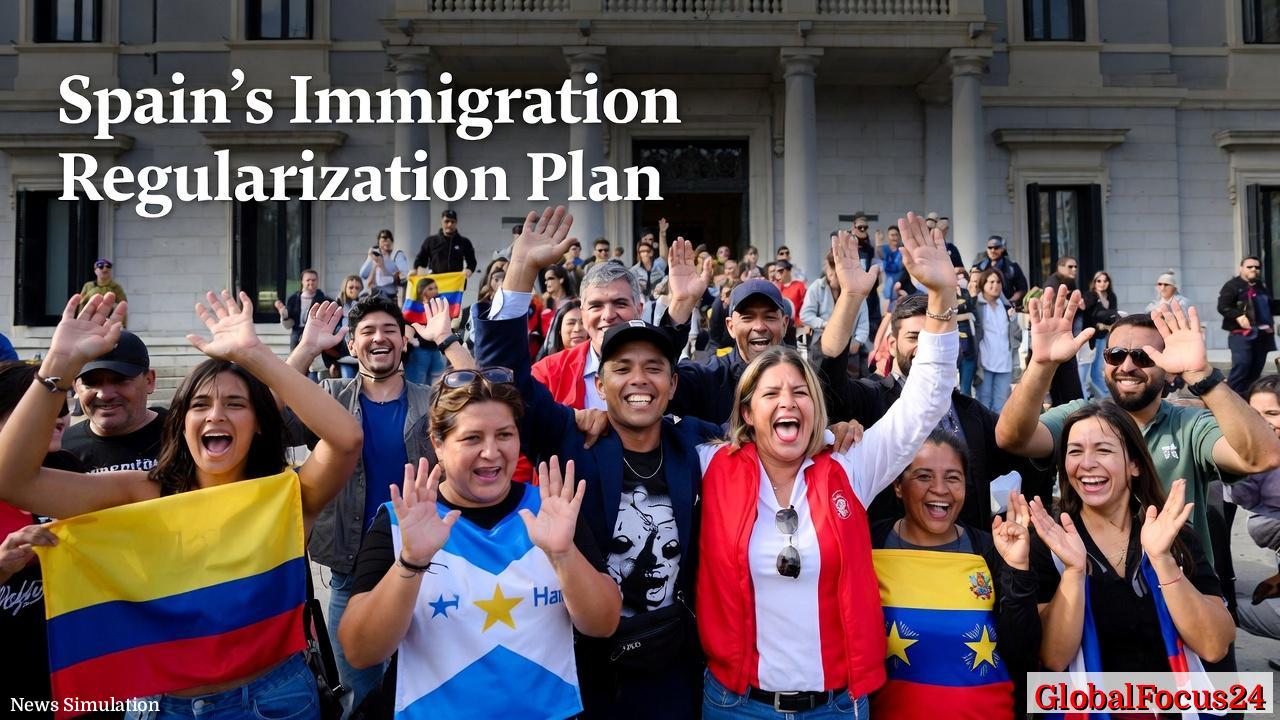
Spain Moves to Regularize Hundreds of Thousands of Undocumented Immigrants amid Labor Shortages and Economic Confidence
Spain has unveiled a sweeping regularization plan that could grant legal residency to hundreds of thousands of undocumented immigrants, a policy shift that stands out in Europe’s evolving approach to migration. Announced through a royal decree and framed as a step toward formalizing a large informal workforce, the measure seeks to integrate migrants who have lived in Spain for at least five months by the end of 2025 and who lack criminal records. The plan aims to unlock tax contributions, social security participation, and workers’ rights, while providing a clearer, more predictable status for those who have long lived and labored in the country.
Historical context and precedent
Spain’s decision echoes a history of regularization that stretches back decades, with seven major mass regularizations recorded over the past half-century. The most recent major program occurred in 2005 and touched roughly 576,000 people. Those initiatives have swung between administrations with different ideological leanings, yet they share a common thread: the desire to stabilize labor markets, improve tax collection, and formalize the status of migrants who have become integral to Spain’s economy. This latest decree places Spain in a distinctive position within Western Europe, where many governments have leaned toward tighter controls, higher deportations, or more restrictive pathways to legal status.
Demographic and regional context
An estimated 840,000 undocumented migrants are believed to reside in Spain today, with more than three-quarters originating from Latin America and parts of North Africa. The majority hail from countries such as Colombia, Honduras, Peru, and Venezuela, drawn by language commonalities, cultural ties, and a shared history of migration to Spain. The smoothness of cultural adaptation and linguistic compatibility is seen as a potential advantage for integration, easing access to the formal economy and social services. Spain’s regional diversity means that the impact of regularization could vary from city to city, with larger urban centers already reliant on immigrant labor across sectors such as hospitality, construction, agriculture, and healthcare.
Economic rationale and projected impact
Spain’s economy has demonstrated resilience and growth in recent years, characterized by relatively low unemployment in certain sectors and persistent labor shortages across manual, service, and care industries. Policy makers argue that a large-scale regularization can address structural gaps by bringing undocumented workers into formal channels. Historical analyses of prior regularizations suggest that legalized workers contribute to public finances not only through income taxes but also through social security contributions. For example, past assessments have estimated that legalized migrants added roughly €4,000 annually to public finances per person on average, reflecting a broader uplift in tax receipts, pension system funding, and social benefits participation. While these figures are subject to variation based on labor market conditions and policy design, the broader logic is that formalizing status reduces informality, helps workers access protections, and leads to more predictable, compliant hiring practices for employers.
Labor market implications
The plan is designed to connect a substantial portion of Spain’s informal workforce to the formal economy. By granting residency and work authorization to eligible individuals, employers may experience a more stable labor pool, improved compliance with labor laws, and enhanced productivity. For workers, regularization can translate into access to written contracts, minimum wage protections, and occupational safety standards. Sectors with known shortages—construction, hospitality, agriculture, elder care, and healthcare support—could benefit from a more reliable pipeline of workers who are legally authorized to work, reducing disruptions caused by informal arrangements and the risk of wage underpayment or exploitation.
Fiscal and social considerations
Regularization schemes carry fiscal implications that extend beyond immediate tax receipts. As workers enter the formal system, employers contribute to social security, potentially widening the funding base for pensions, healthcare, and unemployment insurance. Public services, including education and social welfare, may see increased demand, but these pressures are often tempered by the longer-term gains of a more stable tax base and improved economic activity. Policymakers typically model scenarios in which formalization yields net positive fiscal outcomes over time, particularly when the program is paired with compliance measures, pathways to permanent residence, and measures to support labor market integration.
Regional comparisons and European context
Within Europe, Spain’s approach stands in contrast to broader European debates that have trended toward stricter border controls and asylum processing reforms in several countries. Some neighbors have prioritized deterrence, deportations, and enhanced border management, arguing that these measures better safeguard national sovereignty and public order. Spain’s decision to regularize a large cohort of undocumented workers marks a shift toward leveraging the formal economy as a vehicle for social integration and fiscal stabilization. The policy resonates with a broader European discourse on recognizing the contributions of migrant workers to essential services and economic growth, particularly in aging societies where labor supply constraints are pronounced.
Public response and social dynamics
Public reaction to the regularization plan is multifaceted. Labor unions and many business associations have voiced support, highlighting the practical benefits of formal labor markets, improved working conditions, and a level playing field for employers. The Catholic Church and faith-based organizations have also expressed support, viewing regularization as a humane and prudent step toward dignity and social cohesion. Critics, however, include far-right factions that warn of possible escalations in irregular migration and describe regularization as incentive-driven policy. Conservative opposition has focused on implementation details, asking for clearer criteria, robust verification processes, and safeguards to prevent abuse. In urban areas with high immigrant populations, communities anticipate both opportunities and challenges as residents navigate new regulatory landscapes.
Policy design and implementation considerations
Key design elements of the decree are expected to include clear residency requirements, checks on criminal background, and defined timelines for application processing. Officials emphasize compliance, transparency, and due process, seeking to prevent fraud while ensuring that the most vulnerable migrants gain protection and stability. A significant practical concern will be establishing efficient intake and verification systems, coordinating with local authorities, and ensuring that employers understand and comply with the new rules. The success of the program will partly depend on messaging and public information campaigns that help applicants, employers, and service providers navigate the changes smoothly.
Potential social and cultural effects
Beyond the economics, regularization can influence social integration and community relations. Legal status can facilitate access to education for children and adults, enable participation in community programs, and reduce stigma tied to irregular status. In turn, this can foster greater social cohesion, reduce exploitation in informal work arrangements, and support pathways for civic engagement. Regions with strong immigrant networks and community organizations may experience faster assimilation and more robust peer support systems, which can help new residents find housing, language education, and employment opportunities.
Longer‑term prospects and policy trajectory
If the plan proceeds with careful monitoring and adaptive management, it could become a reference point for similar initiatives in other European nations. The policy’s success will depend on balancing inclusivity with safeguards, ensuring that the regularization process remains targeted and efficient while preventing runaways to informal sectors. Policymakers may also consider complementary measures—such as workforce development, language training, and orientation programs—to maximize the positive impact of legalization on both workers and the broader economy. The decision could shape the political economy of migration in Spain for years to come, influencing debates about labor shortages, social welfare sustainability, and the country’s role within the European Union’s migration framework.
Regional impact in key cities
Major metropolitan areas are likely to experience pronounced effects. In cities with large informal sectors and substantial immigrant populations, the regularization could ease service delivery in essential industries, improve tax collection, and reduce underground economic activity. Local governments may need to adjust housing, education, and social services planning to reflect evolving residency patterns. In coastal and agricultural regions, where seasonal and migrant labor is prominent, the formalization of workers could stabilize supply chains, support agricultural productivity, and improve compliance with health and safety standards.
Conclusion
Spain’s large-scale regularization plan represents a notable pivot in how a Western European economy integrates undocumented workers. By offering residency and labor rights to eligible individuals, the government aims to address labor shortages, strengthen tax and social security contributions, and promote social inclusion. The policy’s success will hinge on careful implementation, transparent administration, and ongoing collaboration among unions, businesses, faith communities, and civil society. As Spain navigates this ambitious transition, observers will watch not only the fiscal and labor market outcomes but also the broader social fabric and the country’s leadership in shaping humane and practical migration policy for the region.
Note: This article presents a balanced, fact-based overview of the policy, its context, and its expected implications, drawing on historical patterns, economic analyses, and regional comparisons to illuminate how such a major regularization effort could unfold across Spain’s diverse landscapes.