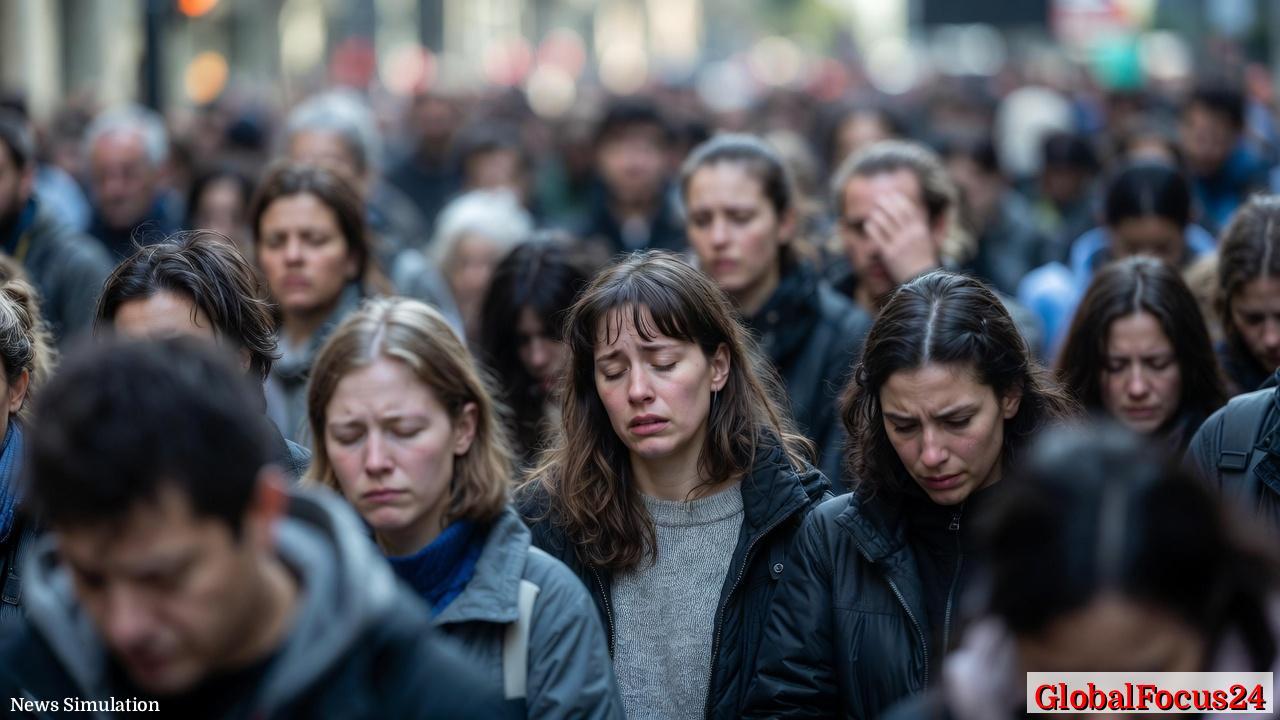
The Hidden Burden: America’s Silent Sufferers of Accidental Killings
A Tragedy Beyond Intent
Each year in the United States, tens of thousands of people accidentally end another person’s life. Car crashes, firearm mishandlings, industrial mishaps, and other unintended incidents leave not only victims but also another kind of casualty — those responsible for the fatal mistakes. These individuals, often ordinary citizens with no criminal record or malicious intent, find themselves living with the weight of a tragedy they never intended to cause. Their lives are upended in ways few can imagine: careers stall, relationships dissolve, and an often invisible psychological toll deepens over time.
While public attention naturally focuses on victims and their families, far less visibility is given to those burdened by unintentional killing. Yet the aftermath for the perpetrator can be equally life-altering. For many, it is a private sentence — of guilt, shame, and self-punishment that lasts for years, sometimes even decades.
The Psychological Toll of Unintentional Killing
The emotional and mental aftermath for those who accidentally cause a death is profound. Psychologists describe a range of reactions that align closely with post-traumatic stress disorder (PTSD): flashbacks, insomnia, avoidance behaviors, and deep emotional numbness. Many experience cyclical waves of guilt when they recall the moment of the event, sometimes triggered by commonplace reminders — the sound of brakes squealing, a child’s laughter, or passing by a familiar intersection.
A landmark study in the Journal of Traumatic Stress found that individuals involved in fatal car accidents frequently report symptoms indistinguishable from those of combat veterans returning from war. Survivors of accidental shootings described similar emotional scars, compounded by social ostracization and, in some cases, criminal charges unrelated to intent.
Mental health professionals emphasize that these individuals often occupy a precarious psychological space. They are neither seen as victims nor accepted fully as perpetrators. Without a social framework that acknowledges unintentional guilt and the need for healing, many fall through the cracks of available mental health care.
Historical Context: A Silent Legacy
Historically, accidental killing — known in older legal frameworks as “manslaughter by negligence” — has always carried moral ambiguity. Ancient legal codes such as the Code of Hammurabi differentiated between premeditated murder and accidents, yet in both cases, the responsible party often faced social exile or required atonement. In early American law, communities relied on both religious and legal mechanisms to reintegrate individuals after tragic accidents. Public confession, community service, or restitution to the victim’s family were common forms of resolution.
However, as society modernized and accidents became increasingly tied to technology — from automobiles to firearms — these communal reconciliation rituals vanished. The act of unintentional killing became less visible and more isolated. Contemporary culture, emphasizing accountability and justice, offers few paths to redemption for those who never intended harm but must live with the result.
The Role of Car Accidents in Accidental Deaths
Traffic fatalities represent the most common form of unintentional killing in the United States. According to federal data, over 40,000 Americans die each year in motor vehicle crashes, and many of those responsible did not act with recklessness or malice. A momentary distraction, missed stop sign, or poor weather condition can distinguish a near miss from a fatal event.
For those behind the wheel in a fatal collision, life often divides into two eras: before the accident and after. Some drivers become advocates for road safety, channeling their guilt into activism, while others struggle to return to driving altogether. Insurance investigations, potential lawsuits, and criminal inquiries can stretch for years, prolonging the trauma and impeding recovery.
Firearms, Children, and Domestic Accidents
Unintended firearm deaths add another complex layer. Accidental discharges — often occurring in homes, during cleaning, or involving children — devastate families and communities. Survivors of such incidents describe an unending loop of grief and disbelief, particularly when the victim is a loved one.
In regions with high gun ownership rates, such as the Midwest and South, accidental shootings are more commonly reported, yet support systems for those responsible remain minimal. Traditional grief support networks tend to focus on victims’ families, leaving the individuals responsible to navigate isolation and stigma without structured help.
Industrial and Occupational Fatalities
Workplace deaths caused by unintentional actions — including construction mishaps, machinery malfunctions, or safety oversights — also contribute significantly to the national total. Employees who survive such incidents often face both legal scrutiny and haunting guilt. Employers typically focus on liability and compliance, but mental health support for the individual directly involved is rarely prioritized.
In unionized industries such as mining or manufacturing, peer-based support mechanisms have evolved more robustly, with informal counseling and trauma debriefing sessions. However, in non-union jobs or gig-based roles, such resources are scarce, leaving workers to bear the weight alone.
Limited Support Systems and Cultural Silence
Across the nation, individuals who accidentally kill someone encounter a severe absence of structured assistance. Traditional therapy models, group counseling, or grief recovery programs seldom address the unique blend of guilt and trauma they experience. Religious institutions occasionally fill this gap, offering pastoral care or spiritual counsel, but access remains inconsistent.
The few organizations that specialize in post-accident trauma often operate quietly, wary of public backlash. Support groups exist in pockets — typically hosted online under pseudonyms — where participants share experiences, fears, and coping mechanisms without judgment. Many describe these virtual communities as the only spaces where they can speak freely without being vilified.
The cultural silence surrounding accidental killing further compounds grief. Western society tends to conflate responsibility with intent, leaving little room to acknowledge the tragedy of unintentional harm. Those who cause fatal accidents often report that friends and family retreat, unsure how to offer comfort without appearing to minimize the loss of life.
Regional and International Comparisons
While the United States struggles to provide structured care for this group, some nations have experimented with alternative models of restorative justice. In countries such as Norway and New Zealand, programs encourage direct dialogue between victims’ families and the individuals responsible for unintended deaths, fostering mutual healing rather than punitive separation. Participants report that such encounters, though emotionally challenging, often help both sides achieve closure.
Regionally within the U.S., attitudes vary. States with a strong emphasis on restorative justice, such as Minnesota and Oregon, have introduced pilots where offenders in cases of negligent homicide participate in guided reconciliation meetings. Early results indicate a decline in recidivism for related offenses and measurable benefits in emotional recovery.
Southern and Midwestern states, by contrast, exhibit greater emphasis on legal accountability and less on psychological restoration. The disparity often mirrors broader cultural attitudes toward law, forgiveness, and the role of community in addressing human fallibility.
Economic and Social Consequences
The economic impact of accidental killing extends beyond the emotional crisis. Legal expenses, civil lawsuits, therapy costs, and reduced employability can drain financial stability. Many individuals lose jobs or face long-term unemployment due to stigma or mental health decline. Industries such as trucking and healthcare — where accidents can occur despite compliance with safety standards — face high turnover rates in part because affected workers cannot emotionally return to their roles.
From a broader economic perspective, the lack of comprehensive mental health support contributes to lost productivity and increased public health expenditures. Experts suggest that targeted recovery programs for individuals responsible for accidental deaths could reduce long-term costs related to depression, substance abuse, and chronic stress.
Toward Recognition and Rehabilitation
For the United States to meaningfully address accidental killing, mental health professionals argue that a twofold shift is necessary: public acknowledgment and policy reform. Recognizing these individuals as part of the human fallout of tragedy, rather than isolating them as villains or statistics, is the first step toward compassionate rehabilitation.
Expanding access to trauma-informed therapy, establishing peer-led recovery groups, and integrating restorative justice principles into sentencing guidelines could all contribute to more humane outcomes. Universities and research institutions have begun examining this question more closely, with recent conferences exploring how guilt, responsibility, and healing intersect in contemporary law and psychology.
A Shared Burden of Humanity
Accidental killing exposes the fragile line between ordinary life and irreversible tragedy. Behind every statistic lies a complex human story — of a driver, a parent, or a worker who must wake each day to the reality of a life lost because of their mistake. Addressing their suffering does not diminish the pain of victims’ families; instead, it acknowledges that tragedy often claims everyone involved.
As awareness slowly grows, a quiet movement toward empathy and understanding is emerging. The goal is not to excuse accidental harm, but to help those responsible reckon with it, recover, and, one day, find a measure of peace in the difficult truth that intent and consequence do not always align — yet both demand compassion.