NVIDIA’s Post-Earnings Surge: Retail Investors Lead the Charge in a Record-Setting Session
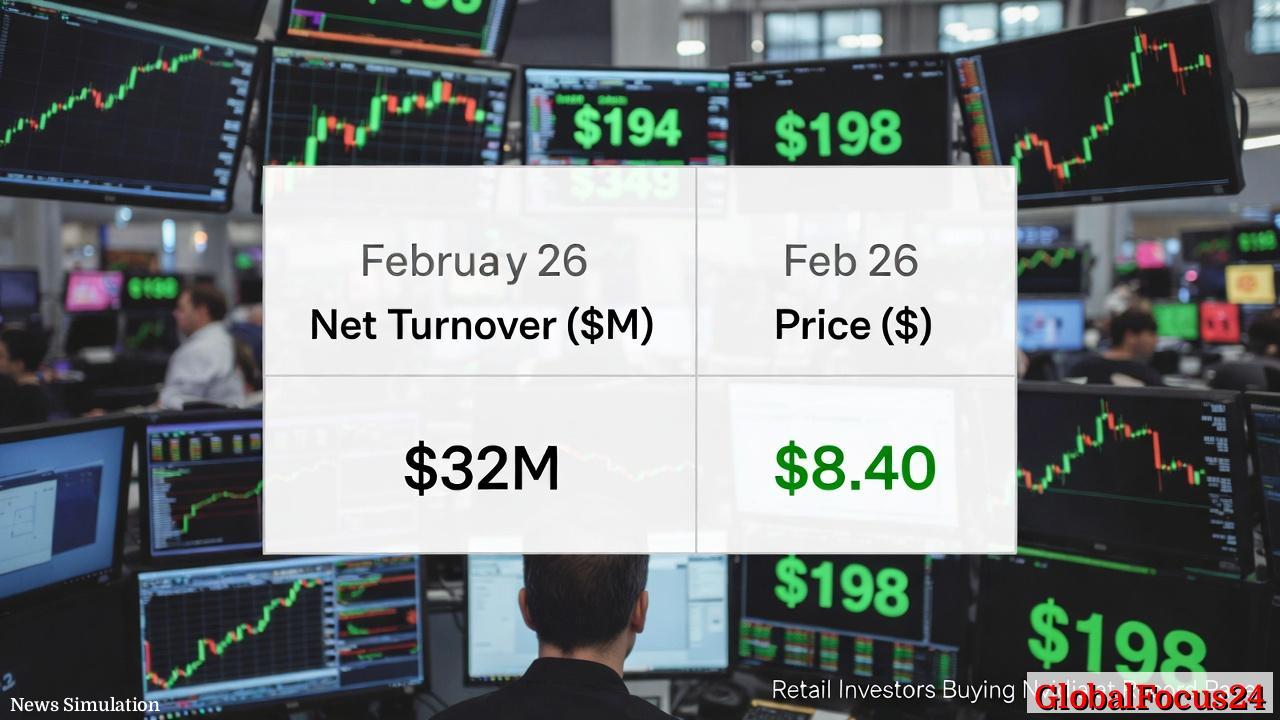
The latest earnings reveal from NVIDIA Corp has sparked a dramatic shift in trading dynamics, with retail investors driving an unprecedented burst of activity on February 26. As the company reported its quarterly results, a surge of everyday investors flooded into the stock, pushing intraday turnover to record highs and shaping a volatile yet highly optimistic trading narrative that rippled across markets. This phenomenon, while punctuating the ongoing influence of retail traders in the modern equity landscape, also raises questions about valuation, market momentum, and the broader impact on regional economies with ties to semiconductor and technology ecosystems.
Historical Context: A Century-Old Tale Reborn in a New Market To understand the current wave, it helps to place NVIDIA’s situation within a broader historical arc. The stock market has long cyclical patterns where earnings beats or beat-and-guidance raises ignite investor enthusiasm, particularly among those who traditionally traded through brokerages and, more recently, through zero-commission platforms. Over the past decade, however, a reshaped retail investor presence has emerged, aided by streamlined access to real-time data, fractional shares, and social or community-driven investment channels. In this context, NVIDIA’s earnings release didn’t merely update a company’s financials; it acted as a catalyst that amplified the appetite of non-professional traders who could amplify short-term price movements through rapid, high-volume participation.
NVIDIA’s business mix—anchored by its leadership in graphics processing units, data center accelerators, and increasingly diverse AI-related applications—has consistently attracted growth-minded investors. The company’s ability to monetize AI compute needs, coupled with expanding adoption in cloud infrastructure and automotive tech, has underscored a narrative of persistent demand and structural advantage. When earnings exceeded expectations, the market’s reaction extended beyond traditional institutions, inviting a broader spectrum of buyers to participate in the upside. The February 26 session, marked by heavy retail involvement, is a vivid illustration of how earnings catalysts can translate into heightened retail engagement in today’s market ecosystem.
Economic Impact: Ripple Effects Across Industries and Regions The retail surge in NVIDIA shares carries implications beyond the trading desk. For regions with concentrated semiconductor activity, such as parts of the West Coast and tech hubs around the United States, heightened retail interest can influence local sentiment, consumer confidence, and even employment dynamics. A surge in stock-related wealth among individual investors may translate into increased consumer spending or renewed interest in tech sector wages and opportunities, particularly in communities with a high density of engineering, manufacturing, and startup activity. Financial services providers—brokerages, fintech platforms, and regional banks—also experience a shift in activity patterns, from routing trades to managing heightened client interest in AI and cloud computing-themed equities.
From a macroeconomic perspective, NVIDIA’s earnings cycle and the ensuing retail participation highlight several important themes:
- Market participation: The episode underscores how retail investors are not merely passive spectators but active participants capable of influencing intraday price action, especially in high-growth, tech-oriented equities.
- Volatility dynamics: Record retail turnover can add layers of short-term volatility, as automated trading, options activity, and speculative positioning interact with long-term investors assessing fundamental value.
- Sector momentum: When a leader within semiconductors and AI hardware updates its outlook, ancillary beneficiaries—ranging from suppliers to software ecosystems—can experience temporary spillovers in demand and capitalization.
Regional Comparisons: Bay Area to Silicon Valley Metrics and Beyond At a regional level, the NVIDIA episode offers a lens into how technology-centric economies are intertwined with capital markets. In regions like the San Francisco Bay Area and greater Northern California, where NVIDIA maintains substantial engineering, design, and research operations, the stock’s movement reverberates through local talent markets, real estate dynamics surrounding tech campuses, and venture funding sentiments. Similar patterns appear in other tech hubs—Seattle, Austin, and emerging clusters on the East Coast—where tech earnings, AI adoption, and cloud infrastructure investments intersect with retail participation in notable ways.
The broader market context also matters. When a marquee AI and semiconductor company reports strong results, it can lift not only related equities but adjacent high-growth sectors such as software-as-a-service, computing hardware, and data-center infrastructure. Investment communities monitor these links carefully, weighing the immediate trading impulse against longer-term fundamentals, such as product cycles, capital expenditure by enterprise customers, and the competitive landscape among AI compute providers.
Investor Behavior: Decoding the Retail Push What makes February 26 particularly instructive is the pattern of retail orders during the session. Reports indicate a strong tilt toward net buying in the latter part of the morning, followed by sustained two-way trading. This dynamic suggests a commitment by individual traders to participate as prices moved through a narrow range, indicating both belief in the upside and a readiness to navigate intraday volatility. While such activity can contribute to momentum and liquidity, it also raises cautions about the potential for swift reversals if earnings interpretation shifts or if broader market catalysts emerge.
In analyzing retail participation, several factors emerge:
- Accessibility and information flow: Modern retail traders have access to high-quality data, real-time quotes, and a wealth of commentary, enabling rapid assessment of earnings nuances, guidance, and market sentiment.
- Leverage and risk: As with any high-volatility environment, there is a calculus of risk versus potential reward, particularly in tech-driven equities where earnings surprises, guidance revisions, or macro shifts can abruptly alter the trajectory.
- Community dynamics: Social platforms, trading forums, and online communities can amplify interest and coordinate attention around a stock, influencing perceived consensus and trading activity.
Technical Landscape: Price Action and Structural Considerations From a technical standpoint, the session’s price action in NVIDIA shares—ranging from around the mid-$190s to near $198 before retreating—reflects a microcosm of how earnings-driven enthusiasm can translate into intraday infrastructure for quotes, spreads, and order book depth. The closing move, despite a day of intense retail participation, signals a complex interplay between speculative demand and the fundamentals that anchor longer-term investors. For market technicians, this pattern may guide assessments of support and resistance levels, momentum indicators, and the potential for continued volatility in subsequent sessions.
Historical vs. Current Context: Benchmarking through Time Comparisons to prior earnings-driven surges reveal both consistencies and evolutions. In past cycles, major growth names have demonstrated similar spurts of retail enthusiasm followed by reassessment of fundamentals. However, today’s landscape features a more granular array of trading venues, faster information dissemination, and a broader base of participants who can influence short-term price dynamics. This convergence of factors means that earnings releases are not simply a corporate event but a market-wide moment that can recalibrate price discovery across multiple connected equities and sectors.
Strategic Implications for Investors For investors constructing portfolios in the near term, NVIDIA’s earnings-driven retail surge underscores several strategic considerations:
- Focus on fundamentals: While retail interest can create short-term momentum, the lasting value proposition remains tied to NVIDIA’s AI compute leadership, product cycles, and competitive positioning.
- Diversification and risk management: High-growth tech names can experience rapid waves of activity; diversified exposure and disciplined risk controls help mitigate the potential for sharp reversals.
- Market context awareness: Observing the broader market environment, including rate expectations, global demand trends for AI hardware, and supply chain dynamics, provides a framework for evaluating the sustainability of a rally or pullback.
Regional Economic Signals: Beyond the Stock Ticker The NVIDIA episode also serves as a barometer for regional economic signals tied to technology and manufacturing ecosystems. In places with deep ties to semiconductor design and fabrication, investors often watch earnings narratives closely for indications of demand across data centers, AI platforms, and autonomous systems. The spillover effects can influence hiring intentions, capital expenditure plans by regional tech firms, and even local tax revenue projections tied to tech-driven growth cycles. A sustained period of positive earnings momentum can contribute to a broader confidence cycle, encouraging additional investments in education, infrastructure, and startup ecosystems that fuel future innovation.
Public Reaction and Sentiment: A Community Perspective Public sentiment around NVIDIA’s performance and the ensuing trading activity reflects a mix of optimism and caution. Enthusiasm among retail investors often centers on the perceived speed at which AI technologies translate into tangible financial results, while more conservative observers emphasize the need for sustainable demand and competitive resilience. Local business communities may experience a blend of pride in regional innovation and a practical awareness of the risks inherent in high-velocity markets. This dynamic illustrates how a single corporate event can catalyze conversations about innovation, job opportunities, and the region’s role in the global tech economy.
What Comes Next: Looking Ahead As markets digest NVIDIA’s earnings and the accompanying retail interest, several potential trajectories emerge. If the earnings outlook remains robust and guidance signals continued growth, retail momentum could persist in the near term, potentially supporting higher share levels and continued liquidity in related technology equities. Conversely, if macro pressures reassert themselves or if earnings forecasts temper expectations, traders may reprice risk quickly, leading to a more pronounced correction or rebalancing across technology sectors. In either scenario, the event highlights the enduring interplay between corporate fundamentals, market psychology, and regional economic vitality.
Conclusion: A Moment Marking the Modern Market The February 26 session with NVIDIA stands as a notable illustration of how contemporary markets operate at the confluence of earnings, technology leadership, and evolving retail participation. The extraordinary intraday activity and record retail turnover emphasize that stock price movements are increasingly shaped by a broad spectrum of market participants, not solely by institutional investors. As the tech industry continues to advance—driven by AI, machine learning, and data-driven innovation—the relationship between corporate performance and market sentiment will remain a critical dynamic for investors, policymakers, and regional economies alike. The episode serves as a reminder that in today’s fast-paced financial landscape, earnings releases are not just corporate milestones but occasions that ripple through markets, influence capital flows, and shape the economic narrative of technology’s leading players.
Notes for readers
- NVIDIA’s earnings performance and subsequent trading activity reflect a broader trend of elevated retail engagement in high-growth tech stocks.
- The regional impact is most pronounced in tech-centric economies with strong semiconductor and AI ecosystems.
- Market participants should balance enthusiasm with due diligence, recognizing that short-term momentum can coexist with long-term fundamental considerations.
Citations:
- Industry data and market activity indicators are based on intraday trading records and turnover metrics observed on the day in question .
- NVIDIA’s leadership position in AI compute and data center markets provides the underpinning context for investor interest and sector dynamics .
- Regional economic implications are influenced by the concentration of tech-related activities and the spillover effects on labor markets and investment patterns in technology hubs .