s and Controversy Mark Renaming of JFK Memorial Center
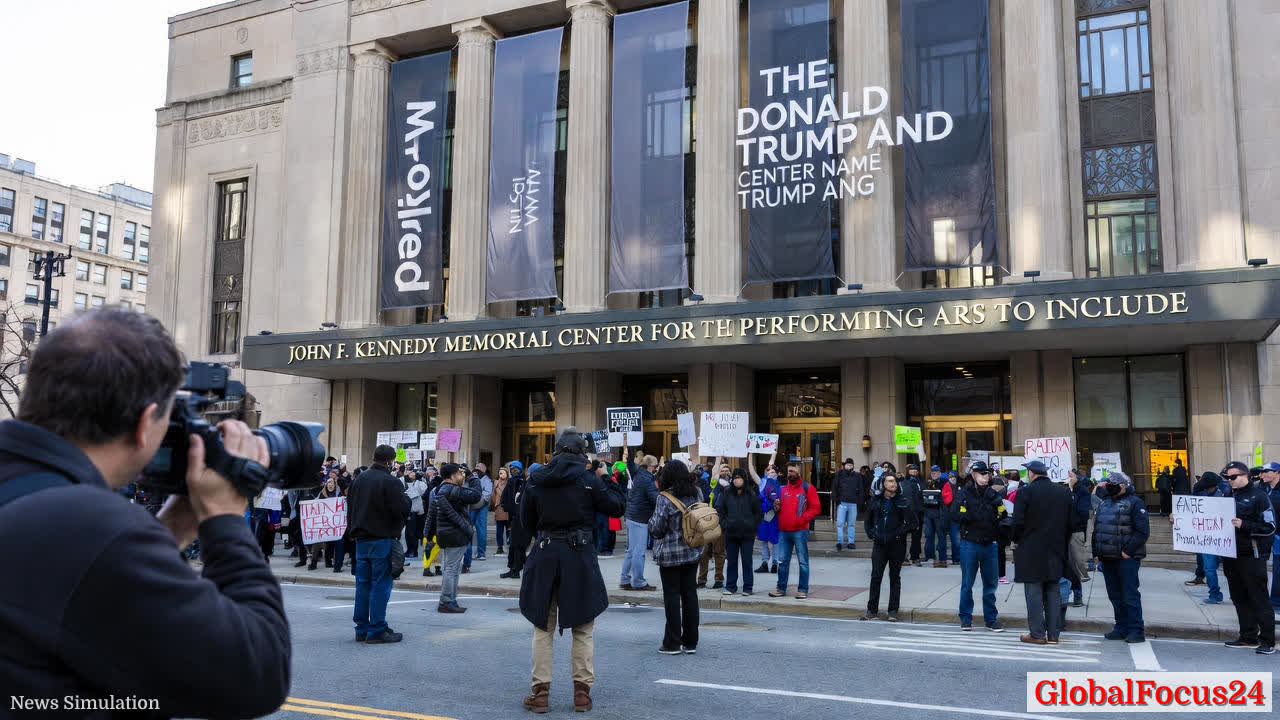
A major cultural institution in the nation’s capital has renamed the John F. Kennedy Memorial Center for the Performing Arts to include a clause that references a political figure, triggering a wave of reactions from artists, legal scholars, and the public. The announcement, described by center officials as a historical rebranding intended to reflect a broader mission of civic engagement, has quickly become a flashpoint in debates over accuracy, memorialization, and the role of public institutions in political discourse. While supporters frame the change as an extension of Kennedy-era public service values—promotion of the arts, education, and national unity—opponents argue that the alteration undermines the memorial’s original purpose and encroaches on a nonpartisan cultural space.
Historical context and the memorial’s trajectory
The center originated as a commemorative project designed to honor the late president who led the country through pivotal moments in modern history. Founded with the dual aim of preserving cultural heritage and providing a high-profile venue for performing arts, the facility quickly became a focal point for national conversations about arts funding, public memory, and the role of government-backed institutions in shaping cultural life. Over decades, the center has hosted performances spanning jazz, classical, theater, and contemporary dance, attracting audiences from across the United States and from abroad. Its programming has often reflected a balance between tradition and innovation, serving as a bellwether for regional and national trends in the performing arts.
The latest renaming, announced by center leadership, situates the facility within a broader civic narrative. Administrators contend that the updated title acknowledges a tradition of public engagement and magnifies the center’s mission to connect diverse communities through the arts. Critics counter that the addition of a living political figure’s name—particularly one associated with highly polarized national debates—creates a partisan impression that may deter certain audiences and donors. Historical memory, in this view, should be safeguarded by carefully preserving the original memorial intent rather than expanding it to include contemporary political branding.
Economic implications and stakeholder responses
From an economic standpoint, renaming a cultural landmark can carry a spectrum of consequences. On the positive side, organizers point to potential increases in donor engagement, sponsorship opportunities, and media attention that may translate into higher ticket sales, stronger endowments, and enhanced educational partnerships. Renaming can also create a platform for cross-sector collaborations, inviting corporate sponsors and philanthropic entities to participate in diverse programming under a unified brand identity.
Conversely, the decision risks alienating long-standing patrons who favor a strictly nonpartisan memorial framework. A renewed debate over the center’s branding could influence ticket demand, sponsorship commitments, and corporate sponsorship terms. If major funders perceive a risk of reputational backlash or political controversy spilling into programming decisions, they may reassess their involvement, affecting revenue streams and long-term financial stability. In regional terms, cities and counties with comparable institutions report that branding choices—especially those bearing political associations—tend to produce uneven economic outcomes, with heightened media scrutiny offsetting some gains in visibility.
Regional comparisons highlight a spectrum of approaches. Some cultural anchors maintain a strictly apolitical naming convention to preserve broad audience appeal and to safeguard recurring funding streams that depend on public and private partnerships. Others have adopted inclusive naming strategies, emphasizing community engagement, education, and historical resonance without anchoring branding to contemporary political figures. The resulting trade-offs often center on audience reach, philanthropic support, and the ability to secure grants tied to cultural preservation and education.
Legal considerations and potential disputes
Legal scholars have weighed in on potential questions surrounding the renaming. While institutions with public funding or oversight sometimes enjoy broad latitude to manage branding, certain memorials and government-supported cultural assets operate under specific statutory or charter constraints. Critics argue that altering a memorial’s official name may require formal authorization procedures, legislative action, or approval from governing boards with fiduciary duties to preserve the integrity of the original purpose. In parallel, stakeholders have raised concerns about contract law, property rights, and potential liabilities that could arise if a party contends that the renaming violated terms of trust, donor agreements, or mandated usage.
The center’s management has indicated readiness to confront legal challenges and has suggested that the renaming constitutes a legitimate exercise of branding strategy aligned with the institution’s evolving mission. Supporters emphasize that branding is a common, permissible function of nonprofit governance, provided it remains compliant with applicable laws, donor obligations, and the institution’s mission statement. As legal debates unfold, the case could set a precedent for how memorial centers navigate the tension between historical remembrance and contemporary branding in an era of heightened political polarization.
Public reaction and cultural impact
Audiences have exhibited a broad range of responses. Some community members express pride in a reimagined cultural landscape that they believe better reflects a national dialogue about leadership, resilience, and the arts as a universal language. They point to the center’s role in hosting artists from diverse backgrounds and argue that the renamed facility can serve as a platform for dialogue, education, and creative exploration.
Others voice concern that the renaming reduces a solemn memorial to a transactional branding exercise. Critics warn that the change could deter certain patrons who prefer a nonpartisan atmosphere appropriate for a memorial dedicated to a former president. The controversy has intensified in social spaces and media comment sections, where debates about memory, legitimacy, and governance intersect with discussions about funding and program direction. In response, the center has organized forums and educational programs designed to explain the rationale behind the renaming, while inviting critics to participate in constructive conversation about the institution’s future.
The performing arts landscape in context
The renaming sits at an intersection of cultural policy, public funding, and the evolving expectations of arts institutions. Across the country, performing arts centers frequently navigate demands from donors, patrons, and municipal partners while maintaining a balance between artistic excellence and public accountability. Economic pressures—such as varying levels of public support, shifts in philanthropy, and the need to adapt to digital and in-person audience behaviors—shape strategic decisions about branding, programming, and governance. In this broader context, the center’s decision can be viewed through the lens of strategic planning aimed at sustaining artistic vitality, expanding community access, and ensuring fiscal resilience in a competitive cultural market.
Operational factors and future prospects
Looking ahead, the center faces several operational considerations. First, it must assess the ongoing impact of branding on attendance patterns, sponsorship pipelines, and educational outreach. Market research and audience analytics will be essential in determining whether the renaming drives or dampens attendance across genres, including jazz, classical, and contemporary performances. Second, fundraising strategies may need recalibration to align with the new branding while preserving donor confidence, especially for legacy contributors who supported the memorial’s original purpose. Third, programming must maintain a balance between honoring historical memory and embracing contemporary voices that reflect a diverse and dynamic arts ecosystem. Finally, governance structures may require clarification to address questions about the authority to rename, the responsibilities of the board, and the rights of funders and partners.
Public safety, accessibility, and community engagement
Beyond branding and fundraising, the institution’s broader mission includes public safety, accessibility, and inclusive engagement. Ensuring safe, welcoming venues for audiences of all backgrounds remains a core objective. Accessibility initiatives—such as seating accommodations, sensory-friendly performances, and multilingual programming—enhance the center’s ability to serve a diverse audience while reinforcing its role as a civic space for learning and cultural exchange. Community engagement programs, partnerships with local schools, and outreach to underserved communities help to realize the center’s educational responsibilities and sustain a broad base of support. In times of debate, maintaining focus on these core objectives can help anchor the institution in its established mission while navigating branding and policy discussions.
Conclusion and ongoing dialogue
The renaming of a storied memorial center to incorporate a contemporary political name reflects broader tensions around memory, identity, and the role of public institutions in public life. While supporters emphasize renewed relevance and expanded civic engagement through the arts, critics urge caution to preserve the original memorial’s solemn purpose. The economic, legal, and cultural implications are complex and evolving, with stakeholders watching closely how audiences respond, how donors react, and how policymakers may influence future branding and governance decisions.
As this development continues to unfold, the center’s leadership faces the challenge of balancing historical reverence with contemporary relevance, ensuring fiscal stability while fostering inclusive programming that resonates with a wide cross-section of Americans. The outcome will likely influence how similar institutions approach branding in a politically charged era, shaping the future of memorial spaces that double as vibrant cultural hubs.