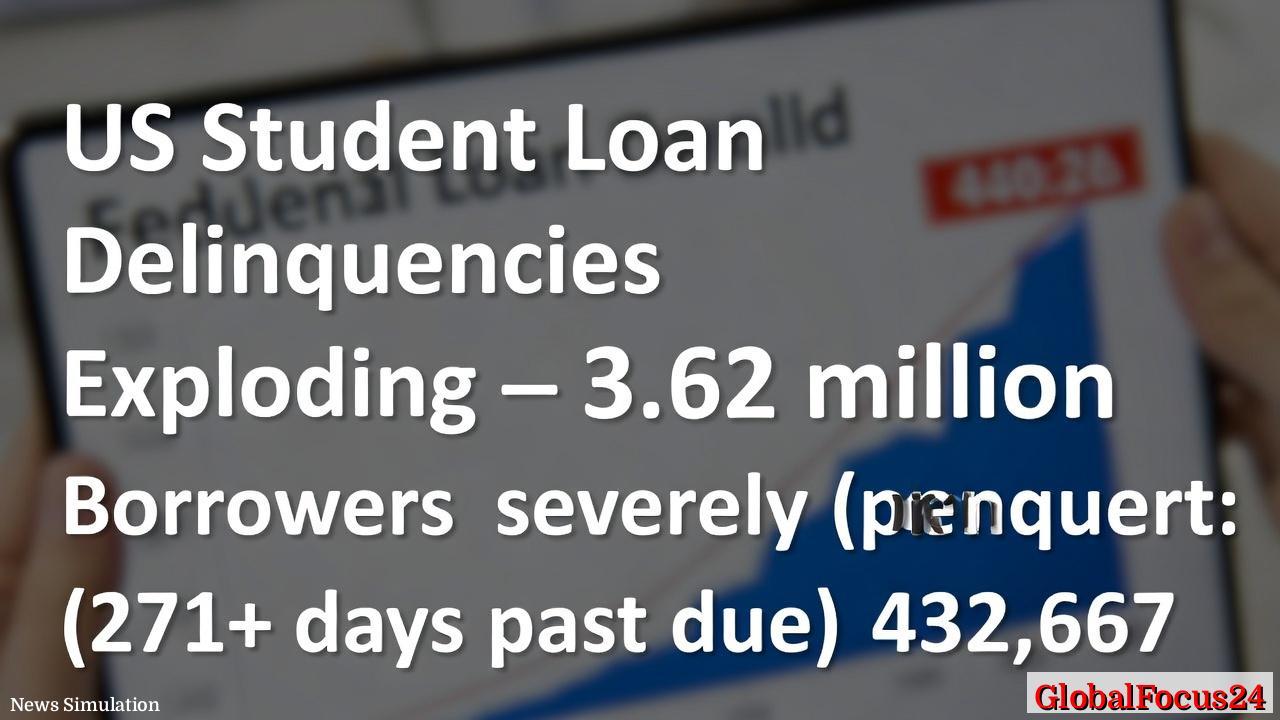
Record Surge in US Student Loan Delinquencies
A sharp rise in federal student loan delinquencies reached a new milestone in late 2025, signaling a pivotal moment for borrowers, lenders, and policymakers. Data released for the fourth quarter of 2025 show that 3.62 million federal student loan borrowers were severely delinquent—defined as 271 or more days past due, including those in collections. This figure marks a dramatic departure from pre-pandemic norms and recent years, underscoring the widespread financial strain facing graduates, nontraditional students, and households across the United States.
Historical context: a long arc from relief to risk
To understand the current spike, it helps to trace the trajectory of student loan delinquency over the past decade. Prior to the COVID-19 pandemic, quarterly averages of borrowers severely delinquent (271 days or more past due) hovered around 432,667. The pandemic-era pause on payments masked underlying fragility, with the on-ramp to repayment creating a window of financial relief for many borrowers. When the pause ended and the repayment framework began to tighten, the landscape shifted dramatically.
From mid-2025 onward, the first month in which borrowers could enter default after the on-ramp to repayment effectively reopened, the share of borrowers slipping into long-term delinquency began to rise. By Q4 2025, the share of student loans entering 90-plus days of serious delinquency climbed to 14.3%—the highest rate recorded in the history of the federal program. The prior peaks occurred in 2013 (10.5%) during a different economic period and in 2008 (7.5%) amid the Great Recession. The new data place today’s risk in a stark category, reflecting a generation of borrowers confronting elevated debt levels, uneven labor market outcomes, and structural changes in repayment options.
Economic impact: ripple effects across households and regions
The surge in delinquencies is not a localized anomaly; it reverberates through multiple layers of the economy. For individual borrowers, prolonged delinquency can erode credit scores, hinder access to affordable credit, and constrain household spending on essential needs, housing, and health care. The broader effects extend to educational institutions and families that rely on federal student aid as a bridge to opportunity. When delinquency persists or worsens, it can affect loan rehabilitation efforts, income-driven repayment outcomes, and the viability of safe financial planning for retirement.
From a regional perspective, places with high concentrations of recent graduates and public-sector employment installations show notable sensitivity to changes in repayment status. In regions with higher unemployment or softer wage growth, the burden of repayment can become a constraint on consumer activity, housing markets, and local small-business resilience. Conversely, regions with stronger labor markets and higher starting salaries for graduates may experience relatively milder delinquencies, though the national trend remains alarming.
Policy and programmatic responses: balancing relief with accountability
Officials and stakeholders are weighing a mix of policy levers to address the rising delinquencies while preserving the long-term integrity of the student loan portfolio. Key considerations include:
- Streamlined rehabilitation paths: Providing clearer, faster routes for borrowers to exit delinquency and return to repayment, including more flexible income-driven options and targeted counseling.
- Enhanced income-driven repayment (IDR) alignment: Assessing whether IDR plans adequately reflect borrowers’ earnings trajectories, particularly for graduates entering nontraditional career paths or sectors facing wage stagnation.
- Targeted debt relief mechanisms: Evaluating the scope and design of potential targeted relief for specific cohorts, such as low-income graduates, those from historically underserved communities, or borrowers with high debt-to-income ratios.
- Administrative and operational capacity: Ensuring that the servicing system can handle elevated caseloads, minimize administrative friction, and maintain timely communications with borrowers.
- Regional support programs: Aligning local workforce development and higher-education initiatives with repayment realities, helping graduates transition into employment that supports steady repayment.
Regional comparisons: patterns across states and metro areas
While nationwide indicators signal a national challenge, regional data reveal differentiated experiences. States with higher concentrations of graduates in fields with strong labor demand and higher average starting salaries show improved repayment outcomes for some cohorts, though the overall delinquency trend remains troubling. In contrast, regions with higher shares of workers in sectors experiencing volatility, such as certain service industries or public sector funding constraints, report more pronounced delinquency upticks. Metropolitan areas characterized by rising housing costs and cost-of-living pressures may see borrower stress increase even among those with moderate incomes, as debt service competes with essential expenses.
Public reaction and social implications
Public response to rising delinquencies has been varied, with communities expressing concern over the long-term consequences for financial security and educational access. Student loan debt has become a defining issue for many households, influencing decisions about pursuing higher education, choosing majors with clearer income prospects, or delaying major life milestones. Advocates emphasize the need for transparent loan servicing practices, fair treatment of delinquent borrowers, and sustained investment in debt relief programs that align with economic realities.
Market signals and lender perspectives
Lenders and servicers are adapting to a higher-risk environment. The increase in delinquencies affects cash flow forecasting, default management strategies, and the pricing of risk across the federal portfolio. Financial institutions involved in private-sector student loan markets may observe parallel trends, prompting broader examinations of underwriting standards, borrower education, and post-employment counseling. The tightening of credit conditions for borrowers with damaged credit histories can influence everything from mortgage eligibility to auto financing, potentially slowing consumer-led growth in regions recovering from pandemic-era shocks.
Looking ahead: what could bend the curve
Analysts emphasize that reversing the delinquency surge will likely require a combination of policy refinement, economic strengthening, and targeted borrower support. Potential pathways include:
- Expanding access to apprenticeship programs and credentials that lead to higher-paying jobs, particularly in STEM-related fields and critical trades.
- Strengthening career services within colleges and universities to improve job placement rates and timely debt servicing outcomes for graduates.
- Extending or redesigning temporary relief measures for financially vulnerable borrowers while maintaining accountability in repayment.
- Coordinating federal, state, and local efforts to create pathways from education to stable employment, with a focus on regions most affected by the current delinquency spike.
- Enhancing digital tools for borrowers to track, manage, and optimize repayment plans with personalized guidance.
Regional economic resilience: tying debt to prosperity
Economists point to the connection between debt levels, earnings potential, and regional growth. When graduates encounter delayed wage growth or underemployment, the ability to service debt becomes more tenuous. Regions that invest in workforce development, including retraining programs and industry partnerships, may build resilience by improving the probability that borrowers successfully complete repayment. The connection between education, credential attainment, and regional competitiveness remains strong, underscoring the importance of coordinated, forward-looking policies.
Conclusion: a turning point for borrower outcomes and policy design
The fourth-quarter 2025 data on severely delinquent federal student loans illuminate a period of heightened risk that demands careful attention from policymakers, lenders, educators, and the public. While the total number of borrowers in delinquency is not a single measure of failure, it reflects underlying economic pressures that can shape financial stability for years to come. As the United States navigates the balance between preserving access to higher education and maintaining a sustainable loan system, the focus remains on pragmatic solutions that support borrowers while safeguarding the integrity of federal student aid programs.
In this moment, historians and policymakers alike are watching how changes in repayment options, employment conditions, and targeted relief initiatives interact to influence outcomes for millions of Americans. The path forward will depend on thoughtful design, timely execution, and a commitment to information transparency that helps borrowers make informed decisions about their financial futures.