Androgenic Wig Snatching Incident Sparks Conversation About Public Persona and Digital Culture
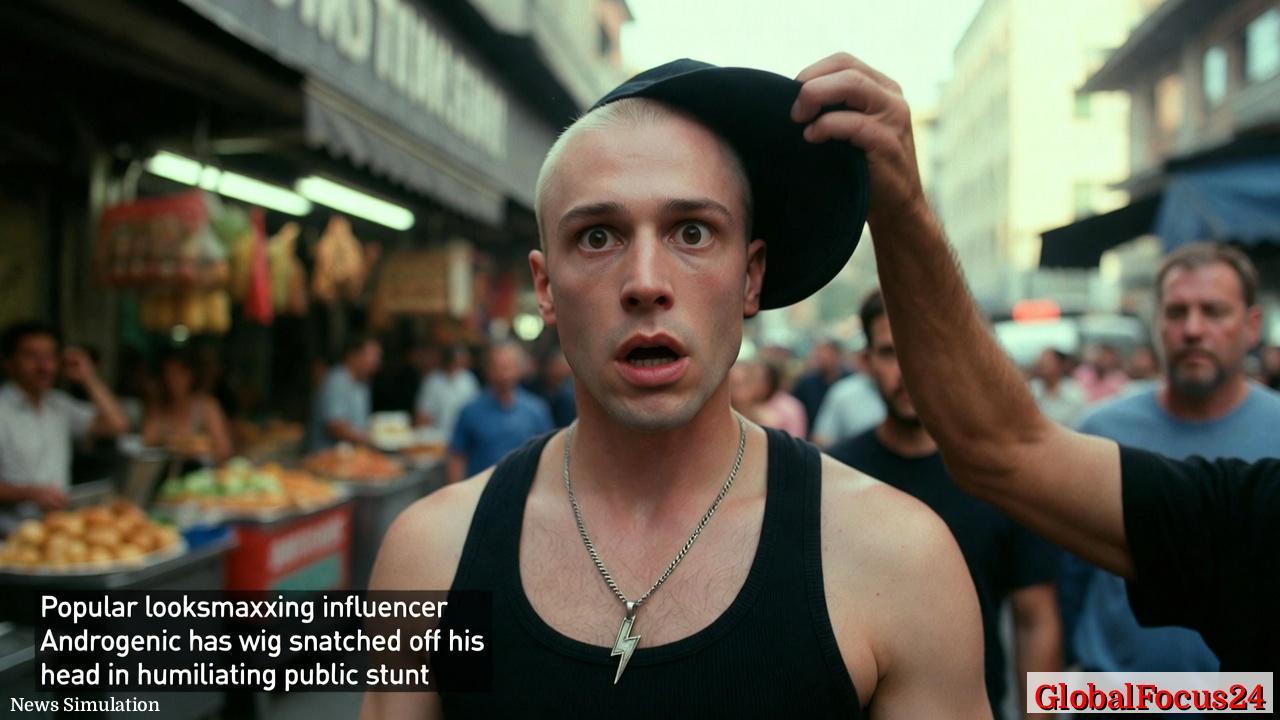
A widely followed looksmaxxing influencer, known to followers for promoting male appearance enhancement and self-improvement techniques, faced a high-profile public stunt that ended with his wig being forcibly removed in a crowded outdoor setting. The incident, captured on video and rapidly shared across social platforms, shows the influencer standing shirtless in a busy area filled with food vendors and passersby. Dressed in a black tank top, a silver chain with a lightning-bolt pendant, and a black cap, he appears momentarily exposed as the wig is pulled away, revealing a bald or closely shaved scalp. The moment has ignited a broader discussion about the vulnerabilities of online personas and the pressures of curated self-presentation in the looksmaxxing ecosystem.
Historical context: a lineage of amplified self-presentation The incident sits at the intersection of a long-standing trend: online avatars crafted through enhanced aesthetics, self-improvement regimens, and carefully managed public images. Over the past decade, influencers focusing on grooming, physique optimization, and style have built sizable audiences by offering formulas—whether practical tips, product recommendations, or motivational messaging—for audiences seeking quick, tangible improvements in appearance. This particular event underscores a broader shift in digital culture: authenticity online increasingly clashes with the performative expectations that accompany highly stylized personal brands.
From vanity to vulnerability In the era of short-form video and real-time engagement, audience expectations often reward highly polished, instantly recognizable personal brands. When a public figure’s carefully constructed image is suddenly revealed to be more fragile than it appears, viewers experience a mix of surprise, curiosity, and, in some cases, Schadenfreude. The wig snatching incident highlights the tension between vanity—driven by the aspirational goals of looksmaxxing—and vulnerability, a universal characteristic that becomes visible when the curtain is pulled back. This moment invites audiences to reassess how online personas are formed, maintained, and contested in public spaces.
Economic impact: the business of appearance-focused influence The looksmaxxing niche has matured into a multi-faceted market that includes sponsored content, product lines, coaching services, and affiliate partnerships. When episodes like this unfold publicly, several economic dynamics come into play:
- Brand reputation and sponsorships: Public missteps or highly dramatic content can affect a creator’s attractiveness to brands seeking stable associations. However, some audiences are drawn to authenticity, even when it’s messy, which can sustain or even boost engagement for certain demographics.
- Product viability: Many influencers in this space rely on a portfolio of appearance-enhancement products and regimens. Audiences may re-evaluate product efficacy after witnessing a highly publicized moment that calls into question the influencer’s personal brand credibility.
- Market intensity: The incident amplifies discussions around the value proposition of looksmaxxing—whether the emphasis on appearance upgrades translates into sustainable, broad-based lifestyle improvements or remains a niche interest with fluctuating demand.
- Adapting monetization strategies: Creators in this space may pivot toward educational content about skincare, haircare, and grooming fundamentals, or toward transparency pieces about the realities and trade-offs of pursuing extreme aesthetic change.
Regional comparisons: where audiences and brands converge Industry observers note that the reception of online persona-related incidents often varies by region and platform dynamics. In some markets, audiences prioritize practical, evidence-based guidance for grooming and self-improvement, favoring content that includes demonstrations, before-and-after results, and transparent discussions about product ingredients and safety. In others, the cultural milieu leans toward aspirational branding, storytelling, and entertainment value as primary drivers of engagement. The incident in question resonates across multiple regions due to its universal themes—appearance, celebrity, vulnerability, and the ethics of online fame—while still reflecting local attitudes toward public displays of identity and humor.
Public reaction: discourse, caution, and curiosity Social media responses to the incident have been swift and varied. A portion of viewers express sympathy for the influencer, interpreting the event as a personal setback exposed to a broad audience. Others frame the moment as a cautionary tale about the fragility of heavily curated digital identities and the potential for public shaming in online ecosystems. There is also a segment that treats the stunt as a form of social commentary on gender norms, the performativity of masculinity in appearance culture, and the pressure to maintain a flawless online image. Academics and commentators alike note that such moments contribute to ongoing conversations about how audiences engage with the persona-driven content that dominates much of today’s digital landscape.
What this means for looksmaxxing communities The incident provides a lens through which to examine both the strengths and risks of appearance-centric communities:
- Community resilience: Groups centered on self-improvement and grooming often emphasize the value of consistency, discipline, and measured progress. Public incidents can either fortify group norms or provoke internal debates about authenticity and boundaries.
- Ethical considerations: The event prompts discussions about consent, the boundaries of performance, and the potential harm of public pranks within communities that promote personal transformation as a serious endeavor.
- Information quality: With rapid content creation, there is potential for misinformation or oversimplified claims about how to achieve aesthetic goals. The moment underscores the importance of critical assessment and reliance on evidence-based practices.
Core takeaways for followers and brands
- Authenticity versus performance: Audiences increasingly weigh authenticity and relatability against the entertainment value of dramatic moments. Creators who transparently address challenges, setbacks, and the realities of appearance work may build deeper trust over time.
- Responsibility of influence: Influencers who advocate for self-improvement—especially in areas touching health, skincare, and haircare—bear a responsibility to promote safe practices and avoid sensationalized content that could encourage risky behavior.
- Long-term sustainability: The most durable influence in this space tends to emerge from a clear value proposition beyond surface-level transformation—education, practical guidance, and verifiable outcomes that help audiences make informed decisions.
Historical precedents in public demonstrations of identity Public demonstrations where a prominent online persona is confronted or humbled are not new in the broader media landscape. Previous episodes in similar domains have revealed how audiences respond to perceived brand breaches or the erosion of a carefully crafted persona. Those cases often lead to renewed emphasis on transparency, the establishment of community guidelines for content creators, and a reexamination of how personal branding intersects with personal privacy. The current incident adds a contemporary data point to this ongoing historical pattern, illustrating how digital culture continues to evolve in its expectations of online figures.
Technical aspects: video capture, virality, and platform dynamics The rapid spread of the incident can be attributed to several technical factors:
- Real-time sharing: Short-form video platforms enable celebrities and influencers to disseminate moments within minutes, amplifying both reach and impact.
- Engagement loops: Early reactions—whether humor, shock, or empathy—drive further sharing, comments, and remix content, creating a feedback loop that sustains visibility.
- Visual storytelling: A single, highly contrasted moment—such as the abrupt removal of a wig—can become a focal point for narrative threads about authenticity, vanity, and vulnerability.
- Moderation and policy: Platforms’ enforcement policies regarding sensitive content shape how quickly such footage moves through feeds and how audiences discuss it, influencing the tone and direction of the ensuing conversation.
Guidance for aspiring creators in the space
- Build a foundation of credibility: Combine appearance-focused content with education about health, safety, and evidence-based practices. Transparent disclosures about product sponsorships and affiliate relationships enhance trust.
- Embrace authenticity: Share both wins and setbacks. Audiences respond to creators who are honest about the challenges of self-improvement and the limitations of cosmetic enhancements.
- Prioritize ethics: Avoid embarrassing or harmful stunts that could violate consent or invite public shaming. Consider community guidelines that promote respectful engagement and safety.
- Diversify content: Balance aesthetic tutorials with lifestyle and wellness content, Q&A sessions, and expert interviews to broaden value beyond appearance alone.
- Monitor mental health around branding: Recognize the psychological pressures tied to public scrutiny and provide or seek supportive resources when needed.
Background description: the environment of the moment The incident unfolded in a bustling outdoor space characterized by a mosaic of food stalls, neon signs, and a steady stream of pedestrians. The setting—a crowded plaza or market area—provided a vivid, chaotic backdrop that amplified the shock of the moment. Sunlight, chatter, sizzling grills, and the hum of nearby conversations created a sensory tapestry that contrasted with the sudden, intimate exposure of the influencer’s appearance. Onlookers reacted with a mix of surprise, amusement, and curiosity as the scene unfolded, illustrating how public life and digital fame intersect in shared, real-world spaces.
Conclusion The wig-snatching incident involving a prominent looksmaxxing influencer underscores a broader cultural shift: online personas built around appearance and self-improvement are increasingly scrutinized in real time by wide audiences. While the event itself is a single moment, its implications resonate across historical, economic, and regional dimensions of digital influence. It prompts ongoing reflection on authenticity, consumer expectations, and the etiquette of public self-presentation in an era where every gesture can be captured, shared, and examined by millions within minutes. The episode serves as a timely reminder that in the age of instant visibility, the line between performance and reality remains porous—and audiences are watching closely how brands and creators navigate that boundary.