Polar Bear Mother Adopts Cub in Rarely Documented Case Mirrors Shifting Narratives of Arctic Wildlife Resilience
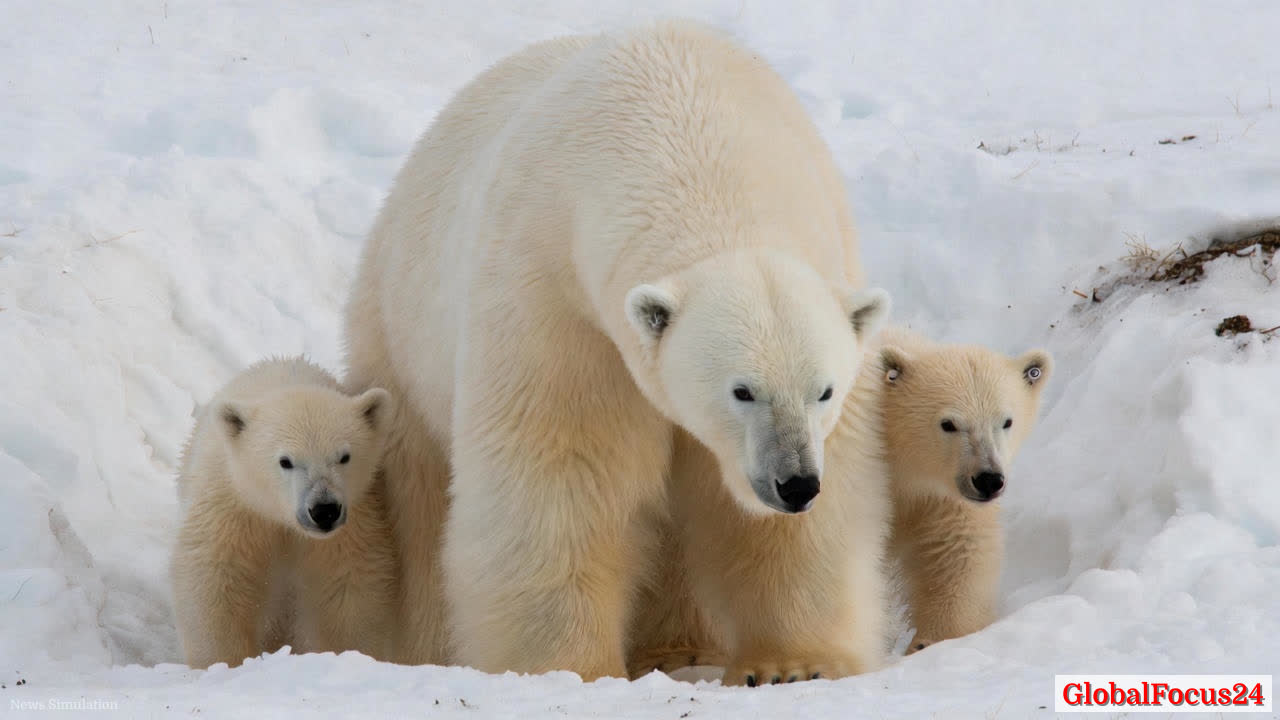
A rare event has unfolded in the sparse Arctic sanctuary of Western Hudson Bay, where researchers tracking wild polar bears near Churchill, Manitoba witnessed a mother bear adopt a cub that is not biologically hers. The incident, recorded during the annual polar bear migration along the ice edge, represents just the 13th such documented adoption in nearly five decades of systematic study. The development underscores both the fragility and adaptability of a species facing an accelerating climate crisis, offering a unique lens into maternal behavior, population dynamics, and the broader ecological implications of a warming Arctic.
Event overview and timeline The observation began when field cameras captured a five-year-old polar bear mother emerging from her maternity den in the spring with one cub, a young animal tagged for ongoing research. In the subsequent fall survey, researchers confirmed the presence of a second cub—a newcomer without a matching tag. The mother appeared to be caring for both cubs, guiding them through social and environmental routines that are characteristic of polar bear rearing in the region.
Genetic sampling is underway to determine the biological lineage of the adopted cub, though researchers caution that confirming parentage in the wild can be complex and time-consuming. Regardless of the biological ties, the adopted cub has joined the family unit and is expected to remain with the mother until the cubs reach roughly two and a half years of age. After that period, the family is anticipated to move onto sea ice to begin essential survival training, including seal hunting—an unforgiving phase where calculated parent-offspring teaching determines immediate sustenance and long-term viability.
Conservation significance and historical context Adoptions of non-biological young in polar bears have occurred infrequently in scientific literature, with this latest instance marking the 13th documented case in a span of about five decades. The rarity of such events makes them difficult to study in a controlled, systematic manner, yet they offer valuable clues about the flexibility of polar bear social behavior and the potential for maternal care to adapt to changing conditions.
Long-term monitoring programs have built by compiling data from more than 4,600 individual bears in the Western Hudson Bay region. These datasets enable researchers to detect patterns, anomalies, and shifts in population dynamics that might otherwise go unnoticed amid the vast expanse of ice and tundra. In this context, the adoption stands out as a notable deviation from the typical genetic, behavioral, and ecological expectations of polar bear maternal care.
The Churchill study area has long been recognized as a vital barometer for Arctic wildlife health. Its history is intertwined with climate-driven fluctuations in sea ice, which directly influence prey availability, mother-cub bonding opportunities, and the rate at which cubs reach independence. Observations from this area contribute to a broader understanding of how polar bear populations adapt to an era of rapid environmental change.
Potential ecological and socioeconomic implications From an ecological perspective, adopting a non-biological cub could signal a form of behavioral plasticity that enhances early-life survival for vulnerable cubs. For polar bears, maternal care is a key determinant of cub survival. Cubs without strong maternal bonds face markedly higher mortality rates, particularly during the first two years when independence and hunting proficiency are still developing. If adoption increases the likelihood of surviving to the critical age when sea ice forms and hunting begins, it could indirectly bolster regional population resilience in a climate-strained environment.
The economic footprint of polar bear research in Churchill encompasses federal and provincial funding, scientific collaboration, and ecotourism-driven curiosity. While the region’s primary revenue relies on seasonal tourism and associated services, the scientific work surrounding polar bear behavior contributes to global understandings of climate change impacts, informing policy debates and conservation strategies distant from the Arctic. The adoption narrative, amplified by media attention and public interest, highlights the connection between Arctic wildlife and broader societal concern for biodiversity under climate stress.
Regional comparisons and climate context Churchill’s polar bear population is part of a broader Arctic mosaic where sea ice dynamics hinge on atmospheric and oceanic conditions. In recent years, declining and increasingly unpredictable sea ice has altered traditional hunting grounds and denning sites, pushing some polar bears to navigate longer periods without access to their preferred prey, seals. Compared with other regions along the Arctic Circle, Western Hudson Bay has shown pronounced seasonal ice loss patterns, which have been linked to shifts in baby bear survival rates and maternal behavior.
Experts point to the adoption as a possible reflection of adaptive strategies in response to habitat stress. If bears can exhibit increased tolerance for non-biological kin, such behavior could contribute to more robust local survival rates under certain conditions. However, scientists urge caution in extrapolating from a single case, noting that every bear family shows unique dynamics shaped by age, experience, available prey, and environmental cues.
Public perception and cultural resonance Public reaction to the adoption has been a mix of scientific curiosity and regional pride in the resilience of Churchill’s bear populations. The event reinforces a broader narrative about the Arctic as a living laboratory where natural history continues to unfold under the pressures of climate change. School groups, researchers, and conservation organizations have cited the case as an example of nature’s complexity and the importance of preserving wildlife corridors and ice habitats that enable these creatures to thrive.
Scientific interpretation and future research directions Researchers emphasize that while the behavioral anomaly is fascinating, it remains one data point within a broad spectrum of polar bear life histories. The ongoing genetic analyses, behavioral observations, and long-term monitoring will help refine hypotheses about why non-biological cubs are sometimes integrated into a family unit. Potential lines of inquiry include the influence of maternal experience, cub temperament, litter size, seasonal resource availability, and environmental stressors on adoption likelihood.
Technological advancements in wildlife monitoring—such as drone surveys, infrared imaging, and non-invasive genetic sampling—will continue to enhance the granularity and speed of data collection. This improvement is critical for assessing the frequency of adoption events across the population and for understanding how these events correlate with climate indices, sea ice duration, and prey dynamics.
Public safety, policy considerations, and conservation strategy While polar bears are apex predators with a strong ecological role, their conservation status in many regions remains precarious. The adoption event, in isolation, does not alter official population assessments; however, it contributes to a nuanced understanding of mother-offspring dynamics in an era of rapid environmental change. Policymakers and conservation planners can benefit from such observations when designing adaptive management strategies that protect critical denning sites and seasonal ice zones.
In terms of risk communication, scientists stress the importance of presenting findings accurately to avoid sensationalism that could distort public understanding of Arctic wildlife and climate trends. Clear messaging highlights how rare natural behaviors fit into established ecological theories and what they may imply for future survival prospects under continuing climate pressures.
Background storytelling, narrative quality, and public engagement Journalists and researchers alike have a role in translating complex field observations into accessible narratives that emphasize context, curiosity, and caution. The Churchill adoption case provides a compelling storyline that humanizes the science of wildlife tracking without anthropomorphizing the animals. It also reinforces the value of long-term data collection, international collaboration, and transparent methodology in drawing meaningful conclusions about animal behavior.
Looking ahead, scientists anticipate continuing to monitor the adoptive family through seasonal changes, with follow-up studies aimed at confirming biological relationships, assessing the longevity of the adoption, and evaluating any long-term impacts on cub development and survival trajectories. The broader objective remains to understand how Arctic wildlife populations endure and adapt in the face of warming oceans, shrinking ice platforms, and shifting prey availability.
Conclusion: a beacon of resilience amid a changing Arctic The observed adoption in Western Hudson Bay is more than a curiosity. It is a window into the adaptive capacities of polar bears, a testament to maternal dedication, and a reminder of the intricate relationships that sustain life in one of the planet’s most extreme environments. As climate change continues to reconfigure the Arctic landscape, such rare behavioral phenomena offer valuable data points for scientists seeking to map the complex tapestry of survival strategies that enable polar bears to endure.
This development will likely inspire further investigations into the boundaries of natural behavior in wild populations, helping to inform conservation actions and climate policy with a grounded, evidence-based perspective. In Churchill, where ice and horizon meet, the story of a mother, two cubs, and a willingness to welcome a stranger into the fold becomes a poignant symbol of resilience in the age of environmental upheaval.