US Economy Shifts as Spending Power Moves Toward Older Americans
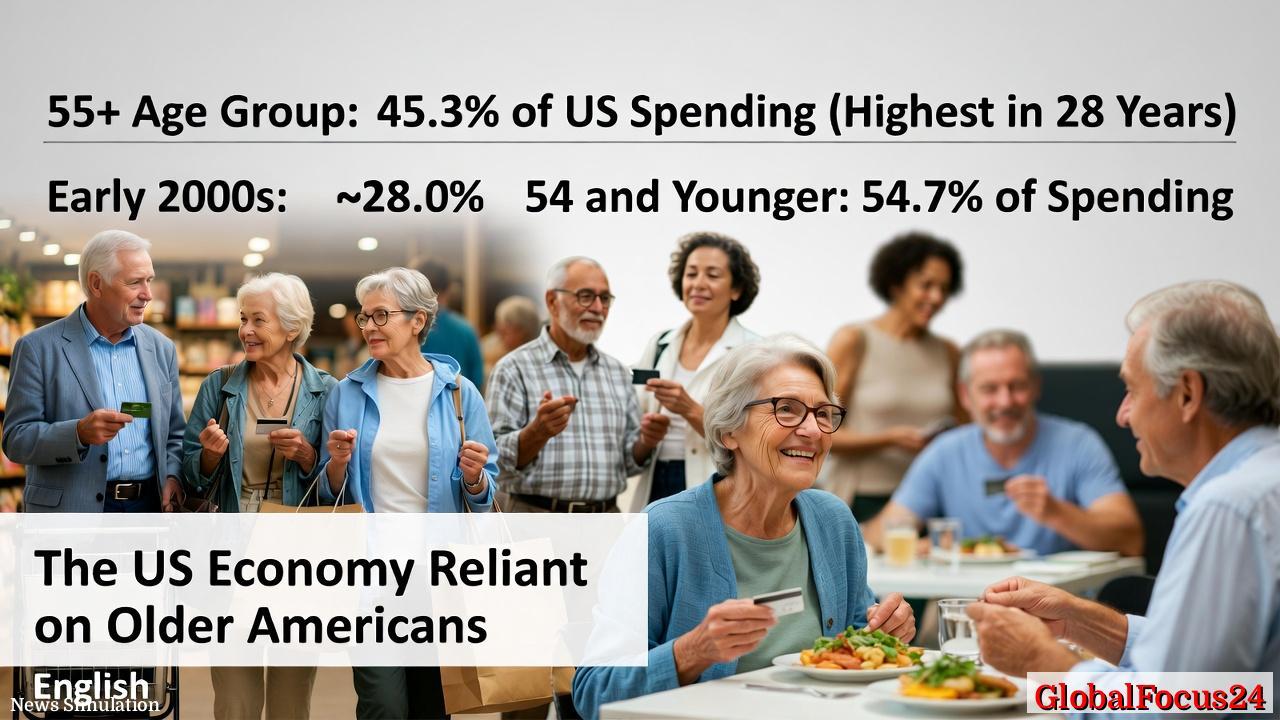
In recent years, the United States has witnessed a structural shift in consumer spending that signals a profound reorientation of the economy. Americans aged 55 and older now account for 45.3% of all US consumer spending, reaching the highest share in at least 28 years. By contrast, those aged 54 and younger contribute 54.7% of total spending, a figure that has declined from about 72% at the turn of the millennium. The gap between the two age groups has narrowed dramatically, shrinking by roughly 35 percentage points over the past quarter-century and inching toward convergence for the first time in modern data history. This development sits at the intersection of demographics, wealth accumulation, and shifting consumption patterns, and it carries implications for businesses, policymakers, and regional economies alike.
Historical context: a long arc toward an older consumer base To understand the current landscape, it helps to chart the decades-long evolution of the American consumer. The baby-boom generation began entering retirement age en masse in the 2010s, bringing a large cohort with accumulated wealth, established housing, and different spending priorities. As life expectancy extended and healthcare costs adjusted, retirees and near-retirees increasingly directed a sizable portion of their budgets toward services that improve quality of life—healthcare, housing, travel, experiences, and leisure—while still maintaining essential essentials such as groceries and utilities.
Meanwhile, younger generations—Gen X, Millennials, and now Gen Z—have faced a different mix of challenges: student debt, tighter entry into housing markets, and more variable wage growth. These factors influence savings rates, credit usage, and discretionary purchasing power. The net effect, observed across multiple data releases over the past two decades, is a gradual tilt in household spending toward the older demographic. The latest figures crystallize that trend into a clear macroeconomic signal: the consumer economy is aging, and that aging is anchored by accumulated wealth.
Economic impact: wealth concentration and consumption dynamics A central element in this narrative is wealth distribution. Federal Reserve data indicate that those over 55 now hold about 73.7% of US wealth, up from roughly 56.2% in 2000. This widening wealth divide translates into concentrated purchasing power within an older cohort, with implications across sectors and regions. The spending patterns of older households tend to emphasize durable goods, healthcare services, housing maintenance, and travel. Even as older households often reduce expenditures on large-scale investments such as new automobiles or education, their purchases in areas like home improvement, healthcare devices, and travel can sustain steady demand for services and products that support an active, independent lifestyle.
The shift also interacts with labor markets and policy settings. As a larger share of consumption is driven by retirees or near-retirees, demand for services that complement aging—senior housing, home healthcare, long-term care, and supportive technologies—has grown. This supports sectors that adapt to aging in place, retrofitting homes with accessibility features, and providing community-based care. At the same time, households under 55—especially those balancing mortgage payments, education expenses, and earlier-stage investments—face different inflation exposures and savings needs, influencing their propensity to spend on discretionary items.
Regional comparisons: geography matters for aging-related consumption Regional patterns illuminate how this aging consumption dynamic plays out across the country. In sunbelt states and major metro areas with high concentrations of retirees, spending in categories such as healthcare services, property maintenance, and leisure travel tends to be more resilient. Counties with higher shares of residents aged 65 and older often exhibit stronger demand for senior-focused retail, healthcare facilities, and age-friendly housing options. Conversely, regions experiencing faster job growth among younger workers may display higher spending on housing, transportation, and education-related goods and services, at least until the effects of aging begin to broaden the base of older spenders.
Economic metamorphosis also occurs in urban versus rural contexts. Urban centers with mature senior populations can become hubs for specialized services, wellness programs, and cultural activities tailored to older residents. Rural areas, meanwhile, may face tighter budgets among aging households, with shopping patterns influenced by access to healthcare, transportation options, and local price levels. Across these geographies, the shared thread remains: the balance of spending is shifting in ways that align with the aging of the population, even as overall consumption remains a key driver of GDP.
Demographic drivers: fertility, longevity, and retirement timing Several demographic forces underlie the observed spending shift. Longevity has continued to extend life expectancy, enabling longer periods of retirement and greater cumulative savings for many households. The retirement timing of older Americans—often occurring gradually over a couple of decades—means that a substantial portion of consumer demand is sustained by pension income, Social Security benefits, withdrawals from retirement accounts, and asset income. These income streams tend to be relatively stable, particularly when compared with the volatility that can accompany wage income for younger workers.
Fertility trends, on the other hand, influence the age structure of the population and the rate at which the 55-and-older cohort grows relative to younger cohorts. If fertility remains subdued, the share of older individuals will remain elevated for longer, reinforcing the spending tilt toward mature households. Policymakers and businesses watch these dynamics closely because they shape labor force participation rates, consumer confidence, and fiscal pressures on programs tied to aging and health.
Implications for businesses: adapting to a changing customer base For companies, the aging of the consumer base signals both risk and opportunity. Retailers, financial service providers, healthcare companies, and technology firms are recalibrating product design, marketing, and distribution to meet the needs and preferences of an older customer base. Simple examples include:
- Healthcare products and services tailored to chronic conditions, preventive care, and senior-friendly clinics.
- Housing and home improvement solutions that emphasize accessibility, safety, and energy efficiency.
- Financial products designed to address retirement planning, Medicare/Medicaid navigation, and estate planning.
- Travel and leisure experiences that cater to comfort, accessibility, and curated itineraries suitable for older travelers.
Businesses are also increasingly adopting omnichannel approaches to serve older customers who blend online research with in-person shopping. Clear information, straightforward product explanations, and accessible store layouts become competitive differentiators as this demographic navigates a wide array of offerings.
Policy considerations: a framework for aging and growth The economic implications of an aging consumer base extend beyond the private sector and into public policy. As wealth concentrates among older households, debates over retirement security, healthcare funding, and long-term care financing gain prominence. Policymakers weigh options such as strengthening Social Security, expanding Medicare coverage, or promoting private saving incentives to ensure that older Americans can maintain purchasing power without imposing excessive burdens on the broader economy.
Initiatives that support healthy aging—such as fall-prevention programs, chronic disease management, and home-based care models—can help reduce long-term healthcare costs while keeping older residents active participants in the economy. At the same time, investments in age-friendly infrastructure, accessible housing, and transportation options improve the quality of life for seniors and support their continued economic contribution through consumption and service use.
Inter-regional comparisons: international context and lessons The United States is not alone in grappling with an aging population and its economic consequences. Several high-income countries face similar demographic shifts, with varying policy responses and socioeconomic outcomes. In some nations, generous pension systems and universal healthcare support sustained consumer activity among older adults, while others emphasize private savings and market-driven solutions. Comparing regional approaches reveals a spectrum of strategies: some place greater emphasis on long-term care financing, others prioritize accessible housing and urban planning to ensure aging in place. The shared takeaway is clear: aging populations prompt a re-evaluation of where and how money is spent, and how societies structure support systems to maintain economic dynamism.
Public reaction: how households respond to shifting spending power Public sentiment surrounding the aging consumption shift centers on two core themes: security and opportunity. For many older adults, stable income streams and wealth accumulation translate into confidence to engage in discretionary purchases, travel, and experiences that enhance well-being. For younger households, the news can be a reminder of the ongoing challenges in achieving homeownership, education affordability, and stable career progression. Across the spectrum, consumers adapt by prioritizing value, seeking out cost-effective options, and embracing products and services that deliver clear benefits. Businesses that communicate reliability, transparent pricing, and accessible customer service tend to earn trust across generations.
Sustainability and long-term outlook: what to watch next Looking ahead, several indicators will help determine whether the current spending pattern endures or evolves. Demographic projections suggest that the 55-and-older cohort will continue to grow as baby boomers age into their 60s and 70s, potentially intensifying the observed spending tilt. Economic factors such as wage growth for younger workers, inflation, interest rates, and housing affordability will influence how durable the gap remains and whether convergence accelerates or stalls.
Advances in healthcare technology and home-based care could shift some costs away from institutional settings and toward at-home solutions, potentially altering the composition of consumer spending. Policy reforms—whether aimed at retirement security, healthcare funding, or housing assistance—could also reweight spending patterns, particularly if they affect disposable income and wealth preservation for older families.
Conclusion: a new economic equilibrium with aging at its core The United States is reaching a pivotal moment in which older Americans play an outsized role in driving consumer activity. The 45.3% share of spending by those aged 55 and older marks a historical high and signals a broader reallocation of economic power within households. As wealth concentration continues to diverge, regional economies will experience different intensities of demand across healthcare, housing, and services designed to support aging in place. The convergence of spending shares between older and younger cohorts does not merely reflect a statistical footnote; it represents a structural transformation with consequences for corporate strategy, public policy, and the everyday lives of millions of Americans. In this evolving landscape, the most successful communities and companies will be those that align offerings with the needs and aspirations of an aging yet active population, while preserving opportunities and mobility for younger generations to participate in the economy and build lasting wealth.
Note: The above article presents historical context, economic impact, and regional considerations based on recent spending and wealth distribution trends, aiming to provide a balanced, objective view of a changing consumer landscape.