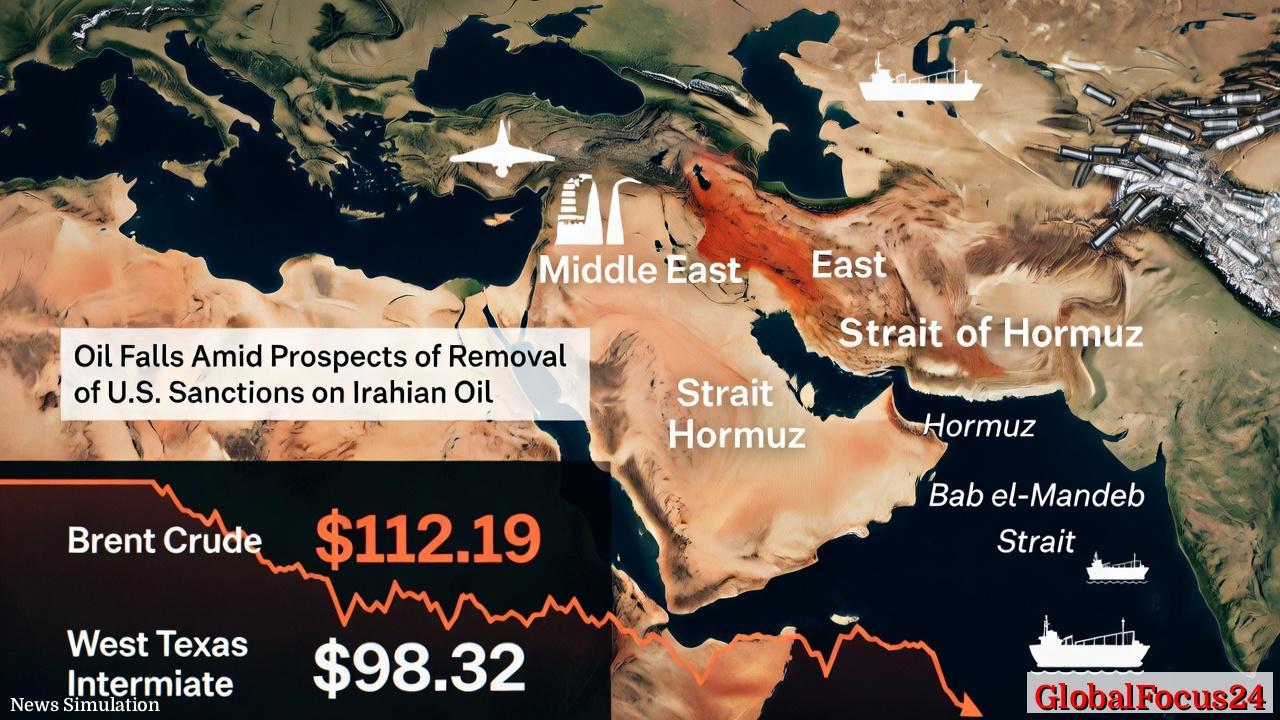
Oil Prices Surge as Middle East Tensions Escalate, Brent Hits $112 Per Barrel
Global oil markets ended the week on a volatile note as geopolitical tensions in the Middle East drove sharp price swings and renewed concerns over energy supply disruptions. Brent crude, the international benchmark, surged 8.8 percent for the week to settle at $112.19 a barrel, marking its fifth consecutive weekly gain. West Texas Intermediate (WTI) crude closed at $98.32, climbing 2.3 percent on Friday but ending the week slightly lower overall.
The widening gap between Brent and WTI—now at its largest in more than a decade—reflects the growing divide between global and U.S. market dynamics. While WTI remains influenced by domestic production and refinery demand, Brent continues to capture the global risk premium associated with Middle Eastern instability.
Mounting Geopolitical Tensions Drive Market Surge
The abrupt rise in oil prices followed a week of intensifying conflict across key energy corridors. Iranian drones struck Kuwait’s Mina Al-Ahmadi refinery, one of the region’s most critical facilities for processing crude into refined petroleum products. At the same time, tanker movement through the Strait of Hormuz, which handles roughly one-fifth of the world’s oil supply, experienced partial paralysis amid military patrols and heightened security warnings.
Adding to the pressure were fears that Yemen’s Houthi forces could disrupt traffic through the Bab el-Mandeb Strait, another strategic chokepoint connecting the Red Sea to global shipping routes. Even a temporary blockade in either passage could have outsized effects on global supply chains, tightening the flow of crude oil to key markets in Asia and Europe.
These geopolitical flashpoints have reignited long-standing concerns about the vulnerability of global energy infrastructure. Market analysts say every flare-up in the region reinforces the perception of a “Middle East premium” on crude, keeping prices elevated even when fundamental supply and demand conditions might suggest otherwise.
U.S. and Allied Responses Attempt to Calm Markets
Late-week comments from senior U.S. officials provided partial relief to anxious traders. Treasury Secretary Scott Bessent suggested that sanctions could soon be lifted on Iranian oil currently stored at sea, potentially releasing several million barrels into the market. The remarks came alongside assurances from President Trump that the U.S. would not send additional troops to the region—a statement seen as an attempt to prevent panic in energy and financial markets.
Those signals briefly eased the upward momentum in oil prices, with some traders taking profits after the week’s steep gains. Still, the prospect of renewed supply from Iran remains uncertain. While lifting sanctions could boost short-term global availability, analysts warn that logistical and insurance concerns will delay any significant volume increases.
Historical Context: A Cycle of Risk and Recovery
The Middle East’s influence on oil prices has deep historical roots. Since the 1973 Arab oil embargo, geopolitical strife in the region has repeatedly triggered price surges and supply disruptions that ripple through the global economy. Subsequent crises—including the Iran-Iraq War in the 1980s, Iraq’s invasion of Kuwait in 1990, and the Arab Spring uprisings of the early 2010s—underscored how tightly energy markets are intertwined with regional security.
Each of these episodes exposed vulnerabilities in global supply networks while prompting strategic responses from major importers. The establishment of Strategic Petroleum Reserves (SPRs) in the United States, China, and Europe was a direct consequence of past crises, offering governments tools to cushion price shocks. However, even those reserves have limitations when simultaneous disruptions occur across multiple supply nodes.
Economic Implications for Consumers and Industry
The sharp rise in crude prices carries broad economic implications. Higher energy costs tend to spill over into transportation, manufacturing, and food sectors, exerting upward pressure on inflation. For countries heavily reliant on imported oil—especially in Europe and parts of Asia—sustained increases could strain trade balances and consumer spending.
In the United States, elevated WTI prices may spur renewed drilling activity in shale-producing regions such as the Permian Basin, Eagle Ford, and Bakken. Yet producers remain cautious after several years of consolidation and capital discipline. Many firms have shifted focus from aggressive expansion to shareholder returns, meaning production increases may lag behind price movements.
For developing economies, particularly in South Asia and sub-Saharan Africa, rising fuel import costs threaten to exacerbate existing fiscal challenges. Analysts note that countries with limited foreign exchange reserves could face difficult trade-offs between subsidizing fuel for domestic stability and preserving financial health.
Regional Comparisons: Diverging Energy Dynamics
While global benchmarks posted gains, regional markets showed varying reactions. Asian refiners, especially in Japan, South Korea, and India, began exploring larger purchases of U.S. crude to offset potential shortages from the Middle East. Meanwhile, European refiners—more dependent on Brent-linked supplies—faced immediate cost pressures, particularly in nations still recovering from prior energy shocks.
In contrast, oil exporters such as Saudi Arabia, the United Arab Emirates, and Iraq stand to benefit from the price surge, at least in the short term. Higher revenues bolster government budgets and fiscal reserves, enabling increased public spending. However, prolonged instability could disrupt production or damage critical infrastructure, offsetting those gains.
Investor Reaction and Market Outlook
Financial markets tracked the oil surge closely, with energy stocks leading gains in global equity indices. Shares of major oil companies such as ExxonMobil, Chevron, and BP rose significantly during the week, reflecting expectations of higher profits. Conversely, airline and logistics firms recorded declines as investors anticipated higher fuel costs.
Commodity traders remain divided on the near-term outlook. Some see the current rally as an overreaction that could unwind if diplomatic efforts succeed or global demand weakens. Others argue that the geopolitical risk environment, combined with tightening inventories, will keep Brent near or above the $110 threshold for the foreseeable future.
Futures data shows that speculative positioning in crude oil has reached its highest level since early 2022, suggesting strong conviction among bullish traders. However, volatility measures indicate nervousness across markets, with spreads widening and trading volumes surging on short notice.
Strategic Considerations: Supply Security and Energy Transition
The latest surge underscores ongoing global vulnerability to fossil fuel supply shocks, even amid record investment in renewable energy. Policymakers face a familiar challenge: balancing near-term energy security with the long-term objective of decarbonization. While alternative energy sources continue to expand, oil remains the backbone of global transport and industrial demand.
Many nations are once again reassessing their supply chains and diversification strategies. European officials have already discussed increasing natural gas storage levels and accelerating offshore wind projects, while Asian importers are renegotiating long-term crude contracts with suppliers outside the Middle East, such as the United States, Brazil, and West Africa.
Energy economists argue that this episode highlights the importance of redundancy in global logistics—spare pipeline capacity, diversified shipping routes, and international coordination during crises. Without such measures, even local conflicts can send shockwaves through the international economic system.
Conclusion: A Fragile Equilibrium
Oil’s recent volatility reflects more than short-term trading dynamics; it reveals a structural fragility in the global energy framework. The concentration of key supply routes in politically sensitive regions leaves markets perpetually exposed to the threat of disruption.
As diplomats race to contain escalating tensions and energy officials explore contingency plans, traders and consumers alike are relearning an old lesson: stability in oil markets can evaporate overnight. Whether recent price gains mark a transient spike or the beginning of a sustained uptrend will depend largely on developments beyond the trading floor—on the diplomacy, deterrence, and coordination that govern one of the world’s most vital commodities.