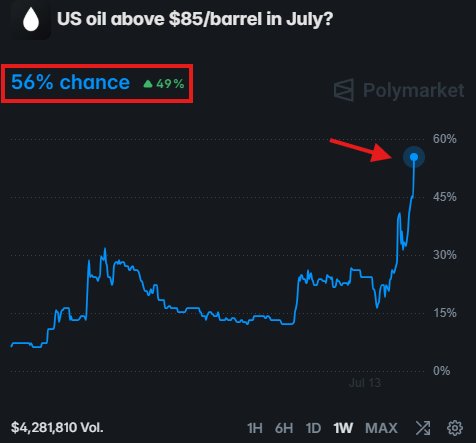
US Oil Prices Eye Surge Above $85 Amid Renewed US-Iran Tensions
Oil markets are bracing for a renewed ascent as geopolitical strains between the United States and Iran intensify, with traders signaling the possibility that Brent and WTI benchmarks could breach the $85 per barrel mark in the coming weeks. The renewed escalation, centered on potential disruptions to shipments through the Strait of Hormuz, has injected fresh risk premiums into crude prices and sharpened expectations for a volatile near term.
Context and historical backdrop
- The Strait of Hormuz has long been a focal point of global oil security. As a chokepoint through which a substantial portion of the world’s crude travels, any disruption—real or perceived—has historically translated into price spikes and heightened market anxiety. The current episode revisits memories of past confrontations around the same corridor, where even rumors of disruption have previously moved prices before supply lines were visibly affected. This dynamic is not new, but the scale and speed with which markets respond tos about Gulf tensions underscore how tightly global oil sentiment is tied to regional risk.
- The United States and Iran have a long history of episodic clashes over political, strategic, and regional issues. While markets often price in risk premiums during periods of heightened tension, sustained or materialized disruptions would represent a meaningful shift from the recent pattern of supply and demand balancing. In past cycles, futures markets have priced in geopolitical risk at a premium that can persist even after tensions ease, reflecting the market’s sensitivity to the potential for supply shocks.
- In this cycle, the central feature is the prospect of fees or tariffs levied on vessels transiting the Hormuz corridor, a development that would raise the operational costs of crude transport and potentially disrupt the normal flow of shipments. Even the hint of such measures can prompt immediate reassessments of risk and forward price curves as traders recalibrate expectations for short-term supply availability.
What could drive prices higher this month
- Shipping disruption risk: The market’s immediate focus is on the risk that Hormuz transit could be slowed or blocked, even temporarily. If vessels face additional charges or navigational constraints, insurers may adjust risk pricing upward, and alternative routing could add days to transit times, raising perceived scarcity and cost.
- Supply-demand jitters: While global oil supply has shown resilience through diversified sources and strategic reserves, the Middle East’s central role in crude flows means that any credible disruption can tighten global balances quickly. Markets watch for signs of anchor points such as OPEC+ production decisions, refinery utilization, and seasonal demand patterns that interact with geopolitical risk to shape price trajectories.
- Market sentiment and momentum: In commodity markets, price moves often become self-reinforcing. As prices edge higher on risk, hedging activity, fund flows, and speculative positioning can amplify the response, pushing futures curves into contango and elevating confidence in further gains if tensions persist.
Economic implications of a price move
- Domestic energy costs: Higher crude prices generally translate into higher gasoline and diesel prices for consumers, especially where domestic refineries rely on benchmark crudes for a portion of their feedstock. The pass-through to transportation, agriculture, and manufacturing costs can ripple through inflation-sensitive sectors, influencing policy conversations around energy affordability and consumer prices.
- Production and investment dynamics: A sustained price excursion toward or above $85 can incentivize higher exploration and production activity in regions with favorable geology, potentially offsetting some of the short-term supply fears. However, such responses take time to materialize and depend on financing conditions, permitting environments, and the capital intensity of new projects.
- Macro policy considerations: In periods of elevated energy costs, central banks and fiscal authorities often monitor energy price signals for their impact on inflation trajectories and growth outlooks. Depending on how long elevated prices endure, monetary policy expectations may shift, influencing exchange rates, cross-border trade, and investment flows.
Regional comparisons and implications
- North America: U.S. crude benchmarks have demonstrated sensitivity to geopoliticals, but domestic supply resilience—supported by a combination of shale productivity and strategic reserves—can moderate some price volatility. Nevertheless, a sustained premium on crude can feed into higher gasoline costs in the near term, affecting consumer sentiment and regional economic activity.
- Europe: European economies, with energy imports and vulnerable refining margins, are particularly exposed to swings in global crude pricing. A sustained move above $85 could tighten energy baskets and influence policy discussions around energy security, diversification of supply, and strategic stock management.
- Asia-Pacific: As a major importer of crude, Asia faces the dual pressures of price volatility and evolving refinery demand patterns. Price surges can have knock-on effects on inflation, consumer prices, and industrial output across economies that rely on imported energy for power generation and manufacturing.
Market outlook and scenarios
- Short-term upside scenario: If tensions remain elevated and Hormuz-related disruptions appear more likely, crude prices could test or surpass the $85 per barrel level in July, supported by risk premiums and potential supply bottlenecks. In this scenario, traders would monitor ship traffic data, insurance coverage, and any signs of escalated military activity that could further threaten flows.
- Baseline scenario: In the absence of a material disruption, prices might stabilize within a broader range as the market weighs supply availability against demand signals. A gradual cooling could occur if diplomatic channels yield progress, calming risk premiums and allowing fundamentals to reassert themselves.
- Downside scenario: If diplomatic breakthroughs emerge or if risk premiums unwind faster than anticipated, prices could retreat from the highs as speculative positioning adjusts and supply concerns recede. This would likely be accompanied by a strengthening of global demand fundamentals as economies continue to recover from prior shocks.
Investor and consumer responses
- Hedging and risk management: Market participants are likely to increase hedging activity across futures, options, and related instruments to mitigate potential volatility. This could lead to higher options premiums and wider bid-ask spreads, reflecting ongoing uncertainty.
- Transportation and logistics planning: Airlines, shipping companies, and manufacturers may adjust procurement and inventory strategies in response to price volatility. Delays, freight rate shifts, and contingency planning could influence global supply chains in the near term.
- Public reaction: Energy price volatility tends to draw public attention tos about geopolitical risk. Consumers may experience more noticeable fluctuations at the pump and in energy-related bills, prompting media and policy discussions about energy security and affordability.
Conclusion
- The path of oil prices in the near term will hinge on the trajectory of geopolitical tensions, the perceived likelihood of Hormuz-related disruptions, and how markets interpret evolving risk versus underlying supply-demand fundamentals. As markets watch carefully for any concrete steps toward transportation fees or other constraints in the Hormuz corridor, the energy complex remains in a state of heightened sensitivity. Traders, policymakers, and households alike will be assessing the potential implications of a sustained move above $85 per barrel, with attention to how regional dynamics interact with global demand, inflation, and growth prospects in an interconnected energy landscape.