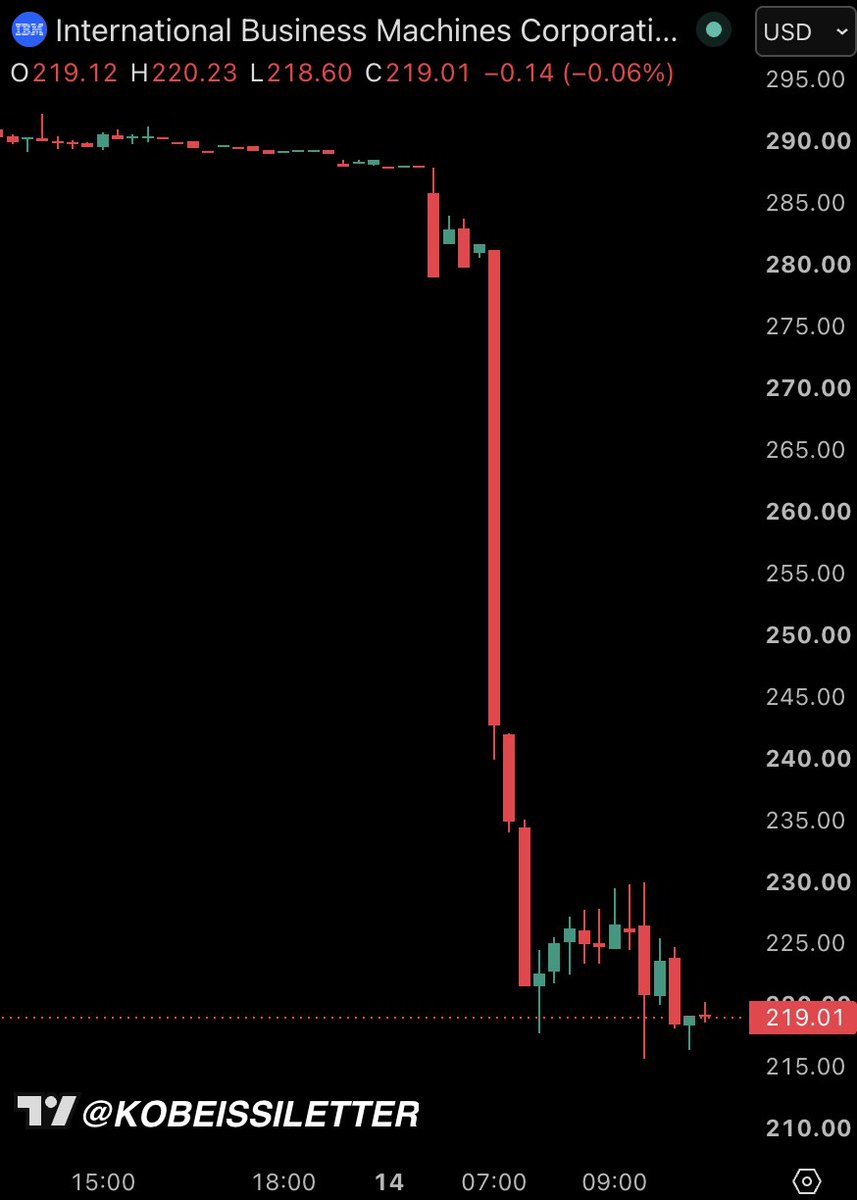
IBM Shares Plunge Sharply on Earnings Warning
IBM’s stock fell sharply after the company issued a disappointing earnings warning for the second quarter, triggering a broad market response in technology equities and reigniting questions about the near-term trajectory of one of the industry’s most storied players. The tumble, powered by revised guidance and a mixed quarterly backdrop, underscores the ongoing tension between IBM’s strategic pivot toward hybrid cloud, enterprise AI, and software services, and the market’s appetite for faster, more visible growth in a volatile tech environment.
Context: IBM’s path from hardware to enterprise AI
- In recent years, IBM has sought to reinvent itself by shifting away from traditional hardware toward software, cloud, and AI-enabled services. This strategic transition aims to capitalize on secular demand for hybrid cloud infrastructure and enterprise-grade AI capabilities, while leveraging the company’s deep relationships with large, risk-averse customers. The earnings warning reopens discussion about whether the company’s revenue mix and long-term growth prospects can translate into sustained earnings momentum in the near term. The current environment—where clients are recalibrating spending toward AI hardware and software that promises measurable returns—amplifies scrutiny of IBM’s execution across its software and services portfolio.
Immediate market impact
- Shares reacted decisively to the revised guidance, with noticeable pressure on the stock as investors reassessed the durability of IBM’s growth trajectory. This reaction reflects a broader sensitivity in the tech sector to earnings consistency and the ability of large incumbents to translate strategic shifts into tangible revenue and margin expansion. The scale of the move also highlights the market’s wariness about whether IBM can accelerate progress in its software and consulting segments while managing the legacy parts of the business that still contribute meaningfully to revenue and profitability.
Quarterly performance and what the market focused on
- IBM reported adjusted earnings that fell short of consensus expectations, with revenue that did not meet analysts’ targets for the quarter. While the company has shown progress in certain segments, investors pointed to concerns about the pace of growth in software and hybrid-cloud-related offerings, as well as the durability of demand for AI-driven solutions in enterprise settings. The mismatch between earnings results and strategic optimism around AI and cloud initiatives contributed to a reevaluation of the stock’s valuation and growth potential.
Regional and industry comparisons
- The sell-off mirrors a broader pattern in technology equities where investors compare IBM’s progress against peers that have demonstrated faster top-line acceleration or clearer near-term catalysts from AI deployments, cloud migrations, or data-and-analytics offerings. Regions with high exposure to enterprise technology—such as North America and Western Europe—have displayed heightened sensitivity to guidance revisions and quarterly performance signals from big IT services and software names. In contrast, some regions with more conservative corporate technology adoption cycles may view IBM’s strategy as a long-term play with distribution and services benefits that materialize in a slower burn.
Historical context: IBM’s earnings cycles and market history
- IBM’s history in the stock market includes periods of volatility tied to earnings surprises, strategic pivots, and macroeconomic shifts. The company’s crosswinds—between legacy infrastructure revenue and the growth promised by hybrid cloud and AI—have long been a source of debate among investors. Historically, large drawdowns can occur when the market recalibrates expectations for a transformation story, particularly if near-term results do not convincingly demonstrate the transition’s earnings power. The current episode fits within that broader pattern of how investors respond to reconciling long-term strategic goals with quarterly realities.
Economic implications beyond IBM
- A significant move in IBM can ripple through the broader tech supply chain, affecting peers in software, IT services, and hardware providers that serve enterprise customers undergoing digital transformation. The reaction also touches sentiment around AI investments, data center capacity planning, and enterprise AI deployment timelines. If the downturn in IBM’s stock prompts a re-pricing of related equities, it could influence capital allocation decisions for corporate buyers and private equity players weighing consolidation or strategic partnerships in enterprise technology spaces.
What investors should watch next
- Guidance refresh and margin trajectory: Investors will scrutinize IBM’s updated guidance for revenue growth, operating margins, and free cash flow, paying particular attention to how the company intends to scale its software and consulting segments in the year ahead. Any indication of accelerated mix-shift toward higher-margin software and managed services could help restore confidence.
- Customer adoption signals: Market participants will listen for commentary on the pace of enterprise AI adoption, including the uptake of IBM’s hybrid-cloud offerings, data and analytics platforms, and industry-specific AI solutions. Clear evidence of customer wins, large-scale deployments, or durable outsourcing engagements would be key positives.
- Cost discipline and efficiency enhancements: Given macro pressures and rising competition, IBM’s ability to optimize costs while funding strategic investments will be critical. Investors will evaluate operating leverage, efficiency improvements in the software portfolio, and the impact of any restructuring or reallocation of resources.
What this means for the broader market
- This development emphasizes the ongoing recalibration in technology equities as investors balance growth narratives around AI and cloud with the reality of quarterly earnings discipline. The market’s reaction to IBM’s earnings warning could set a tone for how investors approach other legacy technology firms pursuing AI-driven transformations. The episode also underscores the importance of transparent communication from management about execution plans, milestones, and the expected timing of benefits from strategic bets.
Public sentiment and reaction
- Public reaction to a sharp drop in a blue-chip tech name often includes a mix of concern and speculation about leadership, strategy, and the prospects for a sustained turnaround. Analysts and investors may reiterate the importance of a clear path to profitability in the near term, while remaining mindful of the long-term trajectory toward hybrid cloud and AI-enabled services. The conversation around IBM’s strategy is likely to center on whether the company can deliver the revenue growth and margin expansion required to justify the optimism embedded in its transformation plan.
Conclusion
- IBM’s earnings warning and the ensuing stock decline spotlight the challenges and opportunities inherent in a multi-decade transformation within one of technology’s most prominent players. As the company navigates a complex landscape of enterprise AI demand, cloud migration, and legacy infrastructure maintenance, market participants will be watching for signs that revenue growth can accelerate, that margins can improve meaningfully, and that the strategic pivot can deliver durable value for shareholders. The coming quarters will be telling as IBM weighs near-term performance against a longer-term vision of AI-powered enterprise solutions.