Oil Prices Plunge Below $80 as Middle East Tensions Ease and Supply Routes Reopen
Sharp Decline Marks One of Fastest Oil Market Reversals in Years
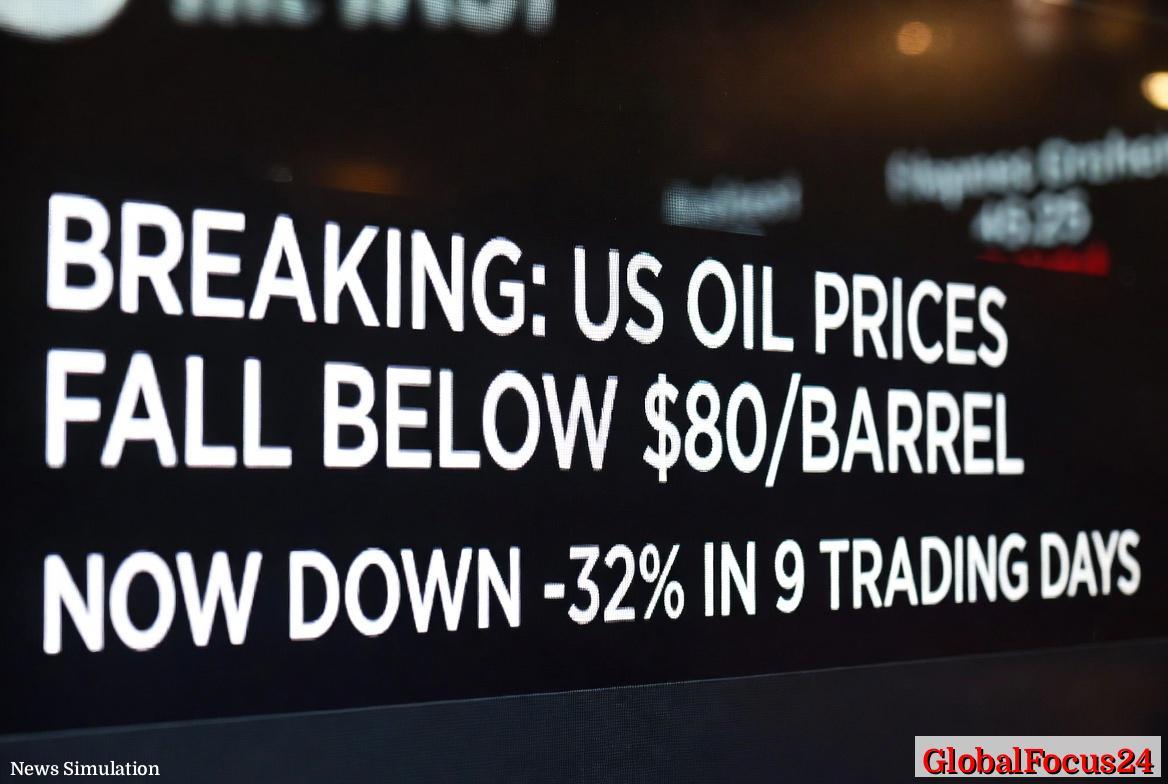
Global oil markets experienced a dramatic shift this week as U.S. crude prices fell below the $80 per barrel threshold, capping a steep nine-day decline that has erased nearly one-third of recent gains. West Texas Intermediate (WTI) crude settled at $79.97, down more than 14% in a single session, underscoring the speed and intensity of the sell-off.
The drop represents a 32% decline over just nine trading days, making it one of the most rapid reversals in modern oil market history. The sharp correction follows a period of heightened geopolitical tension that had driven prices higher amid fears of supply disruptions.
Traders are now recalibrating expectations as several key risk factors that once supported elevated prices have quickly receded.
Ceasefire and Diplomatic Progress Shift Market Sentiment
A central driver behind the decline is a ceasefire agreement between Israel and Lebanon, which has significantly reduced the risk of broader regional conflict. The easing of tensions has alleviated concerns that hostilities could spread and disrupt critical oil infrastructure or shipping routes across the Middle East.
Equally significant is the reopening of the Strait of Hormuz to unrestricted shipping. The narrow waterway, through which roughly one-fifth of the world’s oil supply passes, had been under scrutiny amid fears of potential blockades or military escalation. With shipping traffic returning to normal levels, a key source of uncertainty has been removed from the market.
Adding to the shift in sentiment are reports of advancing negotiations between the United States and Iran. While details remain limited, the prospect of improved relations raises the possibility of increased Iranian oil exports returning to global markets. This potential influx of supply has contributed to downward pressure on prices.
Supply Expectations Outpace Demand Concerns
The rapid unwinding of oil prices reflects a broader reassessment of global supply dynamics. During the recent rally, traders had priced in the risk of constrained output from key producers. However, with geopolitical risks easing, attention has turned to the likelihood of ample supply in the months ahead.
Several factors are reinforcing this outlook:
- The potential return of Iranian crude exports to international markets.
- Continued production from major oil-producing nations, including the United States and Saudi Arabia.
- Stable output from non-OPEC producers, particularly in North America.
- Improved shipping conditions allowing for smoother global distribution.
At the same time, demand signals have remained relatively steady, without significant upward surprises. This imbalance—where supply expectations are increasing faster than demand growth—has accelerated the price decline.
Historical Context: Comparing Past Oil Price Swings
Oil markets have a long history of volatility, often driven by geopolitical events and supply disruptions. However, the speed of the current decline stands out even against past episodes.
During the 2008 financial crisis, oil prices collapsed from record highs above $140 per barrel to below $40 within months, driven largely by a collapse in global demand. Similarly, in 2020, prices briefly turned negative amid a pandemic-induced demand shock and storage constraints.
In contrast, the current decline is primarily supply-driven and sentiment-based. Rather than a sudden drop in consumption, the market is reacting to the rapid removal of perceived risks. This distinction highlights how quickly oil prices can adjust when geopolitical tensions ease.
More recent examples, such as price swings following OPEC+ production decisions, have typically unfolded over longer periods. The nine-day, double-digit percentage drop seen this week is unusually abrupt, reflecting the concentrated nature of the catalysts involved.
Economic Impact Across Key Sectors
The decline in oil prices carries wide-ranging implications for the global economy, affecting everything from consumer fuel costs to corporate earnings and government revenues.
For consumers, lower oil prices often translate into reduced gasoline and diesel costs. In the United States, this could provide relief at the pump, potentially easing inflationary pressures and boosting discretionary spending.
Industries that rely heavily on fuel—such as airlines, shipping, and logistics—stand to benefit from reduced operating costs. Lower energy prices can improve profit margins and encourage expansion or investment.
However, the impact is not uniformly positive. Oil-producing regions and companies may face financial strain as revenues decline. In the U.S., shale producers, particularly those with higher production costs, could see margins squeezed if prices remain below key profitability thresholds.
Globally, countries that depend heavily on oil exports, including several in the Middle East and Africa, may experience budgetary pressures. Government spending plans in these regions often rely on higher oil price assumptions, making sudden declines a challenge for fiscal stability.
Regional Comparisons: Diverging Effects Worldwide
The effects of falling oil prices vary significantly by region, reflecting differences in economic structure and energy dependence.
In North America, the United States occupies a unique position as both a major producer and consumer of oil. While lower prices benefit consumers and many businesses, they can also dampen investment in the domestic energy sector. Canada, with its oil sands industry, faces similar dynamics, where production costs are relatively high compared to conventional sources.
In Europe, where many countries are net importers of energy, declining oil prices are generally viewed as positive. Lower energy costs can help reduce inflation and support economic growth, particularly in energy-intensive industries.
In Asia, major importers such as China, India, and Japan also benefit from lower prices. Reduced energy costs can support manufacturing, transportation, and overall economic activity. For emerging economies, in particular, cheaper oil can ease pressure on trade balances and currency stability.
Meanwhile, in the Middle East, oil-exporting nations may face revenue shortfalls. Some countries have taken steps in recent years to diversify their economies, but oil income remains a critical component of national budgets.
Market Volatility and Investor Behavior
The rapid decline in oil prices highlights the sensitivity of energy markets to geopolitical developments and investor sentiment. In recent days, traders have shifted from a risk-driven buying posture to a more cautious, supply-focused outlook.
Volatility has surged as a result, with large price swings occurring within single trading sessions. This environment can create both opportunities and risks for investors, particularly those involved in commodities trading or energy equities.
Hedge funds and institutional investors have reportedly reduced bullish positions in oil, contributing to the downward momentum. At the same time, algorithmic trading strategies may have amplified the speed of the sell-off, as technical indicators triggered additional selling.
Market participants are now closely monitoring upcoming data and developments, including:
- Updates on U.S.-Iran negotiations.
- Compliance levels among OPEC+ producers.
- Inventory data from major consuming nations.
- Economic indicators that could signal changes in demand.
Outlook: Uncertainty Remains Despite Price Drop
While the immediate drivers of the price decline are clear, the longer-term outlook for oil markets remains uncertain. Geopolitical risks, though diminished, have not disappeared entirely. The Middle East continues to be a region of strategic importance, and developments can shift quickly.
Additionally, structural factors such as energy transition policies, technological advancements, and changing consumption patterns continue to shape the market. The rise of renewable energy and electric vehicles, for example, introduces new dynamics that could influence long-term demand.
In the near term, analysts are divided on whether prices will stabilize around current levels or continue to decline. Much will depend on whether supply increases materialize as expected and whether demand remains resilient.
For now, the sharp drop below $80 per barrel marks a significant turning point, signaling a market that is rapidly adjusting to a new set of assumptions.