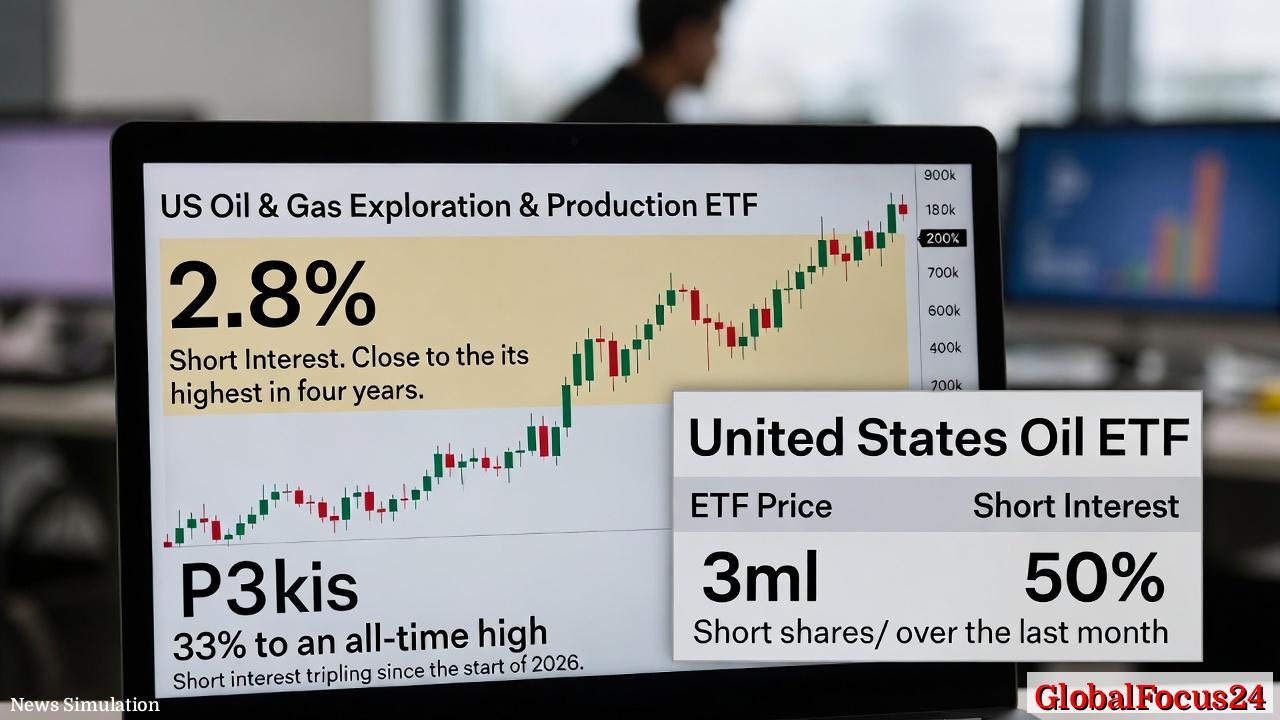
US Oil ETFs See Sharp Rise in Short Interest Amid Surging Prices
Short interest in key U.S. oil exchange-traded funds (ETFs) has surged to levels not seen in several years, signaling heightened market activity and evolving investor sentiment as crude prices rebounded and supply-demand dynamics shifted in early 2026. The increased willingness to bet against specific oil equities and futures-related products comes as traders weigh supply constraints, geopolitical considerations, and the broader trajectory of energy demand in a post-pandemic global economy.
Historical context: a long arc of oil trading and ETF dynamics
Oil markets have long been characterized by cyclical volatility driven by a mix of geopolitical developments, OPEC+ production decisions, inventory data, and macroeconomic expectations. ETFs that track energy exploration and production (E&P) and broader crude price exposure have historically reflected these cycles, attracting both momentum-driven inflows and hedging activity from participants seeking to manage risk or gain tactical exposure.
Historically, rising prices can attract cautious optimism about energy equities and associated ETFs, while simultaneously drawing speculative positions that bet on a reversal or consolidation. The current situation—where short interest has risen while ETF prices have climbed to record or near-record highs—illustrates a nuanced landscape: traders are positioning for both continued upside in prices and the possibility that a near-term pullback could occur, depending on evolving fundamentals.
Economic impact: what higher short interest signals
- Hedging and risk management: A notable rise in short interest often reflects hedging activity, as investors seek protection against potential downside in a market that has already priced in a lot of optimism. Energy-related ETFs can be used to express bearish views on the pace of price gains or to guard against the risk of a sudden reversal.
- Pricing implications: When short interest climbs while prices rise, it can imply a tug-of-war between bulls and bears. If short positions become more expensive to borrow or are covered, ETF prices can stay supported; if shorts cover aggressively, it may amplify near-term moves in either direction.
- liquidity and market structure: Shifts in short interest also illuminate changes in market liquidity and participant behavior. In periods of elevated volatility, more traders may use short positions in futures-linked products or ETF wrappers to express views, influencing intraday liquidity and spreads.
Regional comparisons: how U.S. oil funds stack up
- United States Oil ETF (USO) and related E&P trackers have historically shown sensitivity to domestic supply signals, refinery margins, and the pace of demand recovery. In the current cycle, record or near-record prices in several benchmark grades, combined with continued supply discipline from major producers, have helped U.S.-oriented funds reach all-time highs even as speculative activity has increased.
- Global peers monitoring similar dynamics have observed parallel patterns: short interest in energy-focused funds in Europe and Asia can diverge based on regional production profiles, local energy security concerns, and currency effects. The U.S. market, with its deep equity and derivatives ecosystems, often experiences more pronounced shifts in positioning, reflecting a broader base of institutional and independent traders.
- Cross-asset implications: rising short interest in U.S. oil ETFs can influence other energy assets, including commodity futures, equities in the energy sector, and related fixed-income instruments that traders use to hedge long energy exposure. The interconnections among these markets mean that a shift in one area can ripple through to affect volatility, funding conditions, and correlations across asset classes.
Market dynamics to watch
- Supply and demand signals: The current environment underscores the importance of supply discipline among major producers, inventory levels, and refinery demand. Analysts will be paying attention to OPEC+ messaging, non-OPEC supply growth, and geopolitical developments that could alter the balance between supply resilience and demand resilience as economies recover.
- Inflation and macro backdrop: Energy prices do not move in isolation. Inflation expectations, monetary policy trajectories, and consumer demand trends influence energy usage and pricing power. A robust macro backdrop can support continued demand for crude and refined products, while signs of cooling inflation or slower growth could temper gains.
- Technological and policy shifts: Long-term factors such as energy transition progress, emissions regulation, and advances in efficiency influence the risk premium on oil investments. While ETFs provide leveraged or targeted exposure, fundamental shifts in energy mix—such as greater renewables penetration or demand-side efficiency—can alter the risk-reward profile for energy equities over time.
Public reaction and investor sentiment
Market participants have expressed a mix of optimism and caution as oil ETFs reach elevated levels and short-interest measures climb. Some investors emphasize the potential for sustained price strength given supply constraints and ongoing demand growth from emerging markets. Others warn that a crowded short setup, coupled with macro uncertainties, could lead to increased volatility and faster deltas if catalysts misalign with expectations.
A broader societal lens frames the energy market as a barometer for economic activity, geopolitical risk, and the pace of technological change. Communities dependent on energy production and distribution closely track these developments, recognizing how shifts in ETF positioning may foreshadow changes in investment, employment, and local business conditions tied to energy industries.
Technical takeaways for investors and observers
- Watch for momentum and reversals: Elevated short interest amid rising prices can indicate a fragile balance between bullish momentum and potential short-covering rallies or squeezes. Monitoring daily trading volumes, open interest across futures, and ETF premium/discount dynamics can provide clearer signals about near-term trajectories.
- Evaluate hedging costs: As short interest grows, the cost to borrow shares or access leveraged positions may increase, affecting the feasibility of maintaining certain tactical views. Traders should assess borrowing costs, liquidity, and potential counterparty risk in stressed conditions.
- Consider diversification: While oil-focused ETFs can offer concise exposure to energy sector dynamics, diversification across energy sub-sectors and other cyclical areas can help manage idiosyncratic risk. A balanced approach may smooth returns in a market characterized by episodic volatility.
Outlook: what lies ahead for oil ETFs and the broader energy complex
Analysts expect energy markets to remain sensitive to a constellation of forces, including production discipline, demand resilience in large economies, and the trajectory of global inflation. If supply constraints persist and demand remains robust, price support could endure, potentially keeping short-interest dynamics elevated as traders seek to navigate continued upside with hedging or speculative strategies.
However, the market could also experience periods of consolidation or a downside correction if macroeconomic indicators slow, geopolitical tensions abate, or new supply sources come online more quickly than anticipated. In either scenario, the energy complex is likely to remain a focal point for investors who balance risk management with opportunities presented by ongoing structural shifts in energy procurement and consumption.
Conclusion: an evolving energy landscape
The surge in short interest on U.S. oil-focused ETFs, paired with rising prices to multi-year highs, reflects a market in flux. Investors are navigating a landscape shaped by disciplined production, evolving demand, and the broader context of energy transition. As market participants digest incoming data—from inventory reports to central-bank communications—oil ETFs will continue to serve as one of several instruments through which traders express views on the price path of crude and the performance of the energy sector. In this environment, awareness of risk, liquidity, and macroeconomic tempo will be essential for anyone looking to interpret the implications of rising short interest within the oil investment sphere.