)
BREAKING: Surge in U.S. Corporate Bankruptcies Reaches Multi-Week High
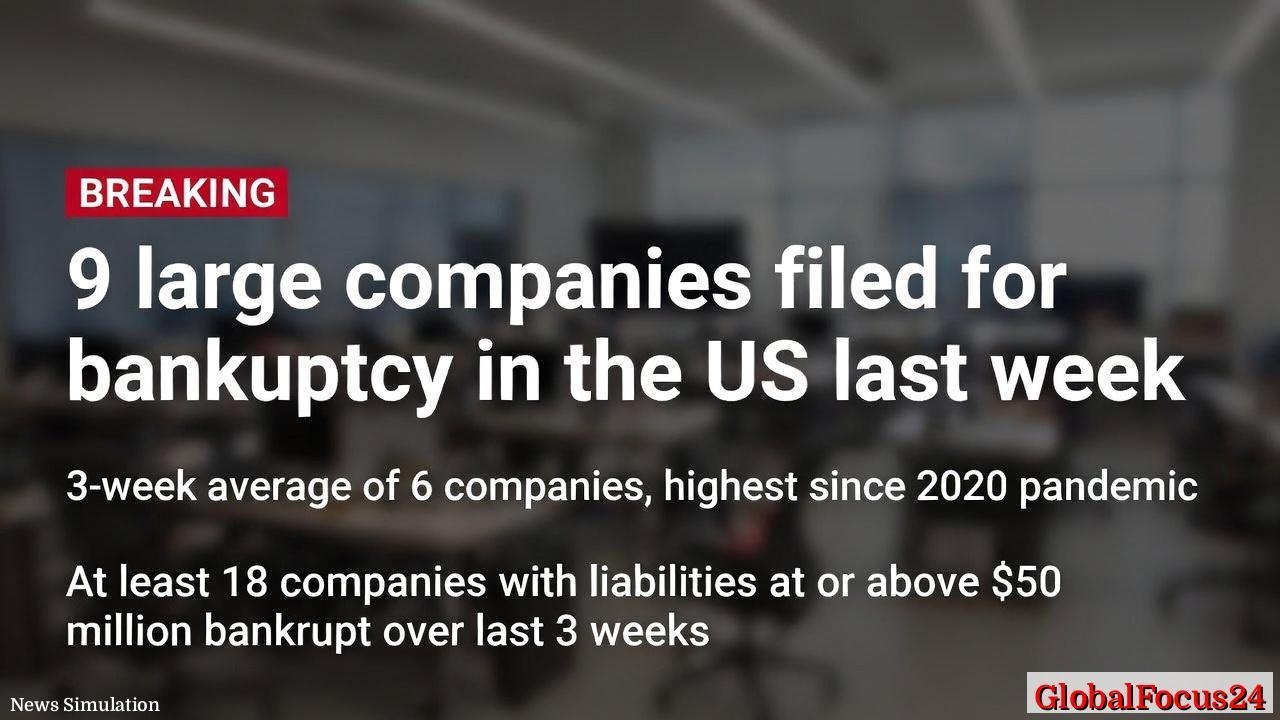
A wave of insolvencies has swept through the U.S. corporate landscape, as nine large companies filed for bankruptcy in the past week. The latest filings push the three-week bankruptcy average to six, the highest pace observed since the early months of the 2020 pandemic. Taken together, at least 18 companies with liabilities of $50 million or more have entered bankruptcy protection over the last three weeks, signaling mounting stress across several sectors and prompting renewed scrutiny of financial resilience in the face of shifting interest rates, supply-chain disruption, and tightening credit conditions.
Historical context: a pattern of distress in volatile cycles
To understand the current wave, it helps to place it in historical perspective. Bankruptcies tend to rise during periods of economic tightening, when higher borrowing costs compress profits and delay capital investment. The last time the United States witnessed a comparable surge over a short span was during the initial phase of the pandemic, when sudden demand swings, supply constraints, and government-implemented shutdowns precipitated a temporary collapse in revenue streams for many firms. As the economy recovered, bankruptcy activity moderated. The present moment, while not identical, echoes that earlier volatility, with a broader mix of industries reporting liquidity challenges rather than a single sector bearing the brunt.
The current round includes companies spanning manufacturing, retail, and services. Analysts say the breadth of the filings underscores how elevated interest rates, inflationary pressures, and ongoing supply-chain volatility continue to erode margins, even for firms that previously demonstrated robust cash generation. The recent pace also raises questions about how widely the financial system can absorb default risk without triggering broader credit tightening.
Economic impact: ripple effects across supply chains and regional economies
The immediate consequence of higher bankruptcy activity is the potential disruption to suppliers, creditors, and employees. When a major company reorganizes under Chapter 11 or similar processes, its suppliers—ranging from small component manufacturers to logistics providers—may experience delayed payments, which can cascade into liquidity strains elsewhere in the network. In sectors with just-in-time production models, even short payment gaps can prompt production pauses, affecting customers and eroding confidence in local markets.
Regional economies with higher concentrations of distressed firms may experience more pronounced effects. Areas with large industrial bases or clustered supply chains could see localized job displacement, vacant industrial space, and shifts in regional employment patterns as restructuring unfolds. Policymakers and economic development officials often monitor bankruptcy activity as a proxy for underlying credit conditions and business confidence, calibrating workforce retraining and small-business support programs accordingly.
Credit markets and lender behavior: what the numbers may imply
Credit markets respond to rising distress with tighter lending standards and more cautious underwriting. Lenders may heighten collateral requirements, adjust covenants, or selectively tighten exposure to higher-risk sectors. Such shifts can broaden the cost of capital for a wider set of firms, even those with solid fundamentals, thereby slowing investment and potentially feeding a feedback loop of weaker demand and further downgrades. Market observers keep a close eye on credit spreads, default rates, and the flow of refinancing activity among mid-sized and larger corporations as indicators of systemic sentiment.
Historical analogies aside, the current environment features a mix of structural and cyclical pressures. Inflation has cooled in some recent data, but prices for raw materials, energy, and transportation services remain uneven, complicating cost forecasting for manufacturers and retailers. Moreover, expectations for future interest rate trajectories influence strategic decisions from capex budgeting to debt maturity management. In an environment where the cost of capital is higher and access to liquidity is more disciplined, firms with thinner margins or weaker balance sheets face amplified risk.
Regional comparisons: how different markets are faring
Across the United States, bankruptcy trends reveal meaningful regional variation. Industrial hubs with heavy manufacturing activity, such as the Midwest and certain Southern corridor cities, often experience earlier and more pronounced distress during rate-tightening cycles due to legacy capital structures and exposure to cyclical demand. Coastal economies with a larger concentration of services and consumer goods retailers may see different dynamics, as consumer spending patterns and tourism-related revenues influence cash flow stability.
In markets where energy prices and logistics costs have remained volatile, firms dependent on global supply chains or commodity-sensitive inputs face sharper income variability. Conversely, regions with diversified industries and robust export activity sometimes exhibit greater resilience, benefitting from multiple revenue streams and stronger local support networks. Analysts emphasize that, while bankruptcy counts provide a snapshot, the underlying financial health of firms varies widely within and across regions.
Corporate restructuring: pathways and what to watch
For companies entering bankruptcy protection, the road to recovery—or orderly wind-down—depends on several factors. The ability to renegotiate labor contracts, secure new financing, and prune non-core assets often determines whether a business can regain solvency or face liquidation. In some cases, firms find strategic opportunities to reposition assets, merge with better-capitalized partners, or pivot to higher-margin offerings. The pace and success of these restructurings hinge on creditor negotiations, market demand for the company’s products or services, and the broader macroeconomic backdrop.
Investors and market participants typically monitor several indicators alongside bankruptcy filings. These include debt maturities, liquidity cushions, cash burn rates, and early-stage signs of demand recovery in key customer segments. In addition, supply-chain resilience measures—such as diversified sourcing, onshoring of critical components, and inventory optimization—are increasingly factored into corporate strategies as firms seek to reduce vulnerability to external shocks.
Industry-specific considerations: where the stress is most acute
- Manufacturing and durable goods: Companies relying on long lead times and capital-intensive processes face fragility when demand softens or financing costs rise. The result can be a rapid depletion of working capital, forcing some firms to seek protection while they recalibrate production lines and supplier agreements.
- Retail and consumer services: Higher borrowing costs compress discretionary spending and complicate inventory management. Brands that maintained strong e-commerce channels and flexible fulfillment networks may outperform those with heavier brick-and-mortar exposure and fixed cost structures.
- Transportation and logistics: The sector remains highly sensitive to fuel prices, driver availability, and carrier capacity. When revenue visibility declines, so does the appetite for risk in capital-intensive expansions or debt-funded route optimization projects.
- Energy and related services: Market volatility, capex cycles, and regulatory considerations influence cash flow profiles. Some firms in this space face heightened risk if commodity prices retreat or if project financing becomes more constrained.
Public reaction and the broader narrative
Public sentiment about rising bankruptcy activity often centers on concerns about economic stability and job security. Communities connected to distressed firms may express anxiety over layoffs, while suppliers and creditors highlight the need for transparent restructuring plans and timely communication. Policymakers typically respond by balancing the imperative to support viable businesses with the necessity of protecting creditors and ensuring orderly markets. In several regions, bipartisan discussions focus on workforce retraining, small-business access to credit, and targeted support for industries undergoing structural change.
What this means for decision-makers
- For executives: The current environment reinforces the importance of liquidity management, scenario planning, and selective investment in growth areas with clearer demand signals. Firms may benefit from stress testing against higher-rate scenarios, building contingency lines of credit, and preserving bargaining power in supplier negotiations.
- For lenders and investors: A cautious but proactive approach is warranted. Structuring debt with flexible covenants, monitoring liquidity metrics, and identifying firms with strong collateral and defensible market positions can help manage risk while supporting viable restructurings.
- For policymakers and regional leaders: Strengthening economic resilience through workforce development, diversified supply chains, and targeted financial assistance for small and mid-sized enterprises can mitigate the hurt from a prolonged period of elevated distress. Public-private coordination can shrink the time-to-recovery for affected communities.
What comes next: predictions and uncertainties
Forecasts in bankruptcy activity are inherently uncertain, tied to how quickly inflation cools, how consumer demand evolves, and how central banks calibrate policy. If financing conditions ease and demand stabilizes, some distressed firms may restructure and emerge with healthier balance sheets. If pressure intensifies or a new shock hits—whether a commodity price surge, a geopolitical disruption, or a renewed liquidity squeeze—the bankruptcy environment could remain stubbornly elevated, potentially dragging on employment and investment across multiple regions.
In sum, the latest filings highlight a pivotal moment for the U.S. corporate ecosystem. While no single indicator can capture the full complexity of the moment, the synthesis of higher interest rates, persistent cost pressures, and uneven demand creates a backdrop in which even large, well-established companies face solvency challenges. As markets digest the implications, stakeholders across industries will watch closely for signs of stabilization or renewed strain, with implications for regional economies, credit markets, and the trajectory of economic recovery in the coming quarters.
Follow-up note: If you’d like, I can tailor this piece toward a specific industry, region, or audience—such as small business owners in the Midwest, investors focusing on distressed assets, or policymakers evaluating economic resilience programs.