US Fears of a Government Shutdown Rise as Deadline Approaches: Historical Context, Economic Implications, and Regional Comparisons
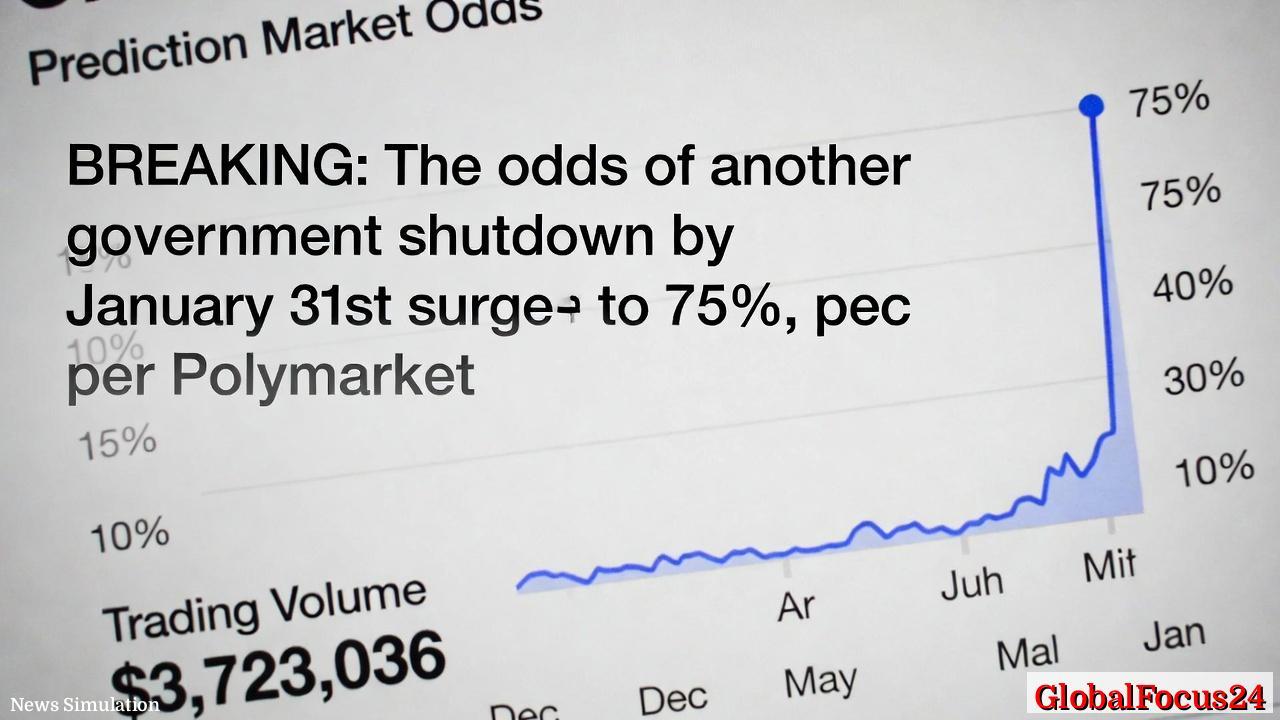
A market-driven forecast is signaling a growing likelihood of a US federal government shutdown by the end of January, as analysts monitor the status of funding legislation and the legislative calendar. Odds surged to 75% in recent trading, a sharp ascent from earlier fluctuations that hovered between 10% and 40% through December and until mid-January. The trigger is a funding measure—currently a continuing resolution—that is set to expire on January 30 or 31, 2026, unless lawmakers enact a new appropriation to keep the government operating. This situation places the nation at a critical juncture where political negotiations, budgetary priorities, and the management of public services intersect with measurable economic risks and regional consequences.
Historical context: past interruptions and their fiscal echoes
The United States has experienced several lapses in funding since the late 20th century, each leaving a distinctive imprint on the economy, government operations, and public sentiment. The most notable recent episodes include a brief shutdown in 2013 over a budget impasse that led to furloughs for nonessential federal workers and disruptions in national parks, visa processing, and internal services. The 2018-2019 period, a longer confrontation over immigration and other policy priorities, produced intermittent closures and heightened uncertainty across markets, with effects that reverberated through consumer confidence and hiring plans in affected agencies. While each shutdown tends to have unique political drivers, the common thread is the monetary and administrative frictions that arise when funding lapses interrupt discretionary and mandatory programs.
Economic implications: how a shutdown reorients markets and households
- Government operations and borrowing costs: A lapse in funding can disrupt the execution of government contracts, grant administrations, and regulatory activities. While essential services may continue, nonessential operations often pause, potentially delaying research programs, infrastructure initiatives, and permit reviews. Financial markets typically respond with heightened volatility as investors reassess the timeline for policy actions, appropriations, and the risk of a prolonged stalemate. The federal debt ceiling and broader fiscal dynamics compound these considerations, influencing Treasury yields, by-plot financing costs, and the risk premium demanded by investors.
- Payroll, procurement, and consumer spillovers: A shutdown can trigger temporary furloughs for hundreds of thousands of federal employees and contractors, reducing household income in the near term and dampening consumer spending. Procurement backlogs can ripple through supply chains that rely on government demand, from construction and defense to health research and environmental monitoring. While many vendors may be contractually insulated from immediate losses, prolonged interruptions tend to increase delayed payments, worsen cash flow, and compress private-sector investment in affected sectors.
- Economic indicators and growth trajectories: Short-term slowdowns in federal activity can depress quarterly growth rates, particularly in regions with high concentrations of federal employment or defense-related contracting. The GDP impact depends on the duration of the shutdown and the scope of services curtailed. In some cases, the private sector anticipates and adapts by accelerating activity before a deadline or by reallocating resources during a pause, which can mitigate some negative effects but also introduce seasonal distortions in official statistics.
Regional implications: who feels the pinch first and how cities adapt
- Capital-heavy districts with robust federal presence: Regions hosting large federal facilities, defense installations, and extensive grant programs may experience a more immediate impact on local economies. Local governments often rely on federal funding for infrastructure, education, and social programs, so a shutdown can tighten municipal budgets, slow public projects, and affect local employment in ancillary services.
- Mixed economies with government-linked industries: States with significant contractor bases or research institutions that depend on federal funding for grants, research grants, and defense procurement may see delayed project timelines, payment cycles, and changes in hiring plans. Universities and laboratories that count on federal grants might adjust grant applications or staffing levels if funding remains uncertain.
- Tourism, parks, and public services: National parks, museums, and federally managed recreational sites experience operational pauses during shutdowns, potentially reducing visitor spending and associated hospitality revenue in gateway towns. Public-facing services such as visa processing, passport issuance, and regulatory inspections can see backlogs, affecting residents and travelers alike.
Regional comparisons to international norms
Compared with other advanced economies, the United States’ reliance on periodic federal funding cycles and discretionary budgeting generates a unique set of near-term macroeconomic risks during funding gaps. In countries with more unified budgetary timelines or automatic budgetary mechanisms, government shutdowns are rarer and often less disruptive to daily life. However, the US system’s separation of funding bills from policy debates creates a higher potential for abrupt interruptions when consensus is elusive in Congress. The regional impact depends not only on proximity to federal facilities but also on the maturity of local industries that depend on federal contracts and research funding.
Political dynamics: electoral cycles, policy priorities, and timing
The current funding impasse sits at the intersection of budgetary discipline and policy disagreement. While this article avoids offering political analysis or speculation about outcomes, it is essential to note that the timing of a potential shutdown often aligns with broader electoral cycles, committee negotiations, and negotiation leverage among political actors. The expiration date of a continuing resolution concentrates attention on that specific deadline and the leverage points that stakeholders might mobilize to secure concessions or allocate funding for high-priority programs.
Public reaction and uncertainty: how citizens and markets respond
Public sentiment during looming funding gaps tends to shift between calls for responsible governance and concerns about the consequences of a disrupted federal machine. Businesses prepare for a range of scenarios, from minimal operational disruption to extended closures, and adjust staffing, inventory, and cash reserves accordingly. Financial markets may exhibit heightened volatility as investors weigh the probability and duration of a shutdown, alongside expectations for policy clarity once a new funding agreement clears Congress. Community leaders and affected workers often mobilize to communicate the real-world impact on local services, from veterans’ benefits to research grants and regulatory oversight.
Historical context in a regional frame: similar episodes across the United States
Several past episodes offer a lens through which to view the present risk. In regions housing major federal agencies, the effect of a shutdown can be felt quickly through delays in grant disbursements, permit approvals, and contract payments. In states with large populations of federal employees, the immediate concern centers on personal income and consumer spending, with ripple effects into housing markets and local businesses. Conversely, districts with diversified economies that do not rely heavily on federal funding may experience relatively tempered impacts, though supply chains tied to government procurement can still suffer.
What to watch next: indicators of resolution and potential consequences
- Funding progress in Congress: The most direct signal is the progress of appropriations bills or an amended continuing resolution that resolves gaps in funding. Observers will watch for bipartisan agreement, amendments addressing critical programs, and schedules for votes.
- Economic data releases: Personal income, consumer confidence, and payroll data in the weeks ahead can reveal how households and employers are adjusting in anticipation of a possible shutdown. Market participants will be attentive to the timing and nature of any reported changes in economic activity.
- Federal program timelines: Agencies’ published calendars and contingency plans provide insight into which services might be affected first and how long the government can operate under a funding standstill before more severe disruptions occur.
Broader context: how the risk fits into long-term fiscal and policy considerations
A potential shutdown is more than a short-term operational hiccup; it reflects deeper questions about fiscal priorities, revenue measures, and the balance of discretionary and mandatory spending. Analysts often compare the liquidity and runway of federal programs to private-sector analogs, noting how buffer funds, reserve accounts, and contingency planning influence resilience. While a shutdown can be managed as a finite anomaly, repeated episodes contribute to a longer-term reputational cost—eroding confidence in governance and complicating long-term planning for businesses, universities, and non-profit organizations that depend on federal funding streams.
What this means for the near term and beyond
As January draws to a close, the probability of a government shutdown remains a live variable shaped by legislative action. The immediate economic consequences hinge on the duration of any lapse and the specific programs affected, but the broader implications extend into regional economies, workforce stability, and the perception of policy predictability. Stakeholders across sectors are watching for signs of progress, including budget negotiations, the retention or expansion of critical programs, and the schedule for resuming normal federal operations.
In summary, the current market signals highlight the seriousness of the funding deadline and the potential ripple effects across economy and communities. The historical pattern of periodic impasses, combined with a complex mix of budgetary needs and policy disagreements, underscores why the outcome remains uncertain. As the country contends with this fiscal crossroads, the days ahead will reveal how prepared federal agencies, private contractors, regional economies, and voters will respond to the looming possibility of a governmental funding lapse.