Majority of Americans Support Voter ID Requirements, New Poll Finds
Widespread Support Highlights Strong Public Consensus on Voter ID Laws
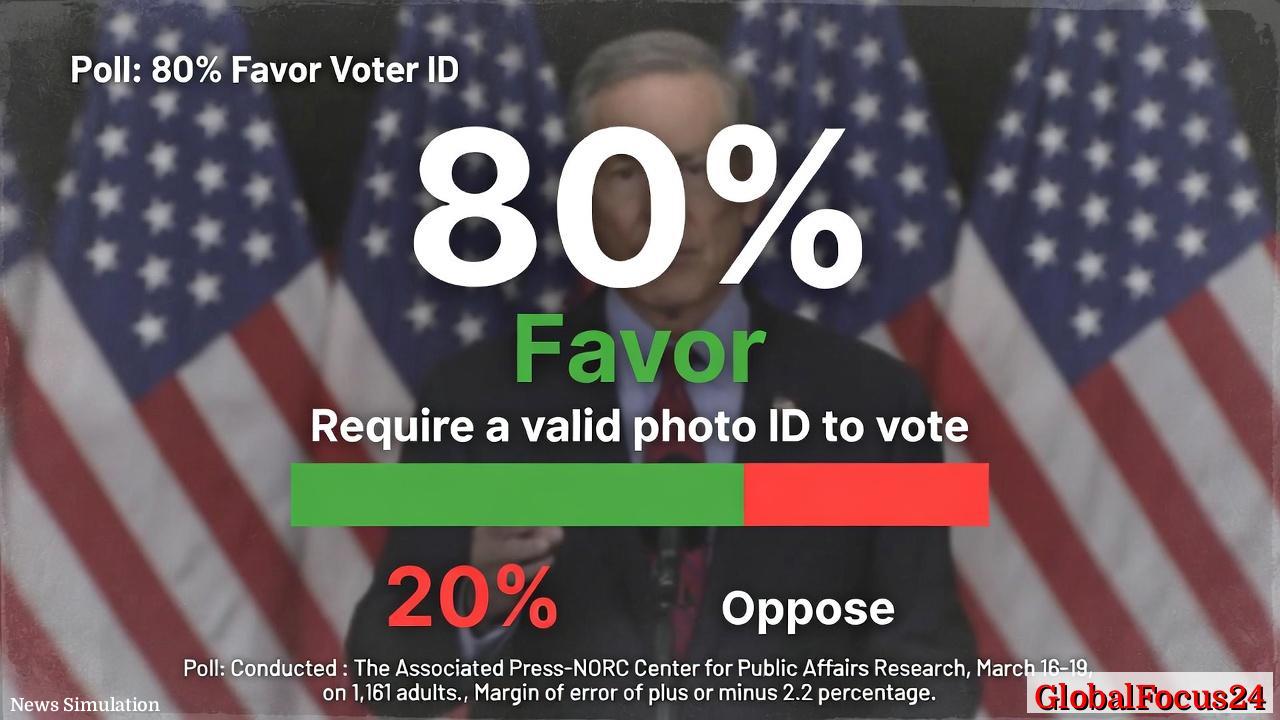
A new national poll released this week reveals that a significant majority of Americans—80%—support requiring a valid photo ID to vote in elections. The survey, conducted from March 16 to 19 with a margin of error of plus or minus 2.2 percentage points, underscores a consistent and growing public sentiment in favor of voter identification requirements across the United States. Only 20% of respondents opposed the measure, suggesting limited resistance among voters nationally.
The results suggest that the question of voter identification—long a central topic in debates over election integrity and access—has reached a remarkable level of public agreement. The data also points to a broad base of support that transcends traditional political and regional divides, although attitudes still vary modestly by demographic group and state.
Historical Context: Voter ID Laws Across Decades
Voter ID laws have existed in some form since the early 2000s, with Indiana becoming the first state to enact a strict photo ID requirement in 2005. Since then, most states have adopted or refined their own standards for verifying identity at polling places. According to historical election data, concerns about voter fraud periodically revived the push for tighter laws, while opponents questioned whether such rules could impede participation among certain voter groups.
By 2026, nearly three-quarters of U.S. states have implemented some form of ID requirement for in-person voting, although the exact rules vary. Some states accept non-photo documents such as utility bills, while others require government-issued photo identification. The latest poll suggests that voters may have become more comfortable with these policies as they have become more common and standardized nationwide.
Regional Patterns Show Strong But Varied Endorsement
The poll’s regional breakdown indicates that voter ID requirements enjoy substantial backing across all areas of the country, with the strongest support emerging from the Midwest and South. These regions have been early adopters of such laws and have generally reported high levels of voter confidence in their integrity.
In the Northeast and West, where voter ID systems are newer or less stringent, approval remains high but slightly lower—hovering around the mid-70s percentile. Analysts believe this consistent majority support across regions reflects the normalization of identity verification in everyday life, from boarding airplanes to completing financial transactions.
Public Confidence in Election Integrity
Election integrity remains a key theme shaping voter attitudes. The widespread support for ID requirements appears driven by a desire for transparency and trust in the electoral process. Many citizens see voter ID laws as a practical safeguard that aligns with other forms of identity verification commonly encountered in civic and commercial settings.
Political scientists note that rising public attention to election security over the past decade has made the issue more broadly accepted. For many Americans, requiring a photo ID at the polls symbolizes a straightforward method to deter potential fraud, even as documented cases of voter impersonation remain exceedingly rare.
Critics Warn of Potential Access Concerns
Despite the overwhelming support reflected in the poll, the 20% who oppose voter ID requirements often cite concerns about accessibility. Critics have long argued that strict identification rules could inadvertently constrain voting rights among certain populations, particularly low-income, elderly, and rural voters who may lack up-to-date identification documents or face logistical hurdles in obtaining them.
Organizations focused on voter participation have emphasized the importance of ensuring that any ID policy includes alternatives or assistance programs. Some states, such as Georgia and Texas, have implemented free state-issued voter IDs to address access concerns. These measures aim to balance election security with inclusion—an ongoing tradeoff at the center of election administration debates.
Economic and Administrative Dimensions
Beyond the political conversation, voter ID laws carry tangible economic implications. Implementing and maintaining ID systems involves administrative costs, including funding for training poll workers, producing voter credentials, and modernizing verification technology. States with long-standing ID requirements have reported spending millions annually on administrative logistics and public awareness campaigns.
However, proponents argue that the financial investment strengthens institutional trust and reduces disputes over election results, which can be costly in their own right. Economists examining state election budgets note that once ID systems are established, long-term maintenance costs typically fall as technology improves and voter databases become more integrated.
At the local level, county election offices play an essential role in enforcing ID laws. Efficient voter processing and clear communication with residents have been shown to minimize confusion at polling places. The shift toward digital voter rolls and mobile verification tools also appears to streamline procedures while enhancing accuracy.
Comparison with Other Democracies
The growing U.S. preference for voter ID aligns with practices seen in many other established democracies. Countries such as Canada, France, and Germany all require some form of identification at the polls, though the documents accepted and the verification processes differ. These systems are typically integrated into national registries, which can simplify the process compared to the patchwork of rules in the U.S.
International observers often note that America’s decentralized election system—which allows states to set their own standards—creates unique challenges in implementing uniform identity requirements. While some democracies issue national identity cards, the U.S. continues to rely primarily on state-issued driver’s licenses, passports, and other documents. Yet, despite these structural differences, the public preference for showing identification remains strikingly similar to global norms.
Technological Shifts and Digital Identification
As technology advances, future debates over voter verification could expand beyond physical ID cards. Several states are exploring digital forms of identification and secure apps linked to official records, potentially simplifying compliance for tech-savvy voters while preserving privacy and accuracy.
Pilot programs in Arizona and Colorado are testing mobile ID integrations that could eventually allow residents to confirm their identity electronically at polling stations. Security experts caution, however, that digital solutions must balance convenience with robust data protection and cybersecurity safeguards.
These innovations reflect a broader shift in how governments manage identity verification across services—from healthcare to transportation—and may influence how Americans perceive voter ID requirements over time. The poll’s strong results suggest that most voters are open to measures that combine accessibility with clear accountability.
Historical Shifts in Public Opinion
Public opinion on voter ID laws has evolved steadily over the past 15 years. Surveys from the early 2010s showed national support hovering around two-thirds, with younger voters more likely to voice reservations. Today’s 80% approval rate represents one of the highest recorded levels of consensus on an electoral issue in decades.
Sociologists attribute part of this shift to generational changes and increased digital literacy. As verification processes become routine in daily life—opening a bank account, accessing healthcare, or verifying online transactions—the notion of showing an ID to vote feels less burdensome. Additionally, expanded access to government-issued identification has reduced earlier disparities.
Implications for Upcoming Elections
The timing of the new poll is significant, coming months ahead of key state and local elections that will test voter readiness and administrative capacity. States continue to refine their policies, balancing security and inclusivity while adapting to evolving technology and voter expectations.
Election officials say that bipartisan consensus among voters on identity verification could ease tensions around election management. When most citizens support consistent documentation rules, officials report fewer disputes at polling sites and less confusion about what is required to cast a ballot.
Still, experts caution that strong public support does not eliminate the need for continued oversight and clarity. Ensuring that every eligible voter can easily meet identification requirements remains essential for maintaining both participation and legitimacy.
The Broader Message from the Poll
The latest survey confirms that Americans overwhelmingly view voter ID laws as reasonable and necessary to protect the integrity of elections. While debates persist about how to best implement these measures, the level of agreement across political, geographic, and demographic lines signals a rare moment of unity on an issue often associated with division.
As the nation heads into another election season, the evidence suggests that voter ID requirements have moved from contentious policy proposal to established norm. With 80% of the public in favor and only 20% opposed, voter identification stands out as one area where Americans appear largely aligned on what it means to ensure secure and trustworthy elections in the decades ahead.