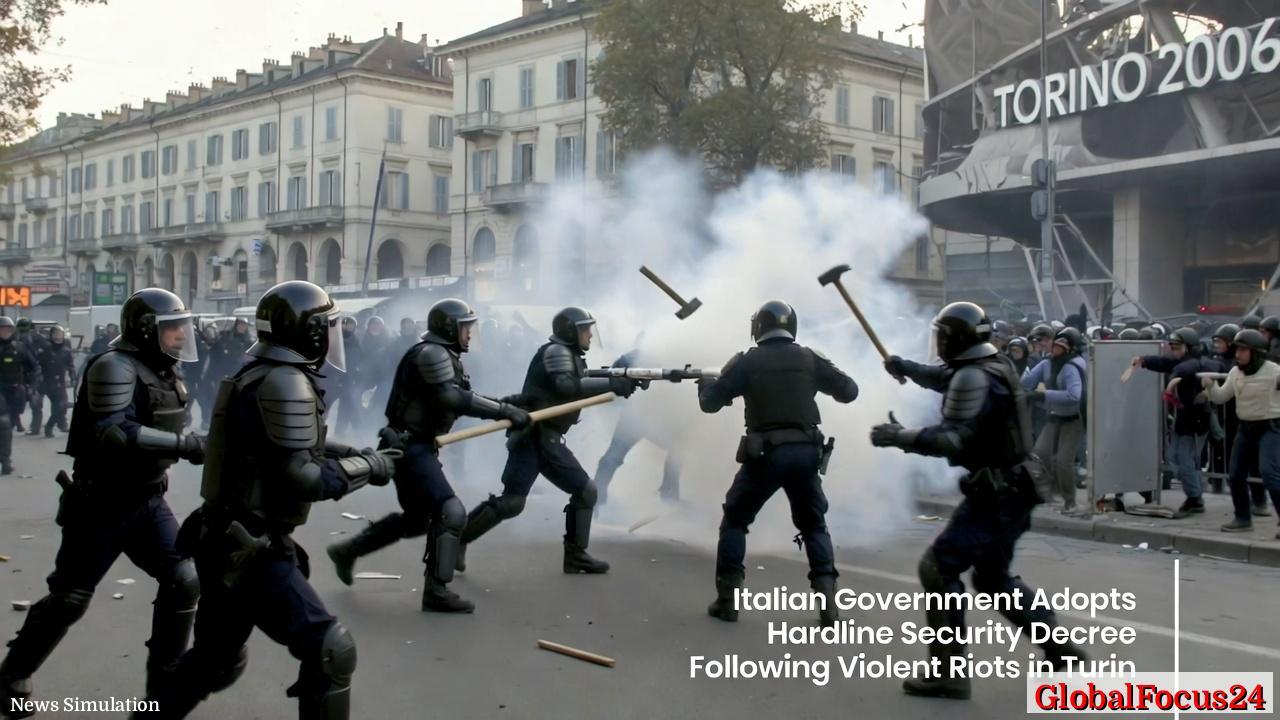
Italy's Security Decree Passes in Wake of Turin Riots as Winter Olympics Near
Italy moves to tighten security in response to violent demonstrations in Turin, signaling a shift in how authorities balance public order and civil liberties during high-profile events. Prime Minister Giorgia Meloni's government fast-tracked the decree in early February 2026, aiming to deter violence at rallies around the Milano Cortina 2026 Winter Olympics and related protests. The measure grants authorities expanded powers to preempt disruption, while outlining new safeguards for law enforcement and the public.
Context: Turbulent January in Turin
On January 31, 2026, Turin became the focal point of a broader clash between government officials and elements of the anti-establishment protest movement. Demonstrators affiliated with left-leaning social centers and activist groups gathered to oppose the eviction of Askatasuna, a well-known social center that had recently faced municipal action. The demonstrations escalated quickly as rocks, bottles, and fireworks were directed at police, leading to physical confrontations in the streets. Among the reported incidents, a police officer sustained injuries after being struck with improvised weapons, and arrests surpassed two dozen as authorities sought to restore order.
The unrest spilled beyond the central march, with further clashes erupting near a venue hosting Winter Olympics-related events. In that area, police employed crowd-control measures, including tear gas and water cannons, to prevent demonstrators from impeding access routes or approaching a major highway. Despite the intensity of the confrontations, there were no reported injuries in the latter encounter, underscoring the irregular and localized nature of the day’s disturbances in certain zones.
Legislative Response: What the Decree Seeks to Do
The security decree, approved on February 5, 2026, introduces a suite of provisions designed to reduce the risk of violence at demonstrations and to safeguard event infrastructure tied to the Winter Olympics. Key elements include:
- Pre-emptive detention and rally security: Police are authorized to detain individuals suspected of planning or participating in violent acts for up to 12 hours before rallies or demonstrations. The aim is to disrupt potentially unlawful activity before it can unfold, particularly on days of high spectator turnout or critical national events.
- Enhanced public safety tools: The decree tightens measures against petty crime often associated with large crowds, such as pickpocketing and other opportunistic thefts, which can undermine public trust and disrupt security protocols for major events.
- Age-based sales restrictions: The legislation prohibits the sale of knives to minors, a measure designed to reduce the risk of weapons being introduced into crowded protest settings or at sensitive venues.
- Strengthened self-defense provisions: The decree expands protections for police officers and civilians who defend themselves or others against assaults, aligning with a broader public-safety framework intended to deter aggression during protests.
Economic and Regional Impacts
- Olympic-related costs and security planning: The decree comes at a time when Italy is investing heavily in the Milano Cortina 2026 Winter Olympics infrastructure, logistics, and spectator safety. By granting authorities greater latitude to manage crowds and deter violence, the government aims to minimize disruption to venues, transportation corridors, and hospitality sectors that stand to benefit from Olympic-related tourism and global attention.
- Local economy and policing budget: The new powers imply higher short-term operating costs for municipal and regional law enforcement, emergency medical services, and traffic management. In Turin and other host cities, city planners will need to coordinate with national agencies on deployment strategies, ensuring security while supporting local businesses reliant on tourism and event-driven traffic.
- Labor market considerations: Security-enhanced environments around Olympic venues can influence staffing needs across hospitality, transportation, and event services. Employers may need to adjust hiring practices, training, and scheduling to meet elevated security expectations without compromising service standards.
- Public sentiment and consumer confidence: The decree’s emphasis on pre-emptive action and visible policing could affect consumer behavior in the short term. Some residents and visitors may appreciate a sense of safety and predictability around large gatherings, while others may perceive heightened enforcement as a deterrent to peaceful assembly. The net economic effect will hinge on how well authorities balance security with civil liberties and public trust.
Historical Context: Security Measures in Italy’s Modern Era
Italy has a long history of adapting security frameworks in response to social unrest and major events. The postwar era introduced strict public-order laws during periods of political volatility, followed by reforms aimed at aligning policing powers with constitutional rights. In recent decades, Italy has faced a spectrum of demonstrations linked to labor, immigration, environmental policy, and national identity. The Milano Cortina 2026 Games, like prior Olympics and large-scale international events, have been viewed through a dual lens: a catalyst for investment and a potential flashpoint for protests that test the boundaries of public order and political speech.
The current decree reflects a broader trend of governments recalibrating security during high-profile occasions. While authorities emphasize the importance of safeguarding athletes, spectators, and infrastructure, critics warn against overreach and the potential chilling effect on peaceful assembly. The balance between maintaining order and preserving civil liberties remains a central and continuing conversation in national security policy.
Regional Comparisons: Italy and Neighboring Countries
- Italy versus Western European peers: Several Western European nations have implemented temporary security enhancements around major events, often balancing enhanced police powers with judicial oversight and sunset provisions. Italian authorities have framed the decree as a targeted, time-bound measure aimed at preventing violence at a specific event window, rather than a broad suppression of dissent.
- Northern and Central Italy: Regions hosting Olympic-related activities, including Piedmont and Lombardy, face similar pressures to protect venues, transportation networks, and urban cores that bustle during large-scale ceremonies. Local police forces in these areas typically coordinate with national units to manage crowds, traffic, and infrastructure resilience.
- Comparative public safety approaches: The approach in Italy aligns with a precautionary model widely adopted elsewhere during high-visibility events. While terminology and specifics vary, the underlying objective is to deter violence, safeguard participants, and ensure the continuity of economic activity tied to tourism and international attention.
Public Reaction and Debate
Public reaction to the decree has been mixed, reflecting broader debates about security, civil liberties, and the role of the state during protests. Supporters highlight the necessity of robust tools to prevent clashes that can endanger lives and disrupt essential services, particularly in the lead-up to a global event like the Winter Olympics. They argue that pre-emptive detention provisions can disrupt violent planning and reduce the risk of harm to police, bystanders, and athletes.
Critics, by contrast, caution against potential overreach and the risk of stigmatizing peaceful protesters. They emphasize the importance of ensuring that detention powers are carefully limited in scope, time-bound, and subject to judicial review or independent oversight. The concerns include the possibility of disproportionate impacts on marginalized communities, the chilling effect on peaceful assembly, and the need for transparent accountability mechanisms to prevent abuse.
Operational Details for Event Weeks
- Training and readiness: Law enforcement agencies are expected to conduct targeted training focused on crowd dynamics, de-escalation techniques, and rapid threat assessment. This preparation aims to minimize the need for force while maintaining the ability to respond decisively to violence.
- Transportation and logistics: Authorities will likely implement enhanced traffic controls around venues and along key corridors to prevent congestion, ensure smooth spectator flow, and safeguard emergency routes. Public transit operators may receive guidance on how to adjust schedules to accommodate crowds while preserving accessibility.
- Medical and emergency services: The security environment places increased demand on emergency medical support, with teams positioned to respond quickly to any injuries or critical incidents during demonstrations and peak Olympic periods.
- Communications and public information: Clear, timely communication about permissible protest activities, safe routes, and real-time updates will be essential to reduce misunderstandings and prevent accidental confrontations.
Outlook: What Comes Next
As Milano Cortina 2026 unfolds, the government’s security framework will face ongoing scrutiny from civil society, legal observers, and international partners. The decree’s sunset provisions and any subsequent amendments will be watched closely to determine whether authorities retain, modify, or revoke specific powers once the Olympic period concludes. The interplay between maintaining security and protecting rights will continue to shape public discourse and influence how future major events are planned and policed in Italy.
In Turin, the immediate consequences of the decree are likely to include a notable uptick in coordination between city and national agencies, aimed at preventing recurrence of chaotic scenes seen in late January. Businesses in the vicinity of protest routes and Olympic venues are cautiously optimistic that the enhanced security posture will translate into safer, more predictable conditions for commerce and tourism. Residents, meanwhile, may weigh the benefits of heightened safety against the ongoing scrutiny of civil liberties in a democracy navigating the tension between public order and individual rights.
Historical resonance and economic signals converge in this moment. The decree signals a willingness to prioritize orderly conduct around a flagship international event, a stance that can yield economic dividends through stable tourism and investor confidence. Yet the long arc of public accountability remains essential. Policymakers, law enforcement, and civic institutions will need to demonstrate that extraordinary measures are proportionate, transparent, and temporary, with a clear path back to ordinary liberties once the Olympic spotlight shifts.
Public policy experts will watch closely how the decree is implemented, including any judicial challenges, oversight mechanisms, and the practical outcomes of pre-emptive detentions. The evolving story will likely influence security policymaking in Italy well beyond the Olympic window, shaping debates about crowd management, protest rights, and the role of the state in maintaining social peace during times of national significance.