Attacks on NYPD Officers Surge as Tensions Rise Between Police and Mayor Mamdani
Rising Violence Marks Early Months of New Administration
New York City has seen a sharp increase in attacks against police officers during the first two months of Mayor Zohran Mamdani’s administration, according to city law enforcement data and accounts from police unions. The uptick in assaults—ranging from verbal harassment to physical confrontations—has heightened tensions between the city’s leadership and the officers charged with keeping its streets safe.
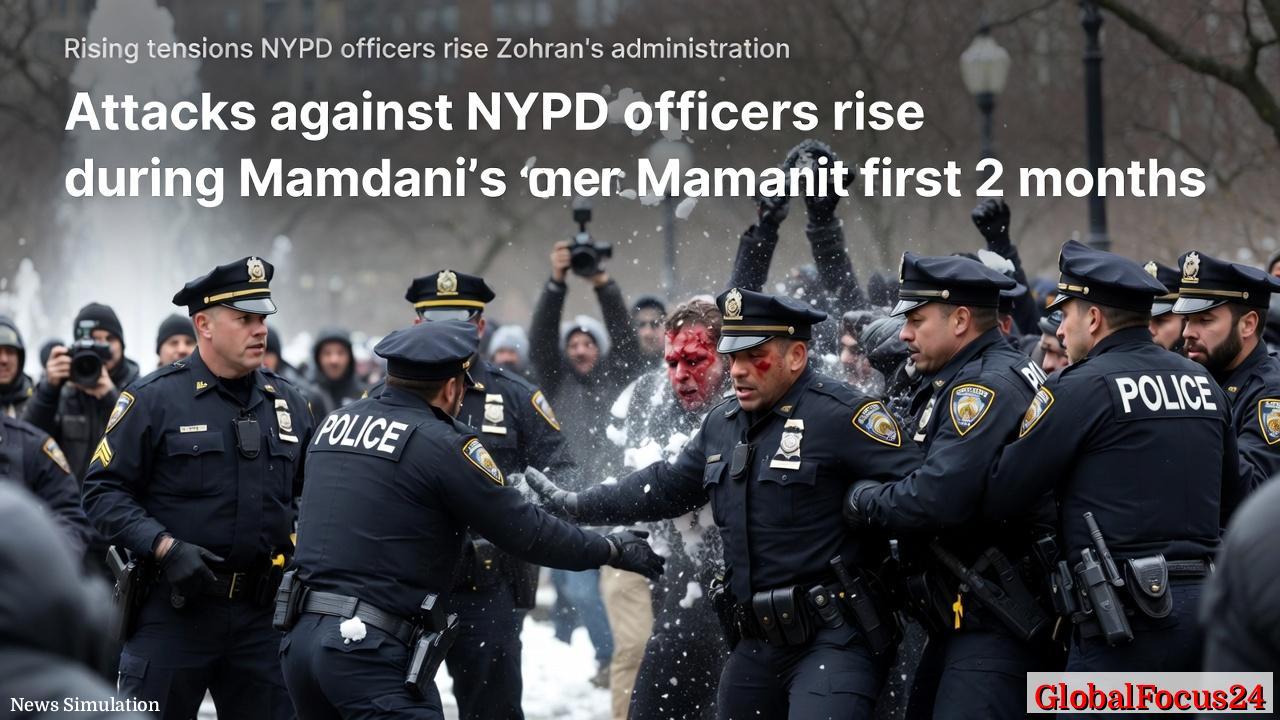
Police officials and union representatives say morale has dropped amid what they describe as a “deteriorating climate of hostility,” pointing to recent incidents including a chaotic post-blizzard celebration in Washington Square Park that turned violent. Officers attempting to disperse large crowds were pelted with snowballs and bottles, leaving two officers injured and one person arrested. The event has since become a flashpoint in the deepening rift between Mayor Mamdani’s administration and the NYPD.
A Historic Relationship Tested
New York City’s relationship with its police force has always been a reflection of broader social and political currents. The NYPD, founded in 1845, has weathered periods of sharp public criticism—from corruption scandals in the early 20th century to protests over policing policies in more recent decades.
However, city historians note that the current atmosphere resembles few precedents in its open hostility between the mayor’s office and law enforcement leadership. While previous administrations, such as those under Mayors Ed Koch and Bill de Blasio, faced moments of discord with police unions, the first months of Mamdani’s tenure have been marked by unusually public clashes over tone, rhetoric, and policy direction.
The mayor, who campaigned on a platform of rethinking urban justice and reallocating some city funds away from traditional policing, now finds himself facing a public safety narrative quickly slipping out of his control.
NYPD Data Signals an Alarming Trend
According to preliminary NYPD figures, reported attacks on officers have risen by nearly 20 percent compared to the same period a year ago. Though most incidents are classified as minor—such as pushing, spitting, or throwing objects—the increase has drawn attention amid concerns about officer safety and declining public confidence.
Union heads have seized on the data as evidence that what they describe as the mayor’s “antagonistic attitude” toward police has fueled disrespect and emboldened lawbreakers. “The message from City Hall has consequences on the streets,” one senior union official said in a statement, referring to comments from the mayor perceived by officers as dismissive of their daily risks.
City Hall officials, by contrast, emphasize that the majority of New Yorkers continue to support law enforcement while also demanding accountability and reform. A spokesperson for the mayor’s office stated that “isolated incidents of misconduct or violence must be handled firmly, but responsibly,” stressing the administration’s commitment to both community safety and equitable policing.
Washington Square Park Incident Illustrates Growing Divide
The Washington Square Park snowball fight incident, which began as an impromptu celebration following January’s record-breaking blizzard, quickly descended into chaos. Video footage shared on social media shows hundreds of revelers gathered amid heavy snow, many throwing snowballs at police officers who had arrived to enforce park closing hours.
When officers attempted to clear the park, several were struck by ice-packed snowballs and bottles. Two officers sustained minor injuries, and one person was arrested on charges of assaulting a police officer and disorderly conduct. What might have once been dismissed as youthful rowdiness has instead become a symbol of the city’s current unease: a lighthearted gathering snowballing—literally—into a confrontation emblematic of deeper discord.
Economic Implications for the City
Public safety and economic stability in New York are closely linked. The perception of rising hostility toward police has implications well beyond law enforcement morale, potentially affecting tourism, business confidence, and municipal spending priorities.
Tourism analysts note that New York’s recovery from the pandemic-era downturn has been stronger than expected, with hotel occupancy rates climbing steadily through late 2025. However, sudden surges in publicized street incidents often correlate with temporary dips in visitor numbers. “Safety narratives matter enormously for a global city like New York,” said one urban economist, adding that “a perception of instability, even if statistically short-lived, can ripple through sectors like hospitality, retail, and transit revenue.”
Furthermore, any sustained tension with police unions could complicate upcoming budget negotiations. The NYPD’s labor contracts are among the city’s largest single expenditures, and tensions may make future pay deals politically volatile. Historically, strained relations have led to work slowdowns or increased absenteeism—both of which carry expensive ripple effects in overtime costs and public services.
Comparisons Across Major U.S. Cities
New York’s current police tensions are not isolated. Other large cities, including Chicago, Los Angeles, and Philadelphia, have reported similar friction between progressive city governments and their police departments in recent years.
In Chicago, reforms under Mayor Brandon Johnson prompted contentious negotiations with the city’s largest police union, especially regarding disciplinary oversight. Los Angeles experienced a brief wave of confrontations last year when disputes over protest response tactics drew public scrutiny. While the numbers of actual attacks on officers vary, the underlying dynamic—a struggle to balance reform agendas with police morale—has become a recurring theme in American urban governance.
In contrast, cities such as Houston and Miami, which have emphasized closer coordination between mayors and police executives, have reported fewer instances of officer-targeted violence and steadier morale metrics. Urban policy experts suggest that communication and consistent public messaging play a decisive role in setting the tone for police-community relations.
The Role of Public Sentiment
The ongoing rise in attacks against officers coincides with more vocal public debates about policing itself. Social media platforms have amplified criticisms of both law enforcement and political leaders, often blurring nuance in favor of viral outrage.
Within the NYPD, rank-and-file officers describe feeling caught between demands for reform and expectations of continued order. Many report growing frustration with what they perceive as inconsistent support from city leadership. Meanwhile, community advocates argue that criticism of police practices remains essential for public accountability and fairness.
Public opinion surveys show a complex picture: while a majority of New Yorkers still view the NYPD favorably, confidence has dipped slightly in recent months. Pollsters suggest that both police behavior and political messaging from City Hall contribute to these shifts.
Historical Lessons on City Leadership and Policing
New York’s history offers several lessons on balancing reform and morale. In the 1970s, amid fiscal crisis and rising crime, tension between city administrators and police leadership resulted in operational strain and falling morale. It took years of careful negotiation and community engagement to rebuild trust.
Similarly, the early 2010s saw widespread protests against stop-and-frisk policies, challenging police-community relations until reforms improved both transparency and oversight. Experts warn that sudden rhetorical shifts—like those emerging under the Mamdani administration—can quickly erode years of progress if not tempered by consistent communication.
Calls for Reconciliation and Reform
Despite the current discord, there are growing calls from civic leaders and policing scholars for de-escalation between the mayor’s office and rank-and-file officers. Some propose establishing a joint “public safety council” to bridge communication gaps and develop joint community policing strategies. Others urge the mayor to engage directly with precinct-level officers rather than relying solely on spokespersons or policy initiatives.
Police Commissioner Elena Ruiz has publicly called for “mutual respect and focus on our shared goal—keeping New Yorkers safe.” Her remarks, delivered at a press conference following the Washington Square Park altercation, were widely interpreted as an appeal to both sides for calm and collaboration.
A City at a Crossroads
Two months into Mayor Mamdani’s tenure, New York City stands at a crossroads shaped by competing visions of justice, safety, and leadership. The rise in attacks against police officers underscores a broader tension reverberating through city streets, union halls, and public discourse. Whether the administration can restore working trust with the NYPD—and by extension, reassure a city still wary of post-pandemic volatility—will shape not only the course of Mamdani’s term but the stability of the nation’s largest metropolitan police force.
For now, every confrontation, every insult, and every snowball thrown in anger seems to echo a larger question: how does a city heal when those sworn to protect it feel under attack—and those meant to lead it stand accused of disrespecting them?