Iran Plunged Into Darkness as Widespread Protests Turn Deadly Amid Nationwide Internet Blackout
Communications Collapse as Bloodshed Escalates
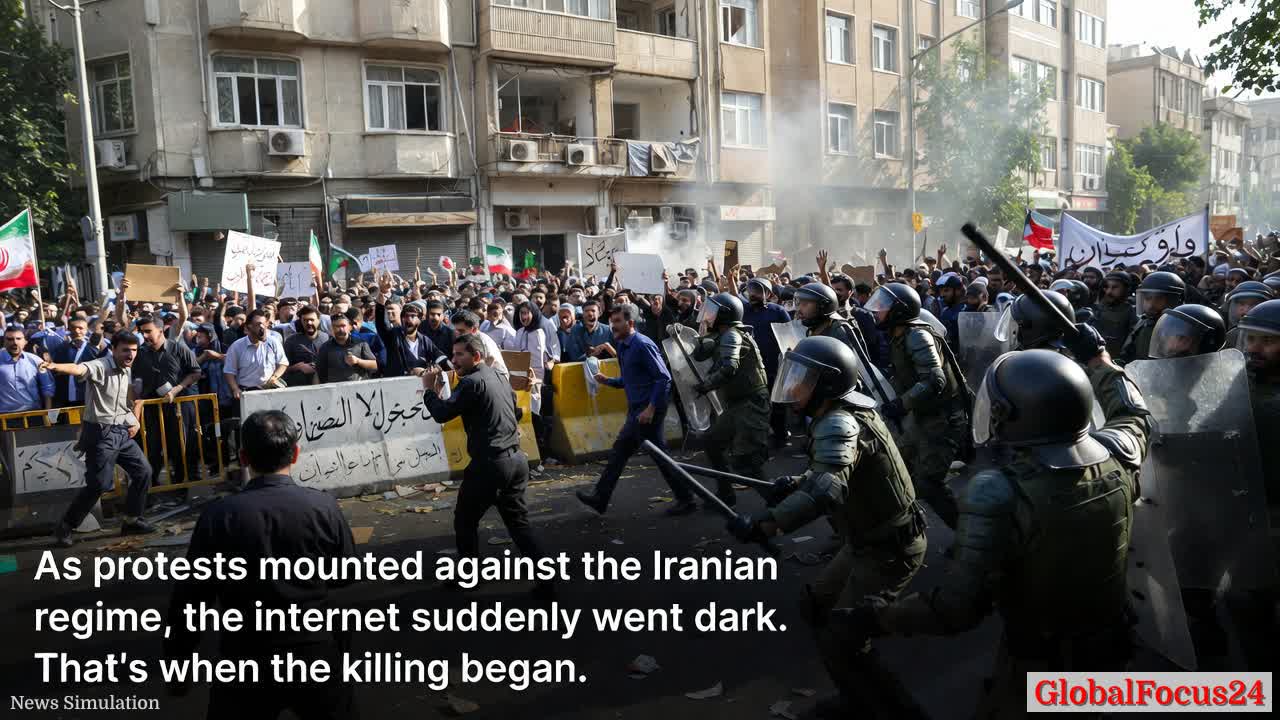
In the early hours of what began as a wave of organized civil protest across Iran, the country descended into near-total silence. Internet access vanished almost entirely overnight, phone lines went dead, and digital communication channels that once connected citizens to the outside world were abruptly severed. Within hours, that silence was pierced not by voices but by gunfire. On streets from Tehran to Shiraz, reports have surfaced of civilians being shot, detained, and forcibly disappeared as Iran’s security forces launched one of the most violent crackdowns in the nation’s recent history.
According to human rights monitors and regional observers, more than 12,000 people have been killed since the blackout began, a staggering toll that has left communities devastated and families unable to even confirm the fate of their missing relatives. The victims include students, workers, and ordinary citizens who had gathered to demand greater political freedom, accountability, and relief from worsening economic hardship.
The government’s decision to impose a blanket communication shutdown has drawn widespread condemnation internationally and left Iran’s population trapped in an information vacuum. With networks down, eyewitness accounts have trickled only through encrypted channels and satellite transmissions, painting a grim picture of cities turned to war zones under curfew and surveillance.
From Economic Strain to Public Revolt
The protests—sparked initially by surging costs of food, fuel, and housing—quickly grew into a nationwide call for systemic change. Iran’s economy, already weakened by years of international sanctions and internal mismanagement, has suffered from rising inflation and declining oil revenues. Unemployment rates remain high, and currency devaluation has eroded the purchasing power of millions of households. For many Iranians, these hardships added to a deeper sense of disillusionment with corruption and lack of political transparency.
Economic frustration has been a driving force behind past demonstrations in Iran. The 2019 fuel protests, for instance, saw hundreds killed when government forces used live ammunition to disperse crowds. Yet the current wave of unrest stands out for both its intensity and organization. Protesters, many of them young and digitally connected, had used online networks to coordinate gatherings and share images of government violence—until the internet went dark.
Cutting digital access has become a recurring strategy for Iranian authorities seeking to suppress dissent. It isolates communities, prevents real-time reporting, and delays international reaction. But the scale of this current blackout, coupled with the disproportionate level of force reported, suggests a strategic effort to eliminate both coordination and witness.
Historical Echoes of Rebellion and Repression
Iran’s history is punctuated by cycles of mass protest and violent suppression. The 1979 revolution, which overthrew the Shah and established the Islamic Republic, was itself fueled by public mobilization and political upheaval. But as the decades progressed, periods of reform and repression alternated, with the government maintaining tight control over media and civil liberties.
The 2009 Green Movement marked one of the first major uprisings in the digital age. Millions took to the streets alleging election fraud, and social media platforms played a critical role in galvanizing international support. Then, too, the government responded with arrests, violence, and communication restrictions. The present crisis, however, appears to surpass even that moment in its brutality and isolation.
Human rights historians note that the systematic killing and silencing of civilians under communication blackouts has parallels in other regions—Syria during early 2011, Myanmar in 2021, and Sudan in 2023. In each case, governments sought to extinguish activism under the cover of darkness, employing both physical violence and digital erasure as tools of control.
Voices Lost in Darkness
With domestic journalists silenced and international media unable to enter, citizen reports have become the only record of what is happening. Leaked videos—smuggled out via satellite internet and shared by exiled activists—depict uniformed forces firing into unarmed crowds, protesters collapsing in smoke-filled streets, and families searching hospitals and morgues for their missing loved ones.
Humanitarian aid organizations have struggled to verify casualty numbers or deliver assistance, hindered by travel restrictions and communication blackouts. Independent estimates describe entire neighborhoods cordoned off, with security checkpoints preventing movement or medical access. Hospitals in several cities are reportedly under surveillance to identify wounded protesters seeking treatment.
Refugee groups and diaspora networks across Europe and North America have held vigils and demonstrations, pleading for international intervention. Social media hashtags calling for solidarity have surged globally despite Iran’s internal silence, with thousands demanding accountability for what observers describe as crimes against humanity.
International Response and Calls for Accountability
Governments and rights groups worldwide have denounced the killings and the communication blackout as human rights violations. The United Nations has called for an independent inquiry, citing “credible evidence of systematic violence against civilians.” European diplomats have discussed imposing additional sanctions targeting Iranian officials and organizations responsible for the suppression.
The United States and several regional partners have expressed alarm at the scale of deaths and communications repression but face limited leverage beyond diplomatic and economic measures already in place. Neighboring countries, particularly within the Gulf region, are monitoring the unrest closely, mindful of potential refugee flows and economic disruption.
Iran’s leadership, meanwhile, has maintained that “foreign interference” and “domestic sabotage” are to blame for the unrest, a narrative long employed to justify harsh security responses. State media portray the protesters as separatists or insurgents, while satellite channels broadcast from abroad have become vital lifelines for the Iranian public seeking uncensored news.
Regional and Global Repercussions
The crisis unfolds at a moment of mounting volatility across the Middle East. Deepening economic hardships, generational shifts, and the power of digital mobilization have repeatedly fueled uprisings from Lebanon to Iraq. Analysts warn that Iran’s suppression, if unchecked, could embolden other authoritarian regimes to use information blackouts as a means to contain dissent.
Regionally, the shutdown of internet infrastructure in a nation as large as Iran also threatens cross-border data networks, as international routing often passes through Iranian exchange points. Businesses reliant on digital commerce or logistics have reported significant disruptions. Oil markets, sensitive to any instability in the region, have shown short-term volatility as fears of escalating conflict ripple through global supply chains.
Beyond economics, the humanitarian impact radiates outward. Families abroad, cut off from their relatives, flood embassies and humanitarian hotlines seeking news. Organizations advocating for digital rights have renewed calls for stronger global mechanisms to counter mass internet shutdowns, arguing that connectivity has become a matter of survival, not convenience.
The Price of Silence
Without access to communication, even basic functions of modern life—banking, education, hospital coordination—have faltered in Iran’s largest cities. Students find universities shuttered. Clinics run out of supplies. Factories halt production as transportation and payroll systems fail. The digital blackout, while intended to suppress protest coordination, has crippled economic activity and magnified public hardship.
Experts compare the coordinated shutdown to turning off the electrical grid of an entire nation. The absence of digital communication has cascading effects on governance, commerce, and emergency response. The longer it endures, the deeper the damage to the social and economic fabric.
Yet despite the risks, reports suggest that pockets of resistance continue. In smaller towns, citizens gather at night, candles in hand, chanting for justice before dispersing again into the shadows. The movement’s persistence under total digital exile underscores a central truth: Iran’s struggle has become not only a fight over governance but over the right to be seen and heard.
Unanswered Questions and an Uncertain Path Forward
As the death toll climbs and communication remains severed, the immediate outlook for Iran appears grim. Whether the regime can maintain control amid growing internal fractures remains uncertain. The nation’s history reveals that force may quiet rebellion temporarily, but it rarely resolves the grievances that fuel it.
The international community faces its own test: how to respond to atrocities unfolding behind a digital curtain. Human rights observers urge stronger diplomatic coordination and the deployment of emergency communication tools to help Iranians document evidence of abuse. Others call for humanitarian corridors and mechanisms to restore connectivity through satellite-based networks accessible to civilians.
What happens inside Iran in the coming weeks may reshape the country’s trajectory for a generation. In the absence of communication, every death risks becoming invisible. Yet the courage of those still defying silence hints that, even in total darkness, the human desire for freedom and truth remains irrepressible.
Conclusion: The Weight of a Nation’s Silence
Iran’s nationwide blackout has transformed a domestic uprising into a humanitarian crisis with global resonance. Thousands of lives have been lost, countless more remain unaccounted for, and a nation has been thrust into isolation from the world. History will remember this moment not only for its scale of suffering but for the chilling efficiency with which technology was weaponized to erase a people’s voice.
Despite the blackout, fragments of truth continue to escape the shadows—through whispered phone calls from border regions, faint satellite signals, and the unyielding determination of those who refuse to let the story end in silence.