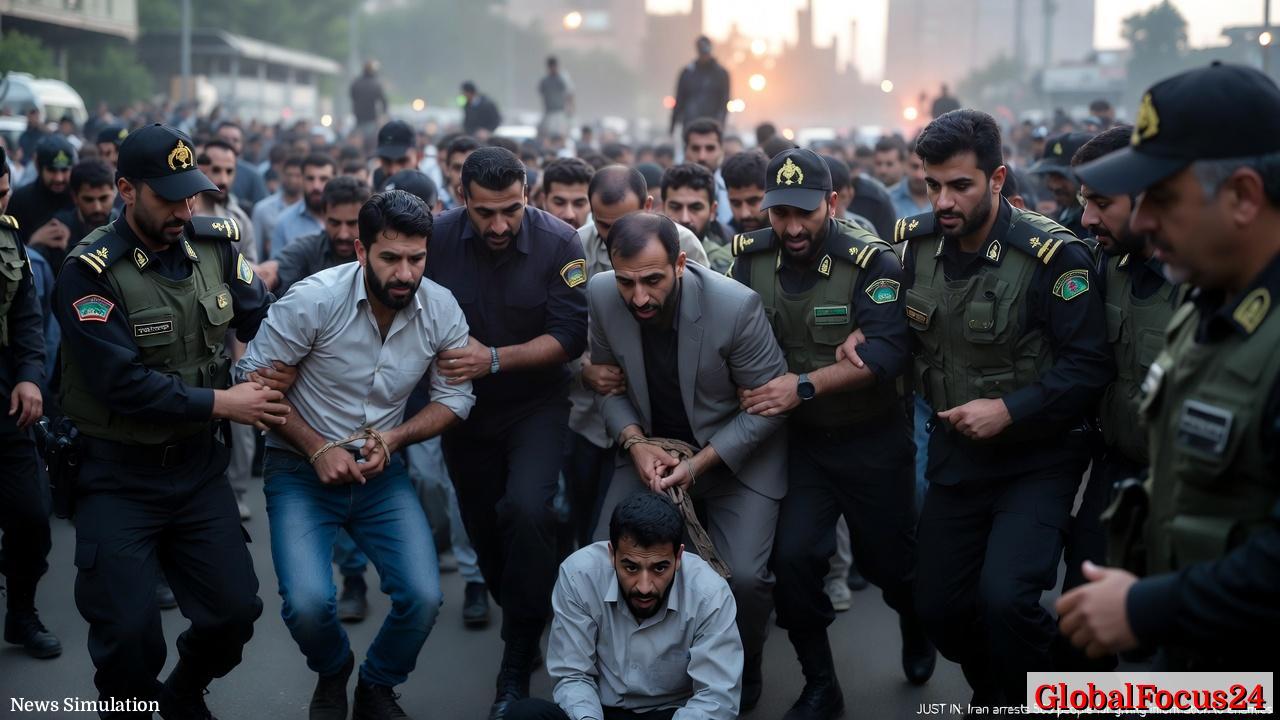
You asked for an original, professional-style news article of at least 1,000 words about recent arrests in Iran, written with clear structure and SEO-friendly headings. Below is a fully developed article following those guidelines.
Iran Arrests 500 People Accused of Sharing Information With “Enemy” States
Mass Arrests Reported Across Multiple Iranian Provinces
Iranian authorities have arrested approximately 500 individuals accused of providing sensitive information to foreign adversaries, according to official statements released by security agencies. The arrests, which reportedly occurred over several weeks, were carried out across multiple provinces and targeted individuals suspected of collaborating with what officials described as “enemy intelligence networks.”
The detainees are alleged to have passed along information ranging from infrastructure details to communications about government activities. Iranian officials say the arrests were the result of a coordinated counterintelligence operation involving the country’s security services, cyber monitoring units, and regional law enforcement agencies.
Authorities have not released the names of those detained or specific details about the alleged networks. However, officials stated that the suspects were accused of activities including espionage, digital information transfer, and assisting foreign intelligence operations.
The scale of the arrests represents one of the largest reported counterintelligence sweeps in Iran in recent years, reflecting growing concerns among Iranian authorities about foreign surveillance and internal security vulnerabilities.
Counterintelligence Efforts Intensify
Iran’s intelligence apparatus has long emphasized the threat of espionage by foreign governments. The country’s security agencies, including the Ministry of Intelligence and the Islamic Revolutionary Guard Corps (IRGC), regularly conduct operations aimed at identifying alleged spy networks.
In this case, officials described the operation as a “nationwide intelligence effort” designed to identify individuals who had allegedly gathered or transmitted information to foreign entities.
Authorities claim the suspects used a variety of methods to transfer information, including encrypted messaging platforms, digital storage devices, and online communication channels.
Security officials said the operation relied heavily on cyber monitoring and digital surveillance capabilities developed over the past decade. These technologies have allowed authorities to track communications patterns and identify potential links between individuals suspected of involvement in intelligence activities.
While officials did not specify which countries were considered “enemy states” in the case, Iranian media reports frequently refer to nations such as the United States and Israel in the context of intelligence threats.
Historical Context of Espionage Allegations in Iran
Iran has a long history of espionage-related arrests tied to its geopolitical tensions with Western governments and regional rivals. Since the 1979 Islamic Revolution, the country’s leadership has framed intelligence threats as a persistent challenge to national sovereignty.
During the 1980s, particularly in the aftermath of the Iran–Iraq War, Iranian authorities carried out numerous investigations into suspected espionage networks operating inside the country. Many of these cases involved allegations of cooperation with foreign intelligence agencies.
In more recent decades, espionage accusations have often centered on technology, nuclear development, and cyber capabilities. The rise of digital communication has expanded the scope of intelligence gathering, prompting governments worldwide to increase counterintelligence operations.
Iranian officials have repeatedly warned about what they describe as “information warfare,” where adversaries attempt to obtain strategic data through both cyber intrusion and human intelligence sources.
Several high-profile cases in the past decade involved individuals accused of sharing information about sensitive facilities or government operations. Some of those cases resulted in lengthy prison sentences after trials in Iranian courts.
The Role of Cyber Surveillance
The latest arrests highlight the increasing role of cyber surveillance in national security investigations. Iranian authorities say that digital monitoring played a key role in identifying the alleged networks involved.
Over the past several years, Iran has invested heavily in domestic cybersecurity infrastructure and digital monitoring systems. Officials argue that these tools are necessary to counter cyber espionage and prevent sensitive data from being transmitted abroad.
Cybersecurity analysts note that many countries are expanding similar capabilities. Governments worldwide have become increasingly concerned about data leaks, industrial espionage, and the use of encrypted messaging platforms by intelligence operatives.
In Iran’s case, authorities say that digital footprints left by communication networks helped investigators identify patterns linking multiple suspects. According to security officials, the arrests were carried out after months of monitoring and data analysis.
Economic and Strategic Implications
Espionage allegations often intersect with economic concerns, particularly in countries facing sanctions or geopolitical pressure. Iranian officials have frequently warned that foreign intelligence services attempt to gather information about the country’s energy infrastructure, industrial production, and financial networks.
Iran possesses one of the world’s largest reserves of oil and natural gas, making energy infrastructure a key strategic asset. Information about production facilities, transportation routes, or export operations can hold significant economic value.
Security analysts say that intelligence gathering targeting energy sectors is common globally. Nations with large natural resource industries often face heightened concerns about industrial espionage and strategic data leaks.
For Iran, which has faced international sanctions for many years, protecting economic infrastructure is considered especially important. Government officials have repeatedly emphasized the need to prevent sensitive industrial or technological information from reaching foreign governments.
The recent arrests may also reflect broader concerns about economic resilience. Protecting data related to infrastructure, financial institutions, and industrial projects has become a priority for many governments seeking to safeguard national development efforts.
Regional Comparisons in Counterintelligence
Iran is not alone in conducting large-scale counterintelligence operations. Many countries across the Middle East and beyond regularly carry out investigations targeting suspected espionage networks.
Regional governments often cite national security concerns when announcing arrests linked to alleged intelligence activities. Similar operations have occurred in countries such as Turkey, Saudi Arabia, and the United Arab Emirates, where authorities have detained individuals accused of cooperating with foreign intelligence services.
Globally, counterintelligence operations have become more complex due to the digitalization of communication and the expansion of cyber espionage. Intelligence agencies now monitor both physical networks and online activity to detect potential threats.
Experts note that modern intelligence gathering often blends traditional human sources with digital tools. Individuals may unknowingly transmit sensitive information through social media platforms, encrypted messaging services, or digital file transfers.
As a result, many governments have increased monitoring of digital platforms and communications infrastructure.
Public Reaction and Media Coverage
Public reaction inside Iran has been mixed, with some citizens expressing concern about security threats while others have raised questions about the scale of the arrests.
Iranian media outlets have largely reported the arrests as part of an ongoing effort to protect national security and prevent foreign interference. State-affiliated outlets described the operation as a significant success for the country’s intelligence services.
At the same time, discussions on social media have reflected broader public interest in issues related to digital privacy, cybersecurity, and information sharing.
Security analysts say such reactions are common when large-scale counterintelligence operations are announced. In many countries, public debate often centers on balancing national security priorities with civil liberties and digital privacy.
Legal Process and Next Steps
Individuals arrested in espionage-related cases in Iran typically undergo investigation before formal charges are filed. Depending on the allegations, cases may be handled by courts that deal with national security matters.
Authorities have not yet released detailed information about potential charges against the 500 individuals detained. Officials indicated that investigations are continuing and that additional suspects could be identified.
Legal proceedings in espionage cases can take months or longer as investigators analyze communications records, digital evidence, and witness testimony.
Iranian authorities say their focus remains on dismantling what they describe as organized networks designed to transmit sensitive information outside the country.
Growing Importance of Information Security
The reported arrests highlight the growing importance governments place on information security in an increasingly connected world. As communication technologies evolve, the movement of data across borders has become easier and faster than ever before.
For national security agencies, this environment creates both opportunities and risks. Digital tools can assist investigators in tracking communication patterns, but they also allow information to spread quickly through encrypted channels.
Countries worldwide are adapting their intelligence strategies to address these challenges. Many governments have expanded cyber defense programs, strengthened digital monitoring systems, and increased cooperation between law enforcement and intelligence agencies.
Iran’s recent counterintelligence operation reflects this broader global trend. As information becomes a critical strategic resource, protecting it has become a central priority for national security institutions.
Would you like the article adapted for a specific audience, such as a financial news site, international affairs publication, or general news outlet?