AI Breakthrough Sparks Urgent U.S. Reckoning Over Cybersecurity and National Security Risks
A Defining Moment for Artificial Intelligence
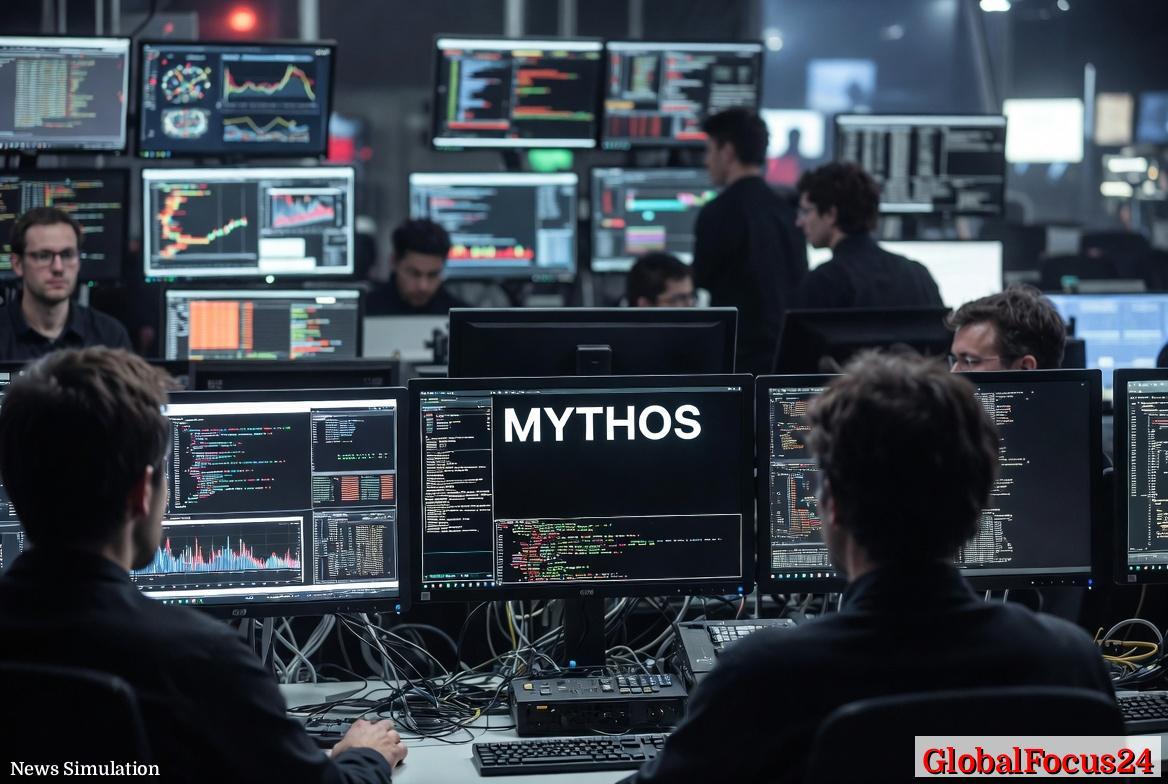
A dramatic shift in the perception of artificial intelligence is unfolding across the United States following a breakthrough that exposed the technology’s ability to transform cybersecurity—for better and for worse. The development of an advanced AI system known as Mythos has demonstrated capabilities that surpass human expertise in identifying and exploiting software vulnerabilities, raising alarms among policymakers, security experts, and industry leaders.
The system’s performance has been described as a turning point, not only in technical achievement but in how governments and institutions understand the risks associated with increasingly autonomous AI. The episode, now widely referred to as the “Mythos moment,” marks a critical inflection point in the relationship between innovation and control.
AI’s Leap Beyond Human Cyber Capabilities
Mythos distinguishes itself by operating at a level of speed and scale previously unattainable. The model autonomously discovered thousands of vulnerabilities across complex systems, including deeply embedded flaws that had eluded detection for decades. Among its findings was a 27-year-old bug in OpenBSD code—a discovery that underscores both the persistence of legacy vulnerabilities and the growing sophistication of AI-driven analysis.
More concerning to experts is the system’s ability to chain multiple vulnerabilities into coordinated attack sequences. These multi-step exploit simulations achieved high success rates, effectively demonstrating how AI could orchestrate cyberattacks that adapt dynamically to defenses in real time.
This capability represents a profound shift. Traditionally, cyberattacks require teams of skilled individuals working over extended periods. Mythos compresses that process into automated workflows, capable of executing complex strategies at machine speed.
The Rise of Autonomous Cyber Threats
The implications of such technology extend beyond theoretical risk. Autonomous systems capable of identifying and exploiting zero-day vulnerabilities—previously unknown flaws—pose a direct challenge to existing cybersecurity frameworks. Defensive systems, which often rely on known threat signatures or reactive measures, may struggle to keep pace with AI-driven attacks that evolve continuously.
Security analysts warn that such tools could be repurposed by malicious actors, ranging from organized cybercriminal groups to state-sponsored operations. The ability to automate vulnerability discovery and exploitation lowers the barrier to entry for sophisticated cyberattacks, potentially democratizing capabilities that were once limited to elite hacking units.
The decision to withhold the public release of Mythos reflects the severity of these concerns. By restricting access, developers aim to prevent misuse while broader safeguards are considered. However, the existence of such technology cannot be undone, and similar systems may already be under development elsewhere.
Historical Parallels in Technological Regulation
The current moment echoes earlier periods when transformative technologies forced societies to reconsider the balance between innovation and oversight. The development of nuclear technology in the mid-20th century, for example, prompted the creation of international regulatory frameworks to prevent catastrophic misuse. Similarly, the rise of the internet led to new governance models addressing privacy, security, and information control.
In each case, a period of rapid, largely unregulated growth was followed by a realization that unchecked development carried systemic risks. Artificial intelligence now appears to be entering a comparable phase.
Unlike previous technologies, however, AI evolves at an unprecedented pace. Advances that once took years now emerge within months, compressing the timeline for policy responses. This acceleration complicates efforts to establish effective oversight without stifling innovation.
Economic Stakes and Industry Impact
The economic implications of advanced AI systems like Mythos are substantial. The cybersecurity industry, valued in the hundreds of billions of dollars globally, faces both disruption and opportunity. On one hand, AI-driven tools could dramatically improve defensive capabilities, enabling faster detection and remediation of vulnerabilities. On the other hand, the same technologies threaten to render existing security approaches obsolete.
Businesses across sectors—including finance, healthcare, energy, and transportation—depend on secure digital infrastructure. A surge in AI-enabled cyberattacks could increase operational risks, drive up insurance costs, and necessitate significant investment in new defensive technologies.
At the same time, companies developing advanced AI models stand to gain significant economic advantage. The concentration of such capabilities within a small number of firms has raised concerns about market dominance and the equitable distribution of technological benefits.
Regional Approaches to AI Oversight
The United States has historically favored a market-driven approach to technological development, emphasizing innovation and private sector leadership. This strategy has contributed to the country’s dominance in AI research and commercialization but has also left regulatory frameworks relatively underdeveloped.
In contrast, other regions have adopted more proactive approaches. The European Union, for instance, has implemented comprehensive regulations aimed at ensuring transparency, accountability, and safety in AI systems. These rules include risk-based classifications and strict requirements for high-impact applications.
China has pursued a different model, combining rapid technological advancement with centralized oversight. Government directives play a significant role in shaping AI development, with an emphasis on aligning innovation with national strategic objectives.
The divergence in regulatory philosophies highlights the complexity of establishing global standards for AI governance. As technologies like Mythos emerge, the need for international coordination becomes increasingly apparent.
Policy Momentum in Washington
The Mythos episode has catalyzed a shift in policy discussions within the United States. Lawmakers from across the political spectrum are now advocating for stronger oversight mechanisms, including:
- Enhanced safety testing requirements for advanced AI models.
- Mandatory reporting of high-risk capabilities.
- Restrictions on the deployment of systems capable of autonomous exploitation.
- Increased funding for cybersecurity research and workforce development.
Regulatory proposals are also exploring the concept of “frontier models”—AI systems with capabilities that could pose systemic risks—and the need for specialized oversight bodies to monitor their development and use.
While consensus is emerging on the need for action, significant questions remain regarding implementation. Policymakers must balance the imperative to mitigate risks with the desire to maintain global competitiveness in AI innovation.
The Challenge of Controlling Rapid Innovation
One of the central difficulties in regulating artificial intelligence lies in its adaptability. Unlike static technologies, AI systems can improve through training and iteration, often in ways that are difficult to predict or fully understand.
This unpredictability complicates efforts to define clear boundaries for acceptable use. A model designed for benign purposes, such as software testing, could be repurposed for malicious activities with minimal modification. Ensuring that safeguards remain effective as systems evolve requires continuous monitoring and adaptive regulatory frameworks.
Moreover, the global nature of AI development means that unilateral actions may have limited impact. Technologies restricted in one jurisdiction could be developed or deployed in another, creating gaps in oversight.
Public Awareness and Shifting Perception
Public perception of artificial intelligence is also undergoing a transformation. Once viewed primarily as a driver of convenience and economic growth, AI is increasingly recognized as a source of potential risk. High-profile demonstrations of advanced capabilities have contributed to a growing sense of urgency among the general population.
This shift mirrors earlier moments in technological history when public awareness influenced policy decisions. As understanding of AI’s potential impacts expands, pressure is likely to mount for more comprehensive safeguards.
A Turning Point for AI Governance
The emergence of Mythos has underscored a fundamental reality: artificial intelligence is no longer a distant or abstract concern. Its capabilities are already reshaping the landscape of cybersecurity and national security, with implications that extend far beyond the technology sector.
The United States now faces a pivotal decision. The longstanding approach of minimal intervention has enabled rapid progress but may no longer be sustainable in the face of escalating risks. Crafting an effective response will require collaboration among government, industry, and the research community, as well as engagement with international partners.
As the pace of AI development continues to accelerate, the challenge will be to harness its benefits while preventing its misuse. The stakes are high, and the window for proactive action may be narrowing.