Iran’s Oil Revenues Surge as Exports Climb and Sanctions Ease Amid Gulf Tensions
A Sudden Revenue Revival
Iran’s oil industry is experiencing a remarkable resurgence in March, with daily oil revenues surging to an estimated $139 million, up about $25 million per day from the previous month. This sharp increase reflects both rising production levels and a narrowing price discount on Iranian crude as global supply remains volatile.
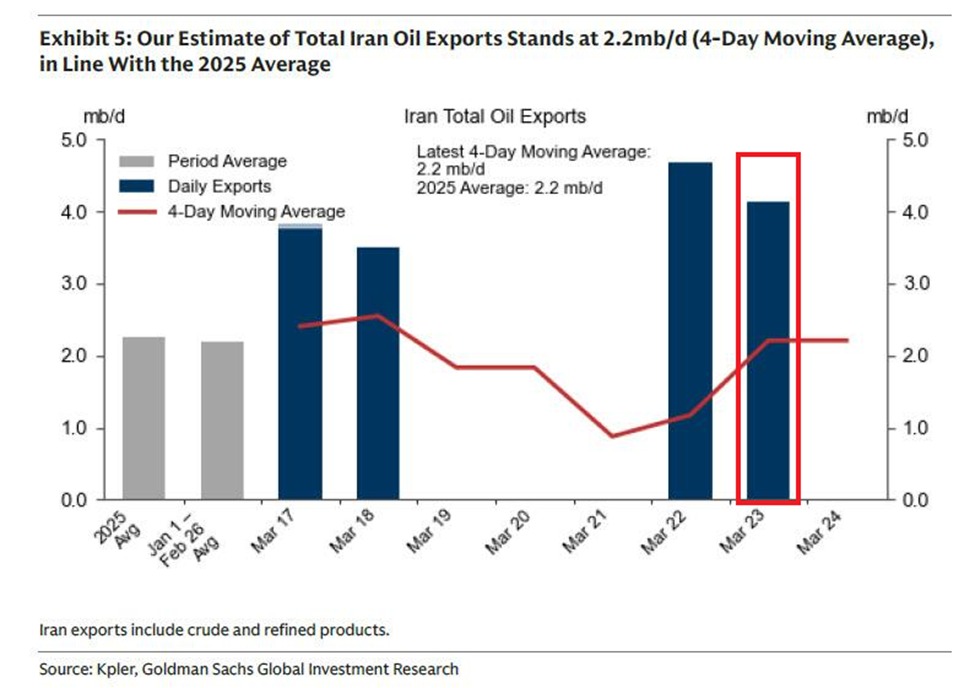
The surge places Iran’s oil export rate above 2.2 million barrels per day, surpassing its pre-war average level. The combination of strong volumes, higher prices, and a temporary easing of export restrictions has triggered one of the most significant recoveries in Iran’s energy sector in recent years.
Free Passage Through the Strait of Hormuz
Iranian oil tankers continue to transit the Strait of Hormuz, the world’s most critical chokepoint for crude shipments, without major interference. While other Persian Gulf producers face logistical restrictions linked to heightened regional conflict, Iranian vessels have largely maintained uninterrupted routes to key markets in Asia and beyond.
This freedom of navigation has given Tehran an undeniable strategic advantage. Each day, roughly a fifth of the world’s oil supply—about 20 million barrels—passes through the narrow strait. For decades, control of this 21-mile-wide passage has symbolized geopolitical leverage in the Gulf. Iran’s ability to sustain exports through it underscores both the country’s maritime resilience and its readiness to capitalize on a constrained market.
The Narrowing Spread Against Brent
A key indicator of Iran’s renewed strength in global oil markets is the price differential between Iranian Light crude and Brent. That spread has now narrowed to just $2.10 per barrel, compared to a steep $10 gap prior to the current conflict. The smaller discount signals stronger buyer confidence and growing demand for Iranian grades, especially among refiners seeking affordable alternatives to more expensive Gulf or Atlantic Basin sources.
In effect, Iran’s oil is no longer treated as a distressed commodity. With the lifting of some Western sanctions and an urgent need to stabilize world energy prices, refiners are willing to pay closer to full market value. This shift has injected billions of dollars in additional annualized revenue into Iran’s coffers.
Temporary Sanctions Relief Shapes Market Dynamics
The United States has quietly lifted sanctions temporarily on a portion of Iranian oil shipments already loaded and en route on tankers at sea. The move was intended to alleviate pressure on global oil prices amid widespread supply disruptions linked to the ongoing conflict in the region.
This limited sanctions relief has opened a window for Tehran to sell oil that might otherwise have remained stranded, significantly boosting government revenues and export momentum. It also reflects a pragmatic policy choice by Washington to temper inflationary pressures on global fuel markets rather than to inflict further price volatility.
For Iran, the timing could not be more favorable. Access to frozen markets offers critical liquidity as it faces ongoing domestic economic challenges, including inflation and a weakened rial. The additional cash flow promises to strengthen Tehran’s fiscal position and replenish its foreign currency reserves.
The Role of Transit Fees in Iran’s Windfall
Beyond oil exports, Iran is also leveraging its geographic position by imposing transit fees of up to $2 million per vessel passing through its maritime zone of the Strait of Hormuz. As many as 30–35 commercial vessels cross these waters daily, ranging from supertankers to bulk carriers, providing Tehran with a lucrative supplementary revenue stream.
Such tolls have grown controversial among regional trading partners, but they underline Iran’s increased confidence in using its maritime control to extract economic benefit. Analysts estimate that, at current levels, transit fees could generate hundreds of millions of dollars per month, bolstering state revenues amid fluctuating oil prices.
Historical Parallels: Oil and Opportunity
Iran’s current export momentum evokes comparisons with the post–2015 era, following the implementation of the Joint Comprehensive Plan of Action (JCPOA). Back then, sanctions relief triggered a similar production surge, briefly restoring Iran’s pre-sanction export potential. The difference today lies in the broader context: Iran’s resilience comes amid an unstable regional environment and limited formal diplomatic engagement.
Historically, Iran has used high oil revenues to stabilize its economy during periods of hardship. In the late 1970s and again in the early 2000s, oil price booms financed large-scale development and subsidy programs. Today, policymakers are likely to channel part of the current windfall toward domestic support measures, energy infrastructure upgrades, and military financing, though transparency in allocation remains limited.
A Regional Contrast: Who’s Losing Ground?
While Iran gains, several of its Persian Gulf neighbors are contending with production constraints and export bottlenecks. Prolonged security risks and shipping insurance costs have curtailed output in Kuwait, Iraq, and parts of Saudi Arabia’s eastern fields. As a result, Iran’s market share within the Organization of the Petroleum Exporting Countries (OPEC) has quietly expanded.
In contrast to Saudi Arabia’s cautious approach to supply increases, Tehran is taking advantage of every available opening. Its crude is flowing steadily to destinations like China, India, and Turkey, often through complex trading networks that blend legitimate sales with semi-clandestine deliveries. This combination has allowed Iranian exports to remain remarkably robust even under sanctions pressure.
The comparison is stark: while Gulf Cooperation Council (GCC) states struggle with risk-related costs, Iran is monetizing both the physical flow of oil and its geostrategic chokepoint advantage.
Economic Ripples and Domestic Impact
The surge in export revenue is beginning to ripple through Iran’s domestic economy. Increased foreign exchange inflows have helped steady the rial and alleviate short-term budget pressure. Analysts expect government revenues from oil and energy-related activities to exceed forecasts for the first half of 2026, allowing Tehran to fund public wages and subsidies more comfortably.
Still, the benefits may take time to reach the wider population. Consumer prices remain elevated, transport costs are high, and youth unemployment continues to hover above 20 percent. Even so, the psychological boost of renewed oil income has improved market sentiment inside the country. Local analysts describe it as a “rare moment of breathing room” amid years of financial strain.
The Global Context: Prices and Policy
Iran’s reemergence as a key supplier coincides with a jittery global oil market shaped by tightening output constraints and widespread shipping disruptions. Benchmark Brent prices have stayed above $88 per barrel for several weeks, even as strategic stockpiles in Europe and the United States are gradually replenished.
Analysts caution that the temporary U.S. sanctions relief is unlikely to last indefinitely. Once the immediate crisis eases, Washington could reinstate restrictions, potentially forcing Tehran to slash exports again. But for now, Iran’s barrels are playing a visible role in calming international markets. The International Energy Agency (IEA) recently acknowledged that additional Iranian supply has helped prevent Brent from breaching the $100 threshold.
Strategic Leverage Through Energy
Energy has long served as Iran’s most potent strategic tool. By maintaining control over shipping routes and ensuring continuous supply during instability, Tehran reinforces its regional standing. The imposition of tanker transit fees highlights a new dimension of this strategy—an assertion of sovereignty intertwined with economic pragmatism.
This combination of oil export growth, price competitiveness, and maritime monetization offers Tehran not only short-term financial gain but also long-term leverage in future negotiations with regional and global powers.
Outlook: A Fragile But Profitable Equilibrium
While the current boom marks a high point for Iran’s energy sector, sustainability remains uncertain. Global demand could weaken if economic conditions deteriorate or if alternative suppliers ramp up production later this year. Sanctions policy also remains a decisive variable; a renewed tightening by the United States or European Union could rapidly undermine current momentum.
For now, Iran sits in a favorable position—a rare alignment of policy relief, market need, and geographic dominance. The country’s oil trade is once again a central pillar of its economy and a crucial factor in the fragile balance of global energy flows through the Persian Gulf.
As one Tehran-based economist observed this week, “Iran is earning more, selling more, and charging more for its geography.” Whether that success proves temporary or transformative may depend less on the price of oil and more on the durability of access—through both markets and maritime lanes.