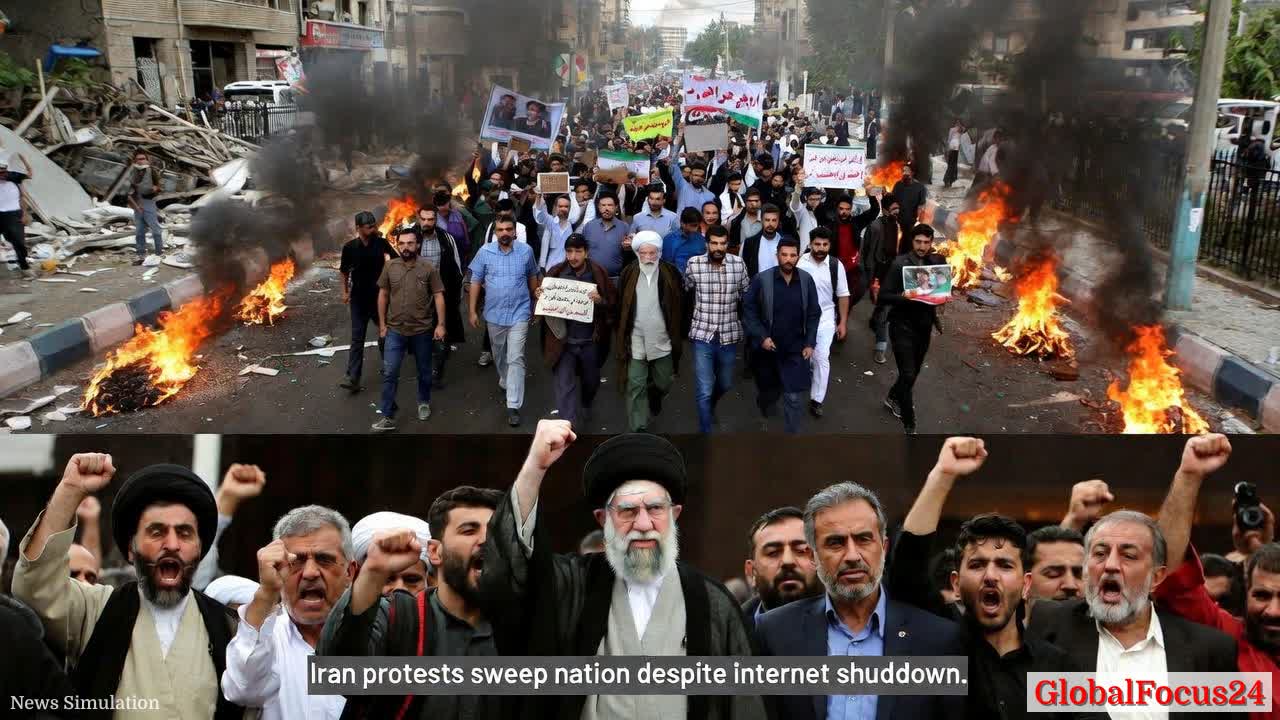
Iran Protests Erupt Across the Nation Amid Internet Blackout and Economic Strain
A wave of protests spanning major cities in Iran has surged despite a comprehensive internet shutdown and restricted communications, marking one of the most significant challenges to the Islamic Republic in years. Overnight demonstrations, fueled by economic distress and public discontent with governance, illustrated the volatility of Iran’s social contract and tested the government’s capacity to manage dissent in a tightly controlled information environment. As state media acknowledged protests with alarming language about casualties, observers weighed the implications for regional stability, foreign relations, and the domestic economy.
Historical context: echoes of past reform movements and economic shocks Iran’s protest cycle has deep historical roots that shape how the current events are perceived and organized. The country’s contemporary political landscape is colored by decades of centralized control, periodic uprisings, and reformist currents that have repeatedly strained the theocratic framework. Past episodes, such as mass demonstrations during the late 2000s and the more recent episodes tied to economic grievances and currency crises, reveal a pattern: economic pain—rapid inflation, unemployment, and currency collapses—often intersects with civil-liberties concerns and calls for political change. The current surge, with public expressions of support for individual leaders outside the official power structure, underscores the enduring tension between state authority and popular demands for accountability and reform.
Economic impact: currency depreciation, inflation, and the broader bearings on growth Iran’s economic backdrop has been volatile in recent years, with sanctions, reduced access to international financial systems, and domestic policy decisions shaping the macro environment. A sharp depreciation of the national currency, accompanied by inflationary pressures, can sap household purchasing power and erode consumer confidence. In this climate, protests frequently crystallize around the cost of living—food and fuel subsidies, utility costs, and job security—creating a feedback loop where economic anxiety amplifies political mobilization. The timing of the protests, set against a backdrop of fiscal strain and external pressure, suggests potential short- and medium-term implications for investment, energy subsidies, and public program sustainability.
Regional comparisons: how neighboring economies respond to similar pressures Across the Middle East and surrounding regions, governments facing comparable challenges—rising unemployment, currency volatility, and price shocks—have employed a mix of policy measures, ranging from targeted subsidies to social protection programs and, in some cases, tighter information controls. Comparisons reveal that economic fragility is a common catalyst for social unrest, but political outcomes vary based on governance structures, legitimacy, and the resilience of civil society institutions. Iran’s unique blend of ideological governance, security apparatus, and external pressures distinguishes its trajectory from neighbors, where the balance between coercive measures and concessions often dictates the longevity and direction of protests. The current events thus provide a case study in how economic pain can manifest as political risk within a system that tightly controls public discourse.
The role of communication controls and information dynamics The reported internet blackout and restricted communications are not merely a logistical hurdle for journalists; they are a strategic tool with far-reaching implications. When access to information is constrained, the speed and geography of mobilization can be shaped in unpredictable ways. Social networks and encrypted messaging often become critical channels for rapid organization, even as authorities attempt to shutdown or degrade those channels. The official acknowledgment of protests through state television underscores a shift in how the regime chooses to communicate with the public during a crisis, signaling an intent to frame events within a narrative of order and security while acknowledging casualties in a controlled manner. The effectiveness of such messaging hinges on public perception, international attention, and the ability of independent voices to document and verify developments.
Public reaction and social sentiment Public responses to these protests reflect a spectrum of attitudes, from solidarity with demonstrators to fear of crackdown, and from nationalist-tinged rhetoric to calls for reform. The chants observed in the initial hours—such as expressions against the regime and support for alternative leadership—illustrate a raw, emotionally intensified landscape. As the situation evolves, reactions from diaspora communities, international observers, and regional governments will likely influence both the tone and tempo of ongoing demonstrations. Social mood will be shaped by day-to-day experiences on the ground, including access to essentials, security conditions, and the perceived legitimacy of governing institutions.
Geopolitical dimensions and potential consequences The protests intersect with a broader regional and global context, including security concerns in the Persian Gulf, energy market stability, and the politics of sanctions. International responses—whether through diplomatic outreach, sanctions adjustments, or humanitarian considerations—could indirectly affect domestic dynamics by altering economic pressures and external risk perceptions. The interplay between domestic legitimacy, external leverage, and economic resilience will be a critical determinant of how Iran navigates this crisis in the near term. Observers will watch for signs of policy recalibration, symbolic gestures of reform, or intensified security measures, each of which could shift the trajectory of the protests.
Key indicators to monitor
- Attendance and geographic spread: The scale of demonstrations across major cities, the duration of protests, and how long street actions persist in the face of government responses.
- Economic signals: currency stabilization efforts, price controls, subsidy reforms, and any announcements related to employment programs or social protections.
- Information environment: the restoration or further disruption of communications networks, as well as the availability of independent reporting and verification of events.
- Public security posture: changes in policing strategies, deployment of security forces, and any judiciary actions related to protest leaders or participants.
- International engagement: statements from regional players, foreign ministries, and multilateral organizations regarding human rights, humanitarian considerations, and regional stability.
What this means for investors, policymakers, and regional stability For investors and businesses with exposure to Iran and the broader region, the unfolding protests introduce heightened risk assessments around energy supply continuity, currency volatility, and regulatory uncertainty. Companies operating in consumer sectors, retail, or energy-related value chains may face volatility in demand and cost structures if social disorder persists or escalates. Policymakers in neighboring countries and international forums will evaluate contingency measures to mitigate spillover effects, such as ensuring stable energy supply, monitoring financial channels, and supporting humanitarian considerations for affected populations.
Historical context and the road ahead Historically, sustained urban protests in Iran have compelled periods of negotiation, reform momentum, or further repression, often depending on multiple intertwined factors: the durability of economic pain, the perceived legitimacy of the regime, the resilience of civil-society networks, and external diplomatic dynamics. The present situation—framed by an internet blackout, currency stress, and a mobilized public—could redefine the window for potential policy adjustments or concessions. Yet the path forward remains uncertain, with the government likely prioritizing perceived stability and the avoidance of perceived vulnerability to external influence while continuing to manage domestic dissent through a combination of legal, security, and narrative strategies.
Public safety and humanitarian considerations As authorities respond to demonstrations, safeguarding civilian safety remains paramount. The balance between maintaining order and protecting civil liberties is a persistent challenge for any government facing widespread mobilization. International stakeholders often call for restraint, transparency, and proportional responses to protests, particularly when information access is constrained and the full impact on civilians is difficult to ascertain. Mechanisms to ensure aid delivery, food and medical supplies, and protections for vulnerable populations are essential components of a comprehensive approach to managing crisis conditions that arise from such social upheaval.
Conclusion: an evolving moment for Iran’s social and economic fabric The current wave of protests highlights the enduring link between economic conditions and political legitimacy. Iran’s authorities face a complex task: restoring a sense of stability and confidence among citizens while navigating the constraints of governance structures and external pressures. The coming days and weeks will reveal how the regime adapts its policy posture, how public sentiment evolves as information flows resume or remain constrained, and how regional dynamics respond to potential shifts in Iran’s domestic trajectory. As observers assess the immediate impact on daily life and the longer-term implications for governance and reform, the situation remains a focal point for understanding how a nation negotiates economic distress, political dissent, and the limits of state power in a rapidly changing world.