Iran Rushes Crude Exports as U.S. Tensions Mount, Tanker Activity Surges at Kharg Island
Sharp Rise in Iranian Oil Loadings Signals Urgency
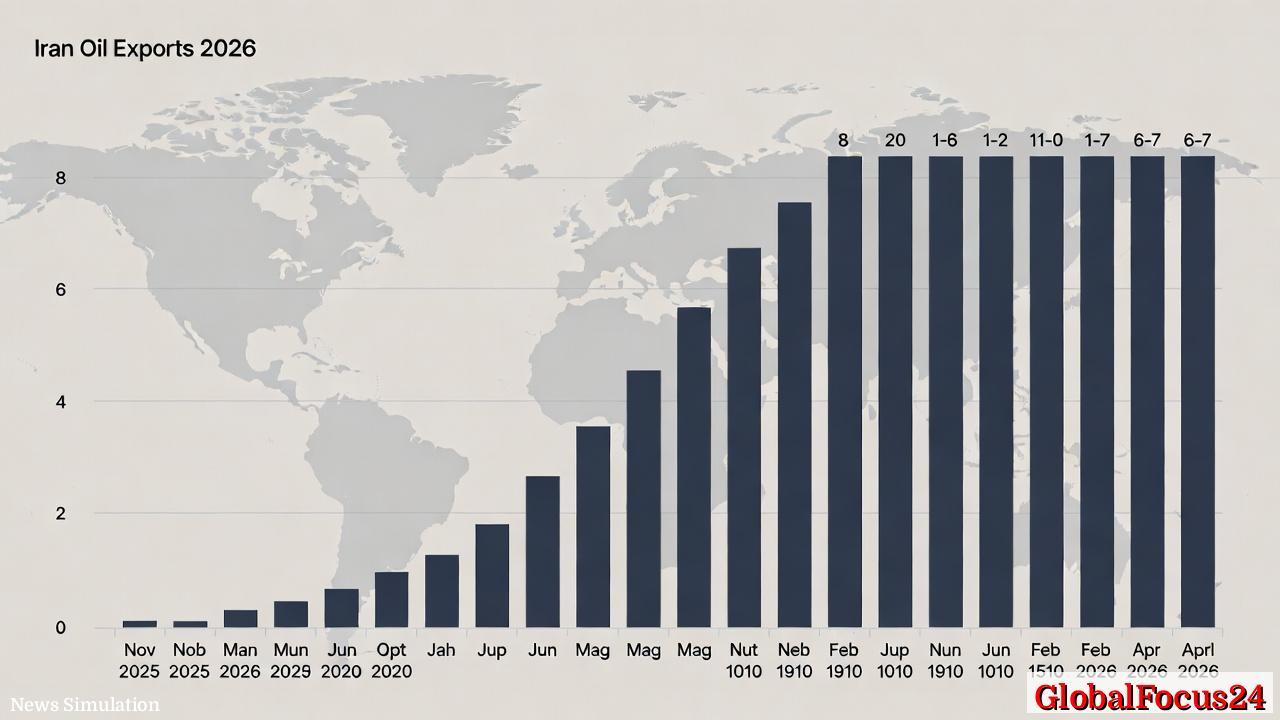
Iran’s major export hub at Kharg Island recorded a dramatic increase in crude oil shipments in mid-February, a sign of intensified efforts to push volumes abroad as geopolitical tensions with the United States escalated. Between February 15 and February 20, crude exports soared to nearly 20.1 million barrels, equivalent to more than 3 million barrels per day, according to data tracked by international shipping analytics firm Kpler.
The surge put exports from the Persian Gulf terminal at roughly three times their typical rate from earlier in the year. Satellite imagery and tanker tracking data showed continuous vessel activity around the island during that six-day period, with a rapid succession of tankers loading and departing for Asian and regional destinations.
This rise not only highlights Tehran’s determination to maintain cash flow from its main export commodity but also underscores how regional tensions can directly reshape global oil trade dynamics.
Kharg Island: Iran’s Vital Maritime Gateway
Kharg Island, situated roughly 25 kilometers off Iran’s southwestern coast in the Persian Gulf, is the country’s primary crude loading point, responsible for the majority of its seaborne oil exports. The terminal has long been central to Iran’s petroleum logistics; its facilities can handle millions of barrels daily through multiple berths connecting to the onshore storage farms of the National Iranian Oil Company (NIOC).
Historically, Kharg has been both a symbol of economic resilience and a strategic vulnerability. During the 1980s “Tanker War” phase of the Iran-Iraq conflict, the island and its industrial infrastructure were repeatedly targeted by airstrikes. Despite the damage, operations were quickly restored, affirming Iran’s capacity to sustain oil exports even under duress.
Today, that same strategic determination appears at play. Tanker traffic in mid-February suggested a coordinated acceleration, possibly to reduce onshore storage or to preempt potential disruptions stemming from renewed U.S. sanctions enforcement or maritime frictions in the Strait of Hormuz.
Export Surge Triples Typical Volume
From January through early February, Iranian oil shipments averaged between 1.2 and 1.5 million barrels per day, varying with tanker availability and destination logistics. The sudden February spike represented an outlier, with daily exports peaking near 8 million barrels across several individual loading days.
Observers note that such sharp bursts of activity often follow geopolitical flashpoints or signals of policy change abroad. Iran has previously accelerated exports ahead of sanctions announcements or military escalations, a strategy aimed at monetizing available output before enforcement tightens.
Shipping manifests during the February window showed numerous very large crude carriers (VLCCs) departing Kharg Island, many sailing under flags linked to private fleets in Asia and the Middle East. Although the final destinations are sometimes obscured through ship-to-ship transfers, analysts believe the majority of barrels are bound for China, Syria, and Malaysia, markets that have provided consistent demand despite Western pressure.
Regional Context: Rising Maritime Tensions
The timing of the February loadings coincided with heightened military maneuvers in the Persian Gulf and Red Sea corridors. Naval escorts, drone patrols, and commercial rerouting reflected a buildup of caution among shipping operators amid the tense climate.
Iran’s decision to push oil exports at such a scale may also stem from concerns that transport via the Strait of Hormuz—a chokepoint through which roughly 20% of global crude passes—could face temporary restrictions in the event of new confrontation with U.S. forces or their allies.
Analysts emphasize that Tehran’s export behavior often serves as a strategic signal. A surge can reflect either confidence in continued maritime access or an attempt to move supplies out quickly if officials perceive a window of opportunity closing. In both interpretations, February’s data reveal a clear sense of urgency.
Economic Drivers Behind the Export Acceleration
Oil remains Iran’s principal source of foreign exchange revenue, crucial to sustaining public spending and the national currency. The spike in shipments provides short-term economic relief by injecting billions in export income within a few days. With global Brent prices hovering above $80 per barrel during mid-February, the accelerated cargo flow represents a significant fiscal boost.
However, the pattern also reflects Tehran’s precarious balancing act. Years of sanctions have constrained formal trade relationships and complicated revenue collection, often forcing the government to rely on intermediaries and unconventional payment channels. The more oil that can be moved while market conditions remain favorable, the more liquidity the country gains to stabilize domestic prices and fund imports.
Domestic observers note that rapid export bursts can also strain logistical capacity. Quick turnover at Kharg Island requires intensified coordination among NIOC subsidiaries, pilotage crews, and tanker operators, increasing the risk of operational bottlenecks or environmental incidents if throughput remains elevated for prolonged periods.
Historical Parallels to Past Oil Export Surges
This February’s export pattern evokes several historical precedents. In 2012, when new sanctions under the U.S. and European Union restricted Iranian sales, Tehran similarly escalated shipments ahead of enforcement deadlines. In 2019, amid renewed nuclear tensions, tanker activity spiked temporarily before easing as international monitoring intensified.
Each time, the pattern followed a similar logic: maximize sales, liquidate stored crude, and ensure that available tankers leave Iranian waters filled before stricter measures could be applied. These strategic “export pulses” have become a recognizable feature of Iran’s oil diplomacy, a combination of logistical resourcefulness and political signaling.
The latest surge, though brief, may thus represent both an effort to capitalize on current demand and a defensive maneuver before potential constraints reemerge.
Comparison With Regional Exporters
By volume, Iran’s mid-February surge brought it momentarily close to output levels typical of Kuwait and the United Arab Emirates, countries that normally exceed Iran’s sanctioned export capacity by wide margins. Though short-lived, this parity underscores the scale of Tehran’s effort to remain competitive in the region’s crowded energy market.
Saudi Arabia—the region’s dominant exporter—maintained production discipline under OPEC+ guidelines during the same period, favoring stable pricing over volume expansion. Iran, exempt from most quotas due to its sanctions status, effectively used its independence from OPEC limits to maneuver more aggressively.
This approach contrasts with the strategies of Gulf neighbors relying on long-term supply commitments and forward contracts. Iran’s export bursts are more opportunistic, driven by tactical decisions tied to geopolitical developments and short-term market access.
Implications for Global Oil Markets
While the six-day surge from Kharg Island briefly added millions of barrels to global supply, analysts expect the effect on oil prices to remain limited given the short duration. Still, such actions can influence market sentiment by revealing Iran’s production capacity and willingness to defy constraints.
Traders often treat Iranian export indicators as early signs of shifting supply patterns in Asia. More exports from Tehran can increase competition for market share in countries like China and India, affecting pricing for similar grades from Iraq or Russia. The February event may therefore have subtle but meaningful implications for benchmark spreads in the coming months.
Additionally, the episode reinforces the complexity of monitoring sanctioned oil flows. Despite official restrictions, Iran continues to demonstrate adaptability through diversified logistics, new flag registries, and flexible shipping practices. The Kharg Island spike thus highlights both the challenges of enforcement and the interconnected nature of global petroleum commerce.
A Familiar Pattern Amid a Changing Landscape
The February export surge from Iran represents more than a logistical anomaly—it offers a snapshot of strategic calculation under pressure. As long as maritime routes remain open and key buyers stay receptive, Tehran is likely to repeat such bursts whenever geopolitics dictate.
For global observers, the episode is a reminder that disruptions or accelerations in the Gulf do not occur in isolation. Every tanker that leaves Kharg Island reflects not only economic ambition but also the broader tension between global demand, regional stability, and the unrelenting push and pull of energy geopolitics.
In an increasingly volatile energy landscape, Iran’s mid-February export rush underscores how swiftly global oil flows can shift—sometimes in a matter of days—reshaping the economic map far beyond the narrow waters of the Persian Gulf.