International Stocks See Surge in Equity Inflows in 2026
Developed-market equities are off to a strong start in 2026, buoyed by renewed investor appetite for international exposure and diversification. As equity funds report net inflows that surpass 50 billion dollars year-to-date, international stocks have emerged as the dominant driver of capital allocations, underscoring shifting regional preferences amid a complex global macro backdrop.
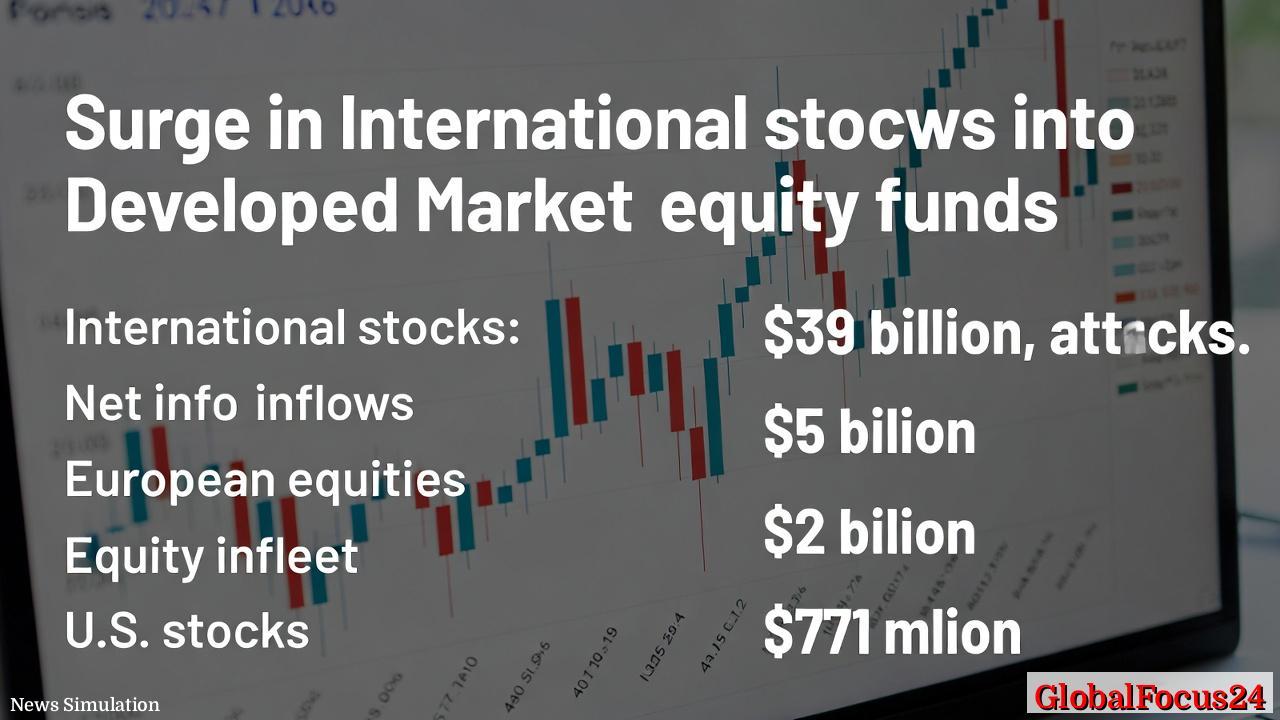
A substantial portion of the year’s inflows has been funneled toward international equities, signaling heightened confidence in non-U.S. markets. Through the first part of 2026, developed-market equity funds have gathered approximately 50 billion dollars in net inflows. Of this total, international equities account for a sizable majority, attracting around 39 billion dollars. This concentration suggests that investors are prioritizing broad geographic diversification, seeking exposure to mature economies outside the United States amid varied economic cycles and interest-rate paths.
Regional breakdown and notable dynamics
- Europe: European equities have drawn roughly 5 billion dollars in net inflows. This level of engagement reflects renewed optimism about the region’s growth trajectory, stabilization in inflation, and improving corporate earnings visibility in key sectors such as technology, financials, and consumer staples. The inflows come as many European markets have benefited from a softer euro in recent months and improved cross-border trade dynamics, helping to buoy investor sentiment.
- Japan: Japanese equities have attracted about 2 billion dollars in net inflows. Investors have been positioning for a gradual expansion of domestic demand, a more accommodative stance from the Bank of Japan, and structural reforms that support corporate governance and shareholder returns. The incremental capital into Japan signals confidence in the country’s ability to translate monetary stimulus into sustainable earnings growth across capital-intensive industries and export-oriented manufacturers.
- United States: In contrast, U.S. stocks have recorded inflows of roughly 771 million dollars. While any positive flow into U.S. equities is meaningful in absolute terms, the dispersion between international and domestic inflows highlights a notable shift in attention toward foreign markets. The relatively smaller U.S. inflow may reflect a combination of valuations, sector rotation, and the ongoing reevaluation of global supply chains in light of geopolitical considerations and demand dynamics.
Contextual background and historical perspective
The early 2026 surge in international equity inflows arrives after a multi-year pattern in which U.S. stock markets drew sustained attention from global investors. The reallocation toward international equities can be understood through several lenses:
- Economic cycles and growth differentials: As the United States contended with robust growth in certain periods, other developed markets navigated slower but more stable expansions. Investors often seek pockets of resilience where valuations remain attractive relative to prospective earnings growth.
- Monetary policy and interest-rate expectations: Divergent policy paths across major regions can create relative appeal for international equities. When domestic rates firm up or remain elevated, equities in other regions with more accommodative financing conditions may become preferable for risk-adjusted returns.
- Currency and valuation considerations: Movements in exchange rates influence cross-border return calculations. A weaker domestic currency can amplify foreign equity returns when measured in the investor’s home currency, while relative valuations can appear more compelling in markets with lower price-to-earnings multiples or higher dividend yields.
- Global supply chains and trade normalization: As supply chains recalibrate post-pandemic and in the face of geopolitical tensions, investors have sought opportunities in markets with diversified exposure to global trade networks and semiconductor ecosystems, among other strategically important sectors.
Economic impact and implications for capital allocation
The shift toward international equities has several practical implications for markets and investors:
- Diversification benefits: Expanding exposure beyond a single economy can help reduce portfolio concentration risk and smooth out volatility arising from domestic shocks. International allocations can provide access to different growth drivers, such as export-oriented manufacturing, tourism rebounds, and services sectors with secular tailwinds.
- Valuation normalization: If international markets continue to offer favorable valuations relative to the United States, investors may allocate more capital to equities overseas, potentially supporting price discovery and earnings revisions in these regions.
- Corporate earnings and dividends: Increased foreign demand for equities can bolster liquidity in international markets, support corporate share buybacks, and sustain dividend payout policies as firms respond to investor expectations for attractive total returns.
- Financial-market infrastructure: Higher cross-border investing can encourage improvements in market efficiency, transparency, and accessibility. Fund managers may expand coverage of regional indices, while brokerage platforms enhance capabilities to trade overseas assets with relative ease.
Regional comparisons and regional resilience
- Europe’s inflows suggest investors are comfortable with the region’s prospects for continued resilience. Growth catalysts include a potential rebound in consumer demand, ongoing digital transformation in services and manufacturing, and sectoral leadership in renewables and technology-enabled manufacturing. The European market’s sensitivity to trade dynamics and energy prices remains a critical variable, but improving inflation trajectories and supportive policy signals can sustain momentum.
- Japan’s inflows reflect a nuanced view of the country’s modernization efforts. Progress in corporate governance, shareholder value creation, and a gradual dissipation of long-standing deflationary pressures have contributed to a more constructive earnings environment. For international investors, Japan’s mix of high-quality equities and a resilient domestic trend can offer an appealing complement to broader exposure.
- The United States continues to be a core anchor for many portfolios, yet the relative inflow figure indicates that global investors are recalibrating their exposure mix. The U.S. market remains diverse across sectors and customarily offers deep liquidity, but valuations, growth expectations, and policy outlooks can drive outsourcing of capital toward other developed markets.
Market sentiment and public reaction
Investor sentiment around international equities has evolved as global macro signals have shifted. Market commentary highlights a growing appetite for safer, diversified exposure when domestic conditions appear uneven or when inflation and interest-rate trajectories complicate return forecasts. The public discourse often frames international equities as a strategic hedge against concentration risk and a vehicle to participate in secular growth themes present in established economies.
Compared with historical norms, this surge in international inflows marks a notable change in relative capital allocation. In periods of relative U.S. outperformance, foreign inflows tended to wane; conversely, when global growth narratives shift or geopolitical risk alters risk sentiment, international allocations can gain traction as part of a balanced, multi-asset approach.
Strategic considerations for investors and wealth managers
- Portfolio construction: Incorporate a measured international sleeve that aligns with risk tolerance, time horizon, and liquidity needs. Consider regional tilts that reflect macroeconomic trajectories, currency outlooks, and sectoral exposures to technology, energy, finance, and industrials.
- Currency risk management: Implement hedging strategies when appropriate to mitigate unexpected currency volatility, or embrace unhedged positions if long-term diversification benefits and potential currency appreciation are expected to enhance returns.
- Fee efficiency and access: Seek cost-effective vehicles and transparent fee structures to maximize net returns from international allocations. Exchange-traded funds and index funds can provide efficient access to broad regional exposure.
- Monitoring and risk controls: Establish clear governance for monitoring geopolitical developments, inflation trends, and policy changes that could influence international markets. Maintain scenario analysis to stress-test portfolio resilience to shocks impacting global trade and capital flows.
Historical context and forward-looking view
Looking back over the past decade, international equities have experienced cycles of capital rotation that correspond to shifts in growth momentum, policy stances, and geopolitical risk. The 2020s have emphasized value creation through modernization and digital transformation across multiple regions, with diversified exposure proving valuable during periods of domestic market volatility.
As the year progresses, the persistence of inflows into international stocks will depend on multiple factors, including the pace of global economic normalization, corporate earnings resilience, and the effectiveness of regional fiscal and monetary policies. If international markets sustain this momentum, investors could see a continued rebalancing of global equity portfolios toward developed economies outside the United States, complemented by selective exposure to high-growth sectors within these markets.
Enduring themes to watch include the stabilization of inflation in major economies, the trajectory of central-bank policy, and the ongoing evolution of international trade relationships. For market participants, the current inflow environment underscores the importance of disciplined, long-range planning that leverages geographic diversification to navigate a dynamic global investment landscape.