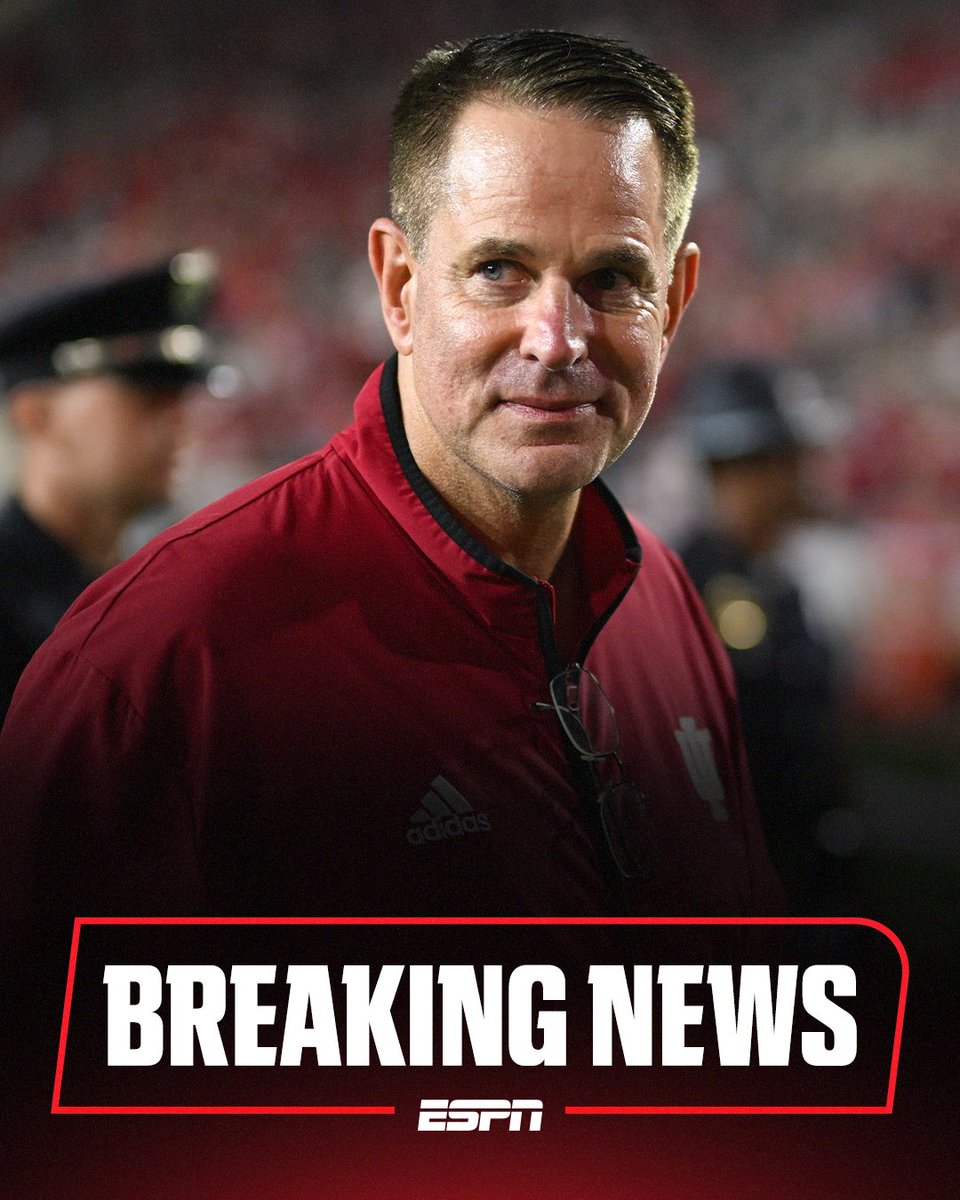
Indiana Football Coach Curt Cignetti Signs Eight-Year Contract Extension Through 2033
BLOOMINGTON, Ind. — Indiana University has secured its football future for the next decade, announcing Thursday that head coach Curt Cignetti has signed a new eight-year contract extension worth approximately $11.6 million per year. The new deal, which extends through November 30, 2033, solidifies Indiana’s intent to remain a powerhouse in the competitive Big Ten Conference and maintain its position among the most talked-about football programs in the nation.
The announcement cements what many analysts have called “the renaissance of Indiana football,” a transformation driven by Cignetti’s leadership since his arrival in Bloomington in 2023. The agreement represents not only a major investment in a coach, but also a declaration that Indiana intends to contend consistently for national prominence.
Cignetti’s Rise and Indiana’s Revival
Curt Cignetti’s arrival at Indiana marked a turning point for a program long searching for stability and success in one of college football’s most demanding environments. Before coming to Bloomington, Cignetti built a reputation for revitalizing programs, first at Elon University and later at James Madison University, where he led the Dukes’ seamless transition into the Football Bowl Subdivision (FBS).
Since taking the helm at Indiana, Cignetti has delivered immediate results that defied expectations. The 2023 season showed flashes of promise as the team adapted to his disciplined approach and aggressive style. But it was the 2024 season that changed everything. Indiana stunned the college football world by finishing the regular season undefeated, earning the first College Football Playoff (CFP) appearance in school history.
The Hoosiers’ success reverberated beyond Bloomington, elevating the program’s profile nationally. For the first time, Indiana was regularly mentioned alongside traditional Big Ten powerhouses like Michigan, Ohio State, and Penn State. This transformation, both on and off the field, made Cignetti one of the most sought-after coaches in collegiate athletics.
Contract Terms Reflect Big Ten Ambitions
Under the new agreement, Cignetti’s annual compensation is valued at roughly $11.6 million, placing him among the highest-paid coaches in the nation. In comparison, that figure rivals the salaries of top-tier Big Ten and SEC coaches who have dominated the national conversation over the past decade.
The deal emphasizes Indiana’s financial commitment to maintaining a competitive program within an expanding and increasingly lucrative Big Ten landscape. The conference’s recent expansion to include schools from the West Coast, such as UCLA, USC, Oregon, and Washington, has elevated the stakes in recruiting and performance. Indiana’s decision to invest heavily in Cignetti reflects an understanding that sustained success requires not just talent on the field, but visionary leadership on the sidelines.
Athletic Director Scott Dolson described the extension as a natural step in Indiana’s long-term plan for continued growth. “Coach Cignetti has transformed our football culture and our expectations,” Dolson said in a statement. “We want to ensure that Indiana remains a destination for top recruits and continues to compete at the highest level nationally.”
Economic Impact and Community Growth
The success of Indiana football has already generated measurable economic benefits for Bloomington and the wider region. In 2024, home games at Memorial Stadium regularly sold out, bringing tens of thousands of fans to local businesses, hotels, and restaurants. According to estimates from Visit Bloomington, the city’s tourism office, the Hoosiers’ undefeated run injected tens of millions of dollars into the local economy.
University officials have also acknowledged the connection between football success and broader institutional growth. Applications to Indiana University for the 2025 academic year rose significantly, a trend seen at other schools whose football programs attained national recognition. The phenomenon, often dubbed the “Flutie Effect” after Boston College’s rise in popularity following quarterback Doug Flutie’s famous 1984 performance, underscores the far-reaching influence of athletic success on a university’s identity and appeal.
Local business owners have echoed that sentiment. “Cignetti brought not just a winning team, but a sense of pride to the community,” said Amber Larson, who owns a restaurant near campus. “When Indiana wins, the whole town wins.”
Regional and Historical Context
For decades, Indiana University football struggled to establish itself as more than an occasional spoiler in the Big Ten. The Hoosiers’ last conference title came in 1945, and bowl appearances were rare. While the program produced exceptional talents over the years, including NFL standouts and inspirational figures, sustained success always seemed just out of reach.
Cignetti’s arrival changed that narrative. By emphasizing player development, disciplined execution, and recruiting stability, he constructed a foundation that transcends individual seasons. His emphasis on mental toughness and adaptability has resonated with players accustomed to competing against the conference’s elite programs.
Regionally, Indiana’s resurgence has shifted the competitive balance in the Midwest. For years, neighboring states such as Ohio and Michigan dominated football conversations. Now, Indiana’s program has inserted itself into that conversation, competing for recruits who once defaulted to traditional powerhouses. High school players across Indiana, Illinois, and Kentucky are taking notice, and the state’s improved investment in football infrastructure mirrors that shift.
Big Ten Rivalries and Competitive Landscape
The extended tenure of Curt Cignetti promises to intensify existing rivalries within the Big Ten. Indiana’s resurging competitiveness has reinvigorated matchups with Purdue, Ohio State, and Michigan, each drawing national attention and strong television ratings. The Hoosiers’ 2024 victory over Ohio State — their first in decades — remains one of the most significant wins in the program’s modern history.
Big Ten media rights, valued at record levels after recent negotiations, further highlight the financial implications of Indiana’s ascent. The conference’s expanded media footprint now stretches across all major U.S. time zones, offering unparalleled exposure for programs showing consistent excellence. As Indiana continues to grow under Cignetti, the university stands to benefit enormously from this increased visibility.
Recruiting and Future Prospects
Recruiting has long been the lifeblood of college football success, and under Cignetti, Indiana has made impressive strides. The Hoosiers’ 2025 recruiting class is projected to rank among the top 15 nationally, a historic achievement for a program once considered a “developmental” destination. High-profile commitments from Midwest and Southern high schools demonstrate Indiana’s newfound credibility as a major player on the recruiting trail.
Cignetti’s philosophy emphasizes adaptability, ensuring his teams stay ahead of the tactical curve. His approach blends traditional fundamentals with innovative use of analytics and player performance metrics — hallmarks of modern collegiate coaching. Those methods have resonated especially well with recruits and their families, who view Indiana as both a competitive and progressive environment.
University leaders hope that the stability of an eight-year deal will strengthen recruiting further. Consistency in leadership attracts not only top athletes but also premier assistant coaches — an essential factor in sustaining success across a decade.
Long-Term Vision for the Program
The extension signals a broader vision for Indiana athletics, which has historically been anchored by basketball but now embraces football as an equal pillar of institutional identity. Investments in training facilities, technology, and athlete support have all increased since Cignetti’s arrival, transforming the infrastructure around the program.
Upcoming renovations at Memorial Stadium include upgraded locker rooms, expanded seating sections, and enhanced fan experiences designed to accommodate the surging game-day attendance. The university has also announced plans to expand its NIL (Name, Image, and Likeness) outreach, ensuring that Indiana’s athletes can thrive in the new era of collegiate sports economics.
As Indiana looks toward the future, the university’s leadership sees football as a key driver of both athletic and academic visibility. By extending Cignetti’s tenure, Indiana positions itself not just as a temporary contender, but as a sustainable program capable of competing for national championships year after year.
Public and Player Reaction
News of Curt Cignetti’s contract extension generated immediate enthusiasm across Bloomington and beyond. Players past and present took to social media to applaud the decision, emphasizing the trust and confidence Cignetti has built within the locker room. Fans celebrated outside Memorial Stadium Thursday night, waving crimson flags and chanting in a spontaneous show of support.
Quarterback Trey Johnson, who led the Hoosiers during their record-breaking 2024 campaign, commended the university’s decision. “Coach Cignetti changed how we think about Indiana football,” Johnson said. “This means we can keep building the legacy we started.”
For alumni and fans, the announcement feels like validation after decades of patience. Indiana football, once overshadowed by its basketball tradition, now commands equal attention — an achievement even the most optimistic supporters might not have imagined a few years ago.
A New Era of Expectation
As the ink dries on Curt Cignetti’s eight-year extension, Indiana University stands on the threshold of a new era. What was once a dream of national contention has become the program’s standard. While challenges inevitably lie ahead in the ever-competitive Big Ten, Indiana’s leadership, alumni, and players alike share a common conviction — that sustained excellence is no longer an aspiration but an expectation.
For Bloomington, the stakes are both emotional and tangible. The roar of Memorial Stadium, the pride of a rejuvenated fan base, and the economic boom tied to championship football all hinge on Cignetti’s continued leadership. As Indiana looks ahead to the 2025 season and beyond, the message from the university is unmistakable: the Hoosiers intend to remain not just a part of the college football conversation, but at its very center.