India’s Cooking Gas Crisis Shuts Restaurants and Disrupts Daily Life
Restaurants Across India Go Dark as Cylinders Run Dry
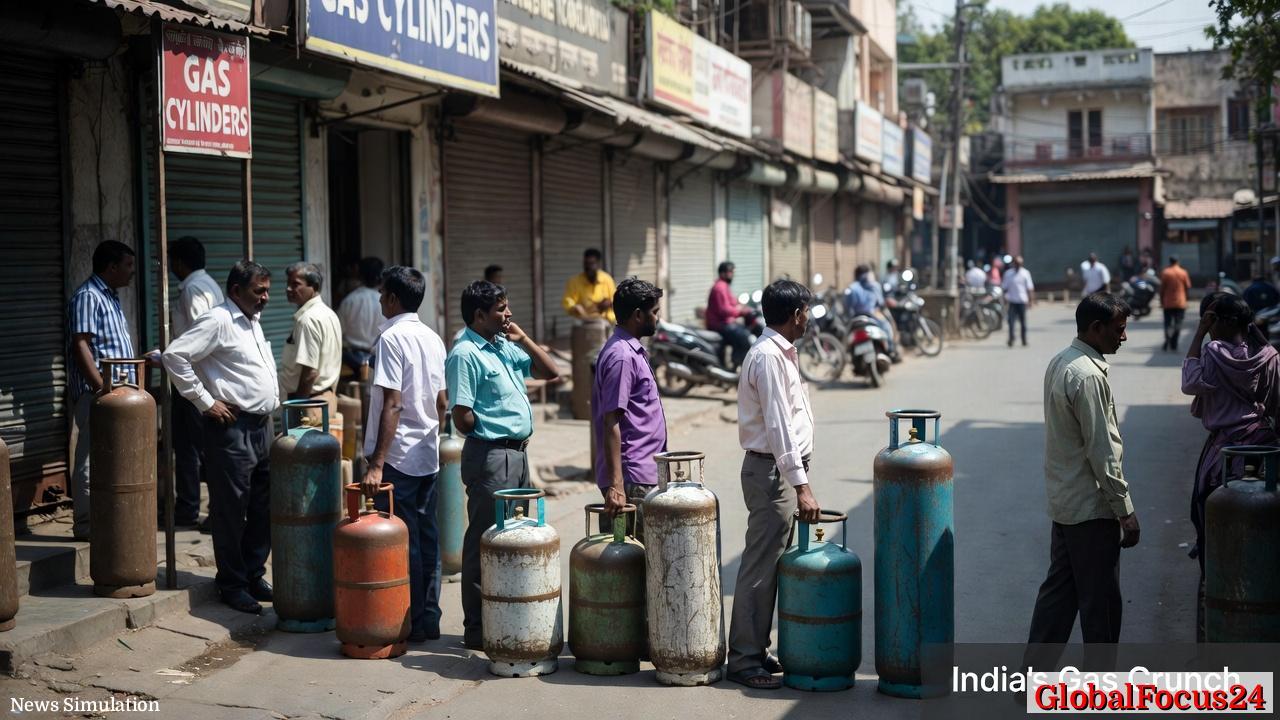
Restaurants across India have shuttered their kitchens amid an acute shortage of cooking gas that has left chefs, street vendors and households scrambling for alternatives. In major cities from Delhi and Mumbai to regional hubs, owners have rolled down metal shutters or taped handwritten notices to their doors, citing the unavailability of commercial liquefied petroleum gas (LPG) cylinders. The disruption has spilled far beyond the food service industry, forcing residents to stand in long queues for cylinders and raising fears of a wider economic slowdown if the gas crunch persists.
For diners accustomed to India’s dense landscape of small eateries and bustling food streets, the sudden silence is jarring. In some neighborhoods, the usual aroma of frying snacks and simmering curries has been replaced by the smell of coal or kerosene, as businesses and families fall back on older, dirtier fuels to prepare basic meals. Public frustration is mounting, with social media flooded by images of queues outside gas agencies and darkened restaurant façades, and with industry groups warning that thousands of small outlets could close permanently if supplies do not stabilize soon.
How a Global Shock Triggered India’s Gas Crunch
India’s cooking gas crisis has been driven primarily by geopolitical turmoil in the Middle East, where conflict involving Iran has disrupted shipping routes through the Strait of Hormuz, the key corridor for LPG imports to South Asia’s largest consumer market. India imports roughly 60 percent of the LPG it uses each year, making it one of the world’s most import‑dependent large economies for cooking gas. With tankers rerouted or delayed and war‑risk premiums on shipping soaring, volumes arriving at Indian ports dropped sharply in early March, immediately tightening supplies.
Officials have stressed that domestic refineries have been ordered to maximize LPG output and that emergency cargoes are being sourced from suppliers outside the Gulf region. Yet the logistics of shifting trade flows, combined with limited storage capacity and existing pipeline constraints, have meant that local distributors and cylinder depots are still struggling to keep pace with demand. The result is a patchwork crisis: households in some areas still receive cylinder refills within a few days, while businesses in others report going weeks without deliveries.
Domestic Users Protected, Commercial Kitchens Squeezed
In response to the supply shock, authorities have prioritized the country’s roughly 330–340 million LPG‑using households, many of whom were brought into the clean‑cooking system over the past decade through large‑scale subsidy programs. To safeguard domestic consumption, regulators have ordered refiners and distributors to divert more fuel toward residential customers, invoking emergency provisions that effectively cap supplies for commercial and industrial users.
This policy has shielded many families from the worst effects of the crisis but has shifted much of the burden onto restaurants, street stalls, laundries and factories that rely on LPG as a primary energy source. Owners report that deliveries of commercial cylinders have slowed dramatically or stopped altogether, leaving them unable to plan menus or operating hours with any certainty. Some have reduced their offerings to a handful of dishes that can be prepared on limited fuel, while others have simply closed their doors rather than risk erratic service and mounting losses.
Long Queues, Closed Kitchens and Improvised Alternatives
Across major cities, scenes outside gas agencies and distribution depots highlight the scale of the disruption. Residents form queues that snake around corners, clutching booking slips and waiting hours in the hope of securing a single cylinder. For some, the wait ends in frustration as stocks run out before their turn comes; others leave with half the quantity they had expected.
Restaurant owners describe a daily struggle to keep stoves lit. Small eateries that once turned over tables rapidly now stare at empty dining rooms as menus are cut back and cooking slows. Many operators say they have experimented with electric hotplates, induction cooktops or makeshift coal burners, but these workarounds raise costs, slow service and in some cases compromise the taste and consistency that regular customers expect.
Households are also adjusting. While domestic LPG supply has been formally prioritized, uneven distribution has led some families to revert to traditional fuels such as firewood, coal and biomass, particularly in lower‑income neighborhoods and peri‑urban areas. Others are investing in small electric cookers or pressure cookers to stretch cylinder use, further straining already fragile urban power grids during peak hours.
Economic Shock for India’s Food and Service Sectors
The immediate economic impact is being felt most acutely in the restaurant and street food sectors, which collectively employ millions of workers and serve as an entry point into the urban labor market for migrants and low‑income households. With many outlets operating on thin margins, the combination of higher fuel costs, reduced operating hours and unpredictable supply threatens to push weaker businesses into insolvency. Industry associations warn that continued shortages could lead to large‑scale closures, particularly among small independent restaurants and informal vendors with limited access to credit.
The ripple effects extend along the supply chain. Wholesalers who supply meat, vegetables and staples to restaurants report falling orders, while delivery platforms and gig workers face fewer trips and lower earnings as demand for cooked food declines. In manufacturing, sectors such as ceramics, glass and certain light industries that use gas‑fired kilns or burners are cutting production and furloughing workers. The hospitality and tourism industries, already sensitive to perceptions of stability and convenience, may also see knock‑on effects if visitors encounter widespread closures or limited dining options in key destinations.
Economists caution that if the crisis persists for several months, it could shave growth from local economies where services, informal trade and small‑scale manufacturing are significant employers. At the household level, higher fuel prices and the need to purchase alternative equipment or fuels may divert spending away from other goods and services, dampening consumption at a time when broader economic recovery remains uneven.
Historical Context: From Biomass to LPG and Back Again
The current gas crunch marks a stark reversal in a decades‑long national effort to move households away from traditional fuels and toward cleaner LPG. Since the early 2000s, and especially over the past ten years, subsidized cylinder connections and targeted welfare schemes have rapidly expanded access to LPG in both urban and rural India. These policies were credited with reducing indoor air pollution, improving health outcomes for women and children, and saving time previously spent collecting firewood or other biomass.
By 2026, hundreds of millions of households had become regular or semi‑regular LPG users, embedding cooking gas deeply into daily routines and urban food economies. The present shortage has exposed how reliant the country’s kitchens—both domestic and commercial—now are on a fuel that remains vulnerable to external shocks and import disruptions. In some areas, the sight of coal stoves and wood fires returning to back alleys and courtyards has prompted comparisons with earlier decades, when smoky, labor‑intensive cooking was the norm rather than the exception.
Energy analysts argue that the crisis underscores structural weaknesses that had long been flagged: limited storage capacity for LPG, insufficient diversification of supply routes, and a growing gap between expanding demand and investment in infrastructure. While emergency measures can smooth temporary disruptions, they note that a system built around just‑in‑time imports and constrained domestic output is inherently exposed to geopolitical turbulence.
Environmental Setbacks and Public Health Concerns
One of the most worrying aspects of the current shortage is the risk that it could push India back toward more polluting fuels, at least in the short term. Reports from several regions indicate rising sales of coal, kerosene and biomass products such as wood and dung cakes, as both households and small businesses seek guaranteed, affordable ways to cook. This shift threatens to reverse some of the gains made in reducing indoor air pollution and greenhouse gas emissions, particularly in dense urban neighborhoods where ventilation is limited.
Health experts warn that increased exposure to smoke and particulate matter could lead to higher rates of respiratory illness, especially among women, children and elderly residents who spend more time near cooking areas. In addition, the open burning of biomass and coal in compact spaces can raise local ambient pollution levels, compounding existing air quality challenges in many Indian cities. If prolonged, the crisis could therefore have a dual impact: undermining climate and clean‑energy goals while also adding pressure to already stretched public health systems.
Government Measures and Industry Response
Authorities have moved to contain the crisis with a mix of supply‑side and regulatory interventions. Refineries have been instructed to reroute operations to maximize LPG output, while state‑owned companies are pursuing alternative import sources from regions outside the immediate conflict zone. Financial support packages have been approved to compensate fuel marketers for selling subsidized gas to households, and digital tracking systems for cylinder deliveries are being expanded to reduce leakage and diversion.
At the same time, officials insist that there is no fundamental shortage of gas at the national level, framing visible queues and localized scarcity as a problem of distribution and temporary demand spikes. Industry groups representing restaurants and small businesses, however, argue that the impact on commercial users has been severe and call for clearer communication on allocation plans, as well as temporary relief measures such as prioritized access for establishments that serve low‑income communities.
Energy analysts say the government faces a difficult balancing act: maintaining domestic affordability and access for households, protecting public health gains from the LPG transition, and supporting an urban economy in which food service and small enterprises are crucial employers.
How India’s Crisis Compares With Other Import‑Dependent Nations
India is not alone in feeling the impact of disrupted gas flows from the Middle East, but its scale and dependence on LPG for everyday cooking make the crisis particularly acute. Other large importers, such as China and various Southeast Asian economies, also face cost pressures and security concerns, yet many rely more heavily on piped natural gas, electricity or alternative fuels for household cooking. In contrast, India’s extensive LPG cylinder network is both a success story of rapid clean‑fuel adoption and a point of vulnerability when external shocks hit.
Regionally, smaller South Asian countries that draw from the same supply routes are experiencing tighter markets and higher prices, but the sheer number of Indian households and businesses dependent on cylinders magnifies the social and political stakes. Analysts note that other nations with similarly ambitious clean‑cooking programs have placed greater emphasis on building strategic storage and diversifying ports of entry, measures that can buffer short‑term disruptions. The current episode may push India toward similar investments, from new import terminals and storage caverns to expanded domestic production and greater use of alternative clean‑cooking technologies such as electric and biogas systems.
Outlook: A Stress Test for India’s Energy Security
For now, many restaurants remain closed, and many residents are still lining up for cylinders, underscoring how deeply the cooking gas crisis is affecting daily life. Officials express confidence that emergency imports, refinery adjustments and distribution reforms will ease the shortage in the coming weeks, but there is no clear timeline for a full normalization of supplies.
Beyond the immediate disruption, the crisis serves as a stress test of India’s broader energy security strategy. It highlights the tension between rapid expansion of modern energy access and the need for resilient infrastructure that can withstand geopolitical shocks. For restaurant owners weighing whether to reopen, for families considering a return to coal or wood, and for policymakers looking ahead to future conflicts, the lessons from this shortage are likely to shape debates over fuel diversification, storage and investment for years to come.