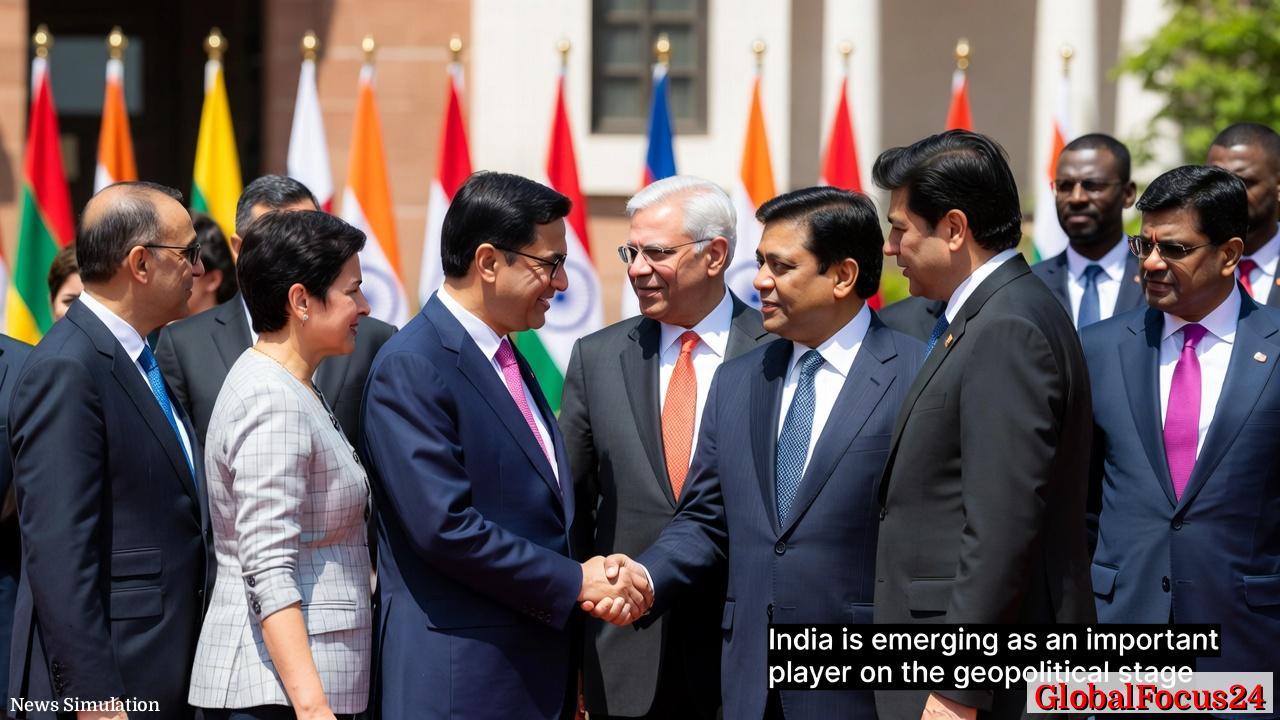
INDIA RISES ON THE GLOBAL STAGE: A NEW GEOPOLITICAL FORCE SHAPING THE 2020S
India’s emergence as a consequential player in world affairs is reshaping regional dynamics, reconfiguring strategic alliances, and recalibrating economic expectations across Asia and beyond. From its growing defense capabilities to its rapid digital and industrial expansion, New Delhi is positioning itself as a pivotal interlocutor on trade, climate, technology standards, and security.
Historical Context: From Nehru to a Global Dialogue Partner
India’s modern ascent traces a long arc—from decolonization and non-alignment to a more assertive, globally engaged state. In the decades following independence, India pursued a model balancing internal development with a principled stance on international issues. The liberalization of the 1990s catalyzed a shift toward greater economic integration and outward foreign policy engagement. Today, those foundations underpin a broader strategy that treats domestic growth as inseparable from international cooperation—an approach that has yielded deeper ties with major economies in Europe, North America, and East Asia, while expanding influence across the Global South. This historical lineage informs India’s current emphasis on multilateralism, strategic autonomy, and a diversified network of partners, rather than relying on a single bloc. As a result, India has become a key voice in global conversations around trade rules, technology governance, and climate commitments, reinforcing its status as a rising power in the 2020s.
Economic Trajectory: Growth, Markets, and Investment Flows
India’s economy remains characterized by rapid growth, a large and young workforce, and a rapidly expanding technology and manufacturing ecosystem. The country continues to attract substantial foreign direct investment, driven by policy reforms, digital infrastructure expansion, and a push to integrate into regional supply chains. This momentum has implications for global investors and neighboring markets as India seeks to deepen manufacturing capabilities and expand its export footprint in sectors such as electronics, pharmaceuticals, and automotive components. While challenges persist—income inequality, regional disparities, and the need for continued reform—policies aimed at improving ease of doing business, digitization, and energy access contribute to a more competitive economic profile. The resulting shifts in investment patterns have influenced regional capital flows, with neighboring economies monitoring how India’s growth engine interacts with their own development strategies.
Geopolitical Realignments: Security, Diplomacy, and Tech Standards
As India expands its security and diplomatic footprint, it has sought to balance traditional alliances with emerging partnerships across the Indo-Pacific and beyond. This realignment includes engagements with major powers on defense modernization, maritime security, and cyber resilience, as well as participation in regional forums that shape security norms and conflict-prevention mechanisms. In the technology sphere, India’s push toward digital sovereignty, data governance, and secure IT ecosystems aligns with global debates on standards and governance, influencing how cloud services, 5G networks, and artificial intelligence are integrated into critical infrastructure. The country’s stance on these issues affects not only regional stability but also the opportunities and constraints faced by neighboring economies pursuing modernization and export-oriented growth.
Regional Comparisons: The Subcontinent and Beyond
When comparing India’s trajectory with its regional peers, several themes emerge. In economic terms, India is often contrasted with other large emerging markets that leverage a large domestic market to drive growth, while also facing the intricacies of regulatory reform and urban-rural divides. In strategic terms, India’s approach to maritime security and regional leadership stands alongside the efforts of other regional powers to shape trade routes, energy corridors, and defense partnerships. The country’s emphasis on inclusive development—education, healthcare, and infrastructure—also differentiates its development model from some peers that prioritize rapid export-led growth or resource-led expansion. Observers note that India’s combination of demographic advantage, diversified industry base, and diplomatic outreach creates unique opportunities for regional collaboration, especially in sectors such as manufacturing integration, technology transfer, and climate resilience.
Technology and Innovation: A Catalyst for Growth
India’s tech sector remains a central pillar of its global standing. The country hosts a vibrant startup ecosystem, robust information technology services, and expanding capabilities in software, hardware, and semiconductor design. Government initiatives aimed at enhancing digital infrastructure, fostering innovation, and supporting scalable manufacturing have helped attract international tech investment while nurturing homegrown capabilities. This tech momentum feeds directly into other strategic objectives, from supply chain diversification to research collaboration with universities and industry partners worldwide. As digital technologies permeate more sectors—from agriculture to healthcare—India’s role as an innovation hub continues to influence regional competition and global technology governance.
Public Perception and Societal Impacts: Public Reaction and Policy Responses
Across urban and rural communities in India, public sentiment toward global engagement combines cautious optimism with pragmatic concerns. Citizens often weigh the benefits of greater international trade and investment against anxieties about economic disruption, environment, and social equity. Governments respond with policies that aim to expand access to markets, improve urban infrastructure, and safeguard digital privacy and data security. In many regional contexts, public opinion mirrors broader global debates about the impacts of globalization, technology adoption, and climate policy, illustrating how national strategies intersect with everyday life.
Environmental and Climate Considerations: Energy Transition and Adaptation
India’s climate strategy emphasizes a balance between accelerating development and reducing environmental impact. The country has pursued investments in renewable energy, storage solutions, and grid modernization to expand clean power capacity while supporting industrial growth. The energy transition involves a mix of solar, wind, hydro, and increasingly, green hydrogen as potential avenues for decarbonizing transport, industry, and electricity generation. Policy coherence across federal and state levels, along with international financing and technology transfer, shapes the pace and quality of this transition. The outcome will influence regional energy markets, interconnection with neighboring grids, and the competitiveness of Indian industry in global supply chains.
Global Trade and Supply Chains: Opportunities and Risks
India’s integration into global trade networks affects regional supply chains, with implications for both efficiency and resilience. Efforts to diversify export markets, reduce dependence on any single trading partner, and bolster logistics infrastructure contribute to more reliable trade flows. Simultaneously, global tensions and policy shifts—ranging from tariff adjustments to sanctions regimes—can alter cost structures and lead times for Indian manufacturers and suppliers. The country’s role in regional trade agreements and its participation in global institutions influence how value is created and captured within these networks. Observers highlight the importance of improving port capacity, rail corridors, and customs efficiency to maximize the benefits of a more connected economy.
Public Infrastructure and Urban Development: A Regional Benchmark
India’s urbanization and infrastructure programs—ranging from smart city initiatives to highway and rail upgrades—serve as benchmarks for neighboring economies pursuing rapid modernization. The scale and speed of implementation, coupled with public-private collaboration and financing models, offer lessons for other large emerging markets. The efficiency of project delivery, land use planning, and social housing remains a critical area of focus as urban centers contend with population growth and the need for resilient, sustainable communities. The regional impact includes improved regional accessibility, reduced freight times, and increased cross-border commerce.
Conclusion: A Dynamic Moment for a Rising Power
India’s ascent is not a sudden phenomenon but the culmination of decades of strategic choices, economic reform, and proactive diplomacy. Its influence extends beyond traditional power metrics, shaping economic trends, regional security dialogues, and governance standards in technology and climate policy. As India continues to engage with a wide network of partners, the country’s trajectory will likely influence the pace of regional integration, investment climates, and development outcomes across South Asia and the broader Indo-Pacific. For observers and policymakers, the central question remains how India will balance rapid growth with inclusive development, how it will navigate complex global conversations on trade and technology, and how its evolving role will redefine regional comparisons in the decade ahead.